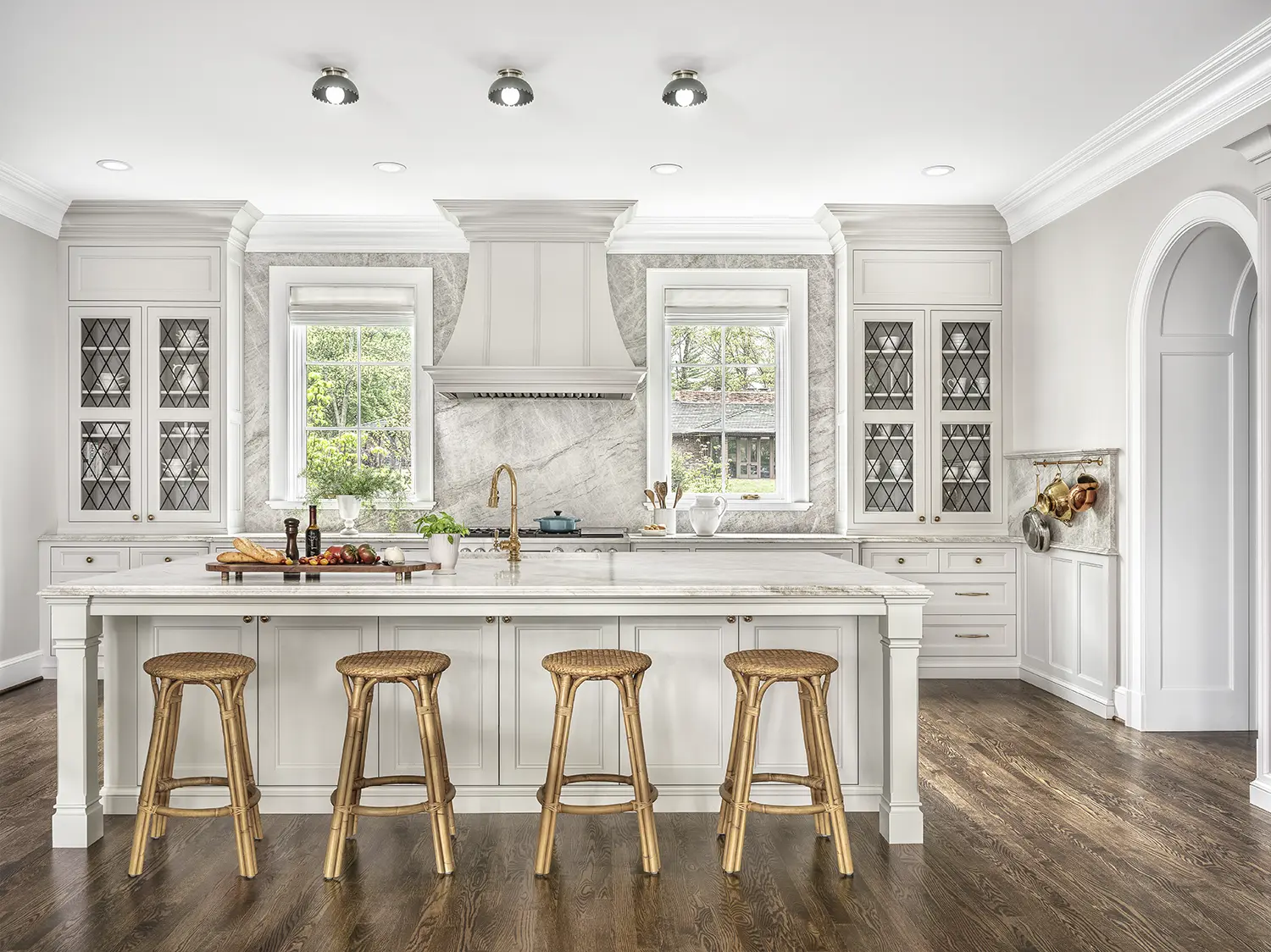
Television crews complete home-remodeling projects in a matter of days, and challenges often seem to be resolved with little worry, effort, or additional cost. In the real world, renovations can be complex, ever-evolving ventures. Design projects typically take months or longer to finish, and unexpected problems and expenses can surface at any point in the process.
For those reasons and more, it can be helpful to hire an experienced interior designer to lend guidance, to troubleshoot, and to offer design options and inspiration. But finding the right person with whom to partner requires some research and understanding of how the industry works. Take the time to educate yourself now, and you won’t regret it when you’re on a construction deadline and can’t decide between brushed nickel or stainless-steel fixtures.
Get a weekly dose of home and style inspiration
Subscribe to the St. Louis Design+Home newsletter to explore the latest stories from the local interior design, fashion, and retail scene.
Where to Look
Local design magazines and blogs, Instagram feeds, and the American Society of Interior Designers website (asid.com) are all good starting points for homeowners wanting to hire an interior designer. Professionals also suggest soliciting contractors, some of whom partner with select interior designers for their projects and are therefore privy to an individual’s range and strengths. Talking to friends whose homes are beautifully furnished and decorated is another smart way to learn about designers.
“I think word of mouth is really the way I get most of my new clients,” says Laura Lee, owner of St. Louis interior design firm Laura Lee Home.
Homeowners should take the time to interview at least two to four prospects, to call their references, and to examine the designer’s body of work, either through a design portfolio or a site visit. Keep in mind that most designers can easily arrange home visits, which offer the opportunity to ask questions about specific design decisions. Though most professionals can execute projects that range from traditional to contemporary, clients glean quite a bit of information from vetting projects first.
A Meeting of the Minds
Once a homeowner has compiled a list of potential interior designers, the next step is to schedule time to meet them. This initial meeting should be seen as an opportunity to establish whether or not good rapport exists. Don’t downplay the importance of enjoying a person’s company; you’ll likely be spending quite a bit of time together if you end up selecting him or her. “A first meeting is to see if we vibe and if we’re a good fit for each other,” says Jacob Laws of Jacob Laws Interior Design. “It’s kind of like dating. You don’t want to waste someone’s time.”
During that first meeting, it’s also essential to get an idea of the designer’s methodology. “Every job is different. There is no formula and no client is the same,” says Jessie Miller of Jessie D. Miller Design, “but I’ve found that the best design happens when a client gives the designer creative freedom. Good design comes from observing the client: How do they live? What do they enjoy? It comes from really getting to know them. Use that as inspiration, and the end result is better than what the homeowner could have conceptualized on her own.”
Whereas some homeowners seek a certain designer’s style imprimatur, others want to play an equal role in the design and decision-making. Typically those clients are looking for a designer to help them source product, offer access to trade showrooms, and do much of the legwork. Knowing which of the two camps you belong in will forestall misunderstandings down the road. Also, find out whether the designer you’re interviewing will be the actual person managing the project on a day-to-day basis, says Heather Helms, president of the Missouri East chapter of the American Society of Interior Designers. “It’s a big investment, and it’s one that you need to be comfortable with,” she says.
Once a designer has been selected, subsequent meetings should cover details of the project’s scope, timetable, and total budget. “A second meeting is meant to talk about budget and to fine-tune priorities. Where would they like to begin?” says Laws. “Sometimes clients don’t know and will rely on me to educate them.”
A Costly Venture
Hiring a designer is an investment of time and resources, so it’s critical to establish a financial plan early in the relationship. Designers propose a range of fee and furniture-buying structures, with some charging a flat design fee and others an hourly rate anywhere from $75 to $150 an hour or more. For those clients who don’t want to make a large financial commitment, some designers, including Elizabeth Baumgartner of Little Black Door Designs, propose smaller packages. For $400 a room, Baumgartner will provide clients with images of furniture and fabric selections plus a source list. As for buying furniture, most designers will extend their discounts to clients with a small percentage markup, so clients never pay retail. Baumgartner likes to source pieces from small, local vendors and negotiates with the owners for the best possible prices. “A client is paying me for my opinion and expertise, not because I can get them a sofa for less money,” she says.
But according to Helms, there is still a general resistance on the part of homeowners to talk about their budgets. “I think they think our goal is to spend every dollar, but it’s not.”
“There is a fear that the homeowner’s budget isn’t good enough,” adds Baumgartner, “but you can get something for every budget.”
Understanding the financials is a critical starting point in the planning and procurement process. DeAnn Bingaman, one of Lee’s clients, appreciates how Lee offered furniture and materials options at different price points and the way in which she helped solidify the vision for Bingaman’s Richmond Heights home.
“She really made me think about what I wanted,” Bingaman says.
So settling on a budget and placing product orders is only the beginning of an interaction with clients. That’s why Lee says it’s important to choose a designer who encourages open communication from start to finish.
“You have someone in your home and it’s very personal,” she says. “The sooner you bring up any concerns, the happier you will be as a client.”
Designer Interview Questions
Several states, including Missouri and Illinois, require professionals to meet certain education and experience requirements and pass an exam before claiming the title of registered interior designer. Here’s a list of interview questions, adapted from some on the American Society of Interior Designers website (asidmoe.com), to help homeowners further narrow the field when choosing a designer:
- Can you summarize your education, training, experience, professional affiliations, and other credentials?
- What services can you provide and can you explain what certain projects might cost?
- Can you explain your fee structure?
- Will you be able to take on the project and complete it in a time frame that works for my needs?
- How and how often do you communicate with clients?