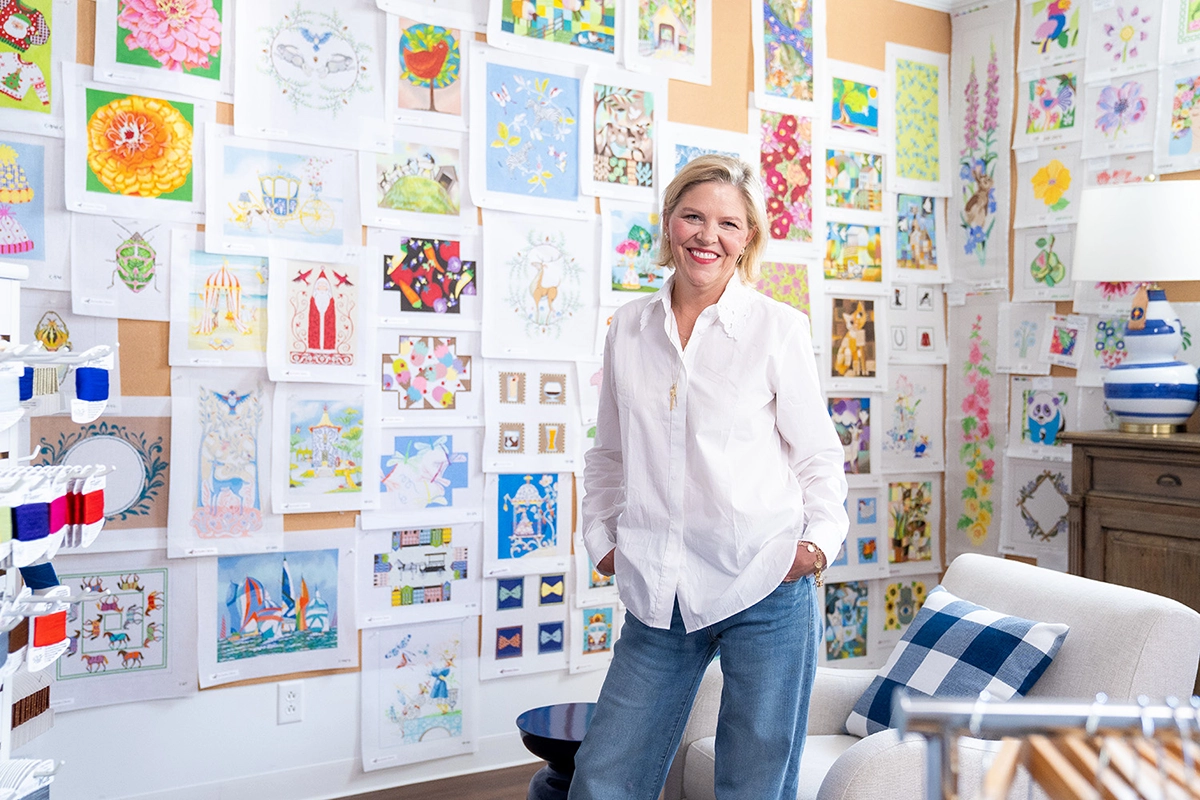
In St. Louis, needlepoint has long been part of the cultural fabric, woven into private school traditions, local shops, and generational hobbies passed from grandmothers to grandchildren. For decades, it was something one might associate with a private school student’s belt or a carefully stitched Christmas stocking hung on the chimney once a year. Today, that image is changing—and fast. Local shop owners and designers say needlepoint is experiencing a surge, driven by a younger generation of stitchers discovering the craft as both a creative outlet and a way to unplug from digital life.
“It’s huge. It’s crazy how much the industry has blown up in just the past four months,” says Annie Zigman, a 28-year-old local needlepoint designer and the owner of Ziggy Stitches. “I had one distributor tell me sales are up 305 percent. It’s been absolutely crazy. There’s actually a canvas shortage right now.”
Get a weekly dose of home and style inspiration
Subscribe to the St. Louis Design+Home newsletter to explore the latest stories from the local interior design, fashion, and retail scene.
Zigman first learned needlepoint in high school at Marquette. Back then, she says, the hobby was viewed as old-fashioned, and members of her family took to calling her Granny Annie. But after a recent April weekend at a needlepoint retreat in Kansas City with fellow designers and stitchers, she says the community looks very different today. Attendees ranged from their 20s to 80s, with the majority in their 30s.
According to a 2015 survey by The National NeedleArts Association (TNNA), the average needlepointer at that time was 61. “It’s now 30 years younger than that. It’s really, really cool to see,” Zigman says.
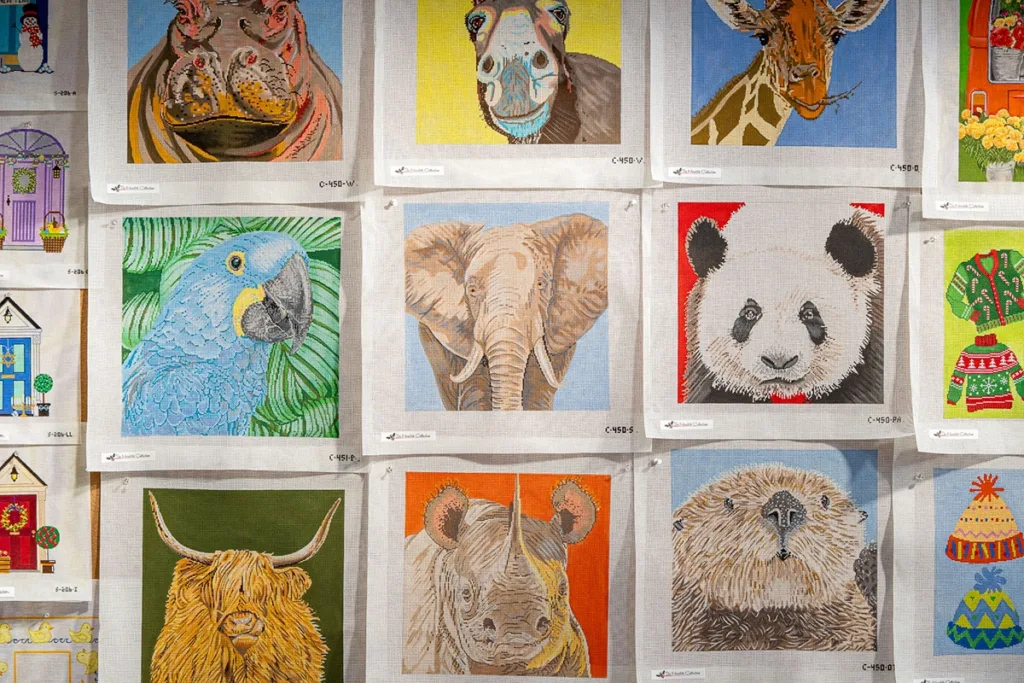
At The Needlepoint Clubhouse, which relocated to 9850 Manchester in Rock Hill last year, owner Megan Holmes describes a similar transformation. She emphasizes the “unprecedented” growth she’s witnessed over the past year, especially among younger generations.
“I can’t exactly explain the phenomenon, but I’ve started calling it ‘the analog boom,’” Holmes says. “What people are saying is, ‘I just want a reason to get off my phone.’ We hear a lot about doomscrolling. People are sick of being on their phones. They’re looking for something that helps them slow down and feel connected.”
In that way, needlepoint is right up there with other trending “grandma hobbies,” such as sourdough baking, mahjong, and crafts like embroidery and knitting.
Julie Filean, manager of Sign of the Arrow in Ladue, has witnessed the same generational shift. She credits social media as a driver of the hobby’s recent growth but notes that, ironically, needlepoint also serves as a way for people to step away from their screens.
“Social media has really made this industry blow up,” she says. “So many people on TikTok and Instagram are talking about wanting hobbies where they’re off their phone.”
The uptick in younger customers has also led to a shift in what needlepointers are creating. Traditional floral pillows and heirloom-style pieces are still popular, but so are pillows featuring pop culture references, funny sayings, and modern designs.
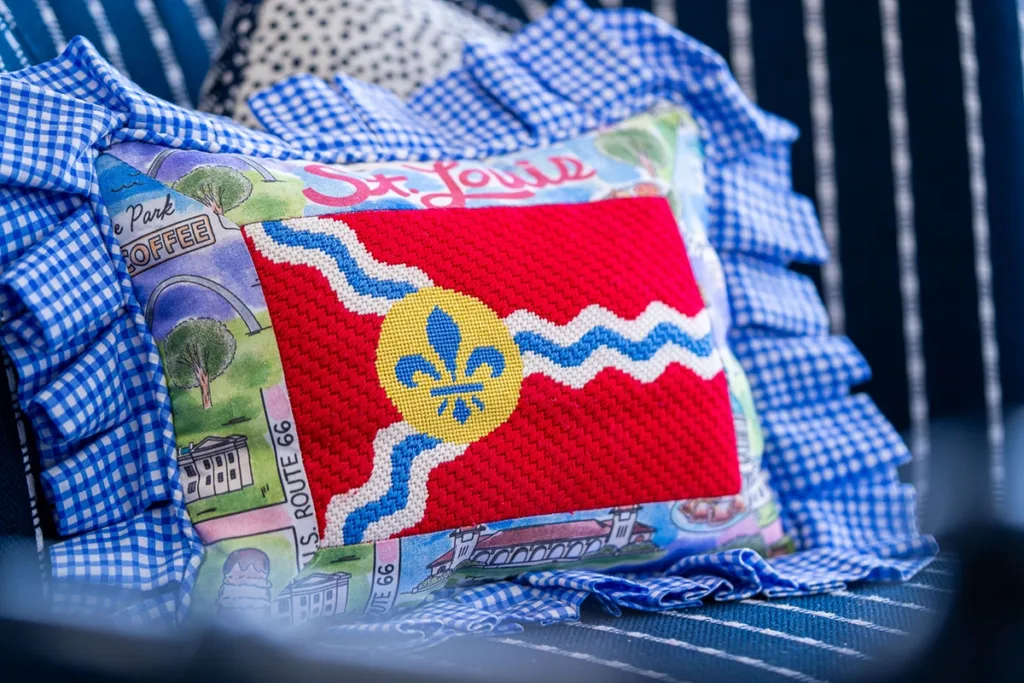
“We have all-new categories within our business that didn’t exist a couple of years ago,” says Filean, whose shop has been a staple of the St. Louis needlepoint scene since 1966. “Pop culture like Schitt’s Creek, Mean Girls, Taylor Swift. We have little icons and sayings that relate to TV and movies.”
For younger designers like Zigman, that shift in style has also been good for business. While she avoids leaning too heavily into fleeting trends, the modern, playful designs in her store’s inventory resonate across generations.
“Using bright colors and funny sayings and things that are more graphic and modern has opened up my clientele’s age range,” she says. “I like to do things that will make you smile now, but also make you smile 30 years from now.”
Filean adds that Gen Z trends like bag charms have also drawn in young stitchers, whereas older generations more often focused on creating final products like holiday ornaments or throw pillows.
“Bag tags have been a whole new phenomenon in the last couple of years,” she notes. “It’s a way to show off your hobby, not just something you put out on a Christmas tree once a year.”
For Filean, the appeal of needlepoint across all age groups lies in both its creativity and its analog nature. “People are losing the connection to doing things with their hands,” she says. Needlepoint offers something increasingly rare today.
“It’s creative, it’s tactile. It can be relaxing and therapeutic,” she says. “It engages a whole different part of your brain.”
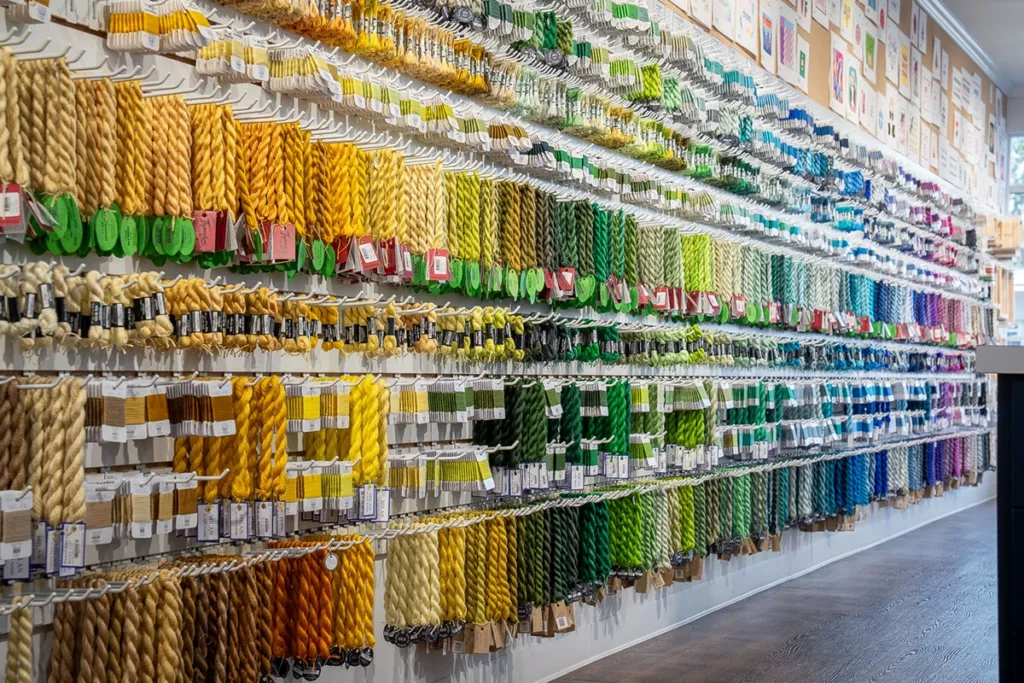
How much does it cost to start a needlepoint hobby?
Starting a hobby like needlepoint doesn’t require a major investment, and beginners can choose how ambitious they want their first project to be.
“You can make needlepoint as affordable or as expensive as you want it to be,” says Megan Holmes, owner of The Needlepoint Clubhouse.
At the entry level, beginners often start with bundled kits designed to include everything needed to complete a project.
“It’s the canvas, the supplies, and the way to finish it, all in one,” Holmes says. Each kit costs between $82 and $100, with larger ones running a bit more.
If you want to purchase pieces individually, the price of a canvas can vary significantly depending on size and detail. Canvases are typically hand-painted or printed, which can drive up the cost.
“A canvas, depending on the size, can range anywhere from $50 to $350,” Holmes says. “A really detailed painted stocking might be $350, and that’s just for the canvas.”
Then there are the materials, which vary in cost by thread type, with specialty fibers driving up the price.
“You’ve got polyester and rayon, which are inexpensive, but then we get into silks and wools and overdyed silks. Those are going to be more expensive than basic cotton threads,” Holmes says.
Finishing work—which turns stitched pieces into ornaments, stockings, or home and personal décor—is another expense, handled by specialists. Needlepointers can take their projects to local shops like The Needlepoint Clubhouse or Sign of the Arrow, which send them off to a finisher.
“Finishing an ornament can range anywhere from around $75 to $95,” Holmes says. “Finishing a stocking can be $100 to $150. It just kind of depends on the size and the amount of specialized work.”
Despite the range in prices, most shop owners emphasize how needlepoint evolves over time with the stitcher.
“Once you gather your original supplies, like a good set of scissors and a couple of canvases, you don’t have to buy all of it over and over again,” Holmes says. “It’s just like golf. You can start simple and build on it.”