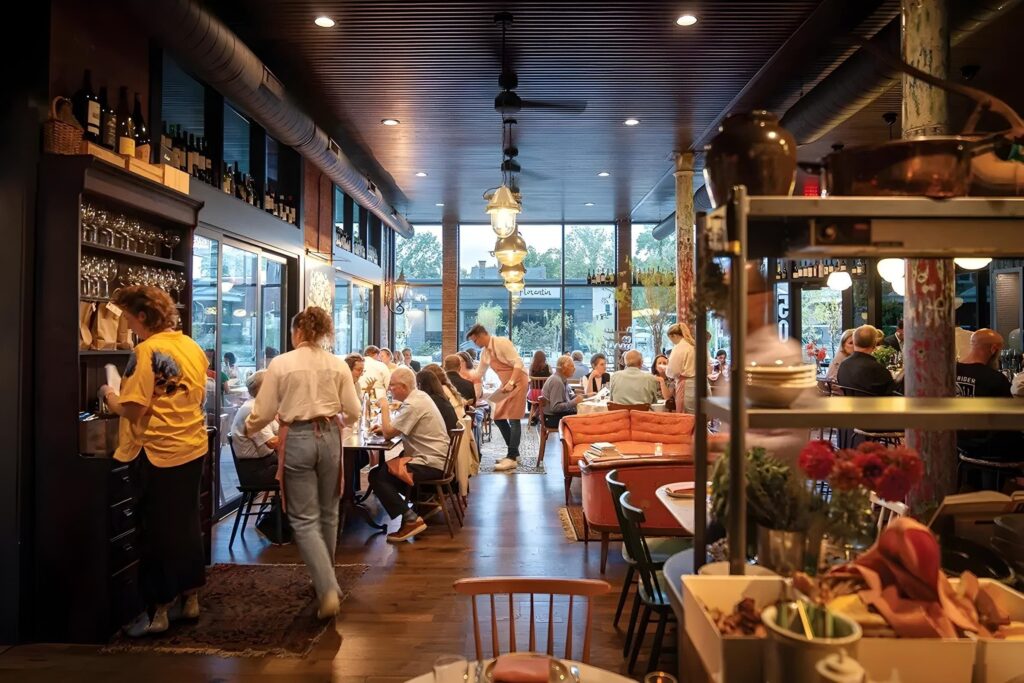
For nearly six decades, the private Saint Louis Club enjoyed one of the best views in the town—and cuisine to match.
But the venerable club is facing mounting financial pressure after what some members say was an ill-advised move to a newer building across the street from its longtime home in Clayton, which not only led to increased costs but took away the very views that made the club a destination. In a letter to members Wednesday, the club’s board of directors made clear that closure is imminent unless drastic actions are taken.
Keep up with local business news and trends
Subscribe to the St. Louis Business newsletter to get the latest insights sent to your inbox every morning.
The letter invited members to a meeting on August 17 to discuss a three-pronged plan that involves decamping to a smaller space, members paying an assessment to cover past-due bills and rent, and restructuring the club’s debt to reduce its monthly payments.
“The Board will convene the following day in a closed session to determine whether there is enough member support to move forward with the bank’s proposal,” the letter warned. “If this path does not look possible, a decision will be made to close the Club on or before August 29.”
Club leadership did not respond to a request for comment Thursday.
The club opened in 1964, taking up four floors of the new Pierre Laclede Building in downtown Clayton. The space offered soaring views of Forest Park and downtown St. Louis.
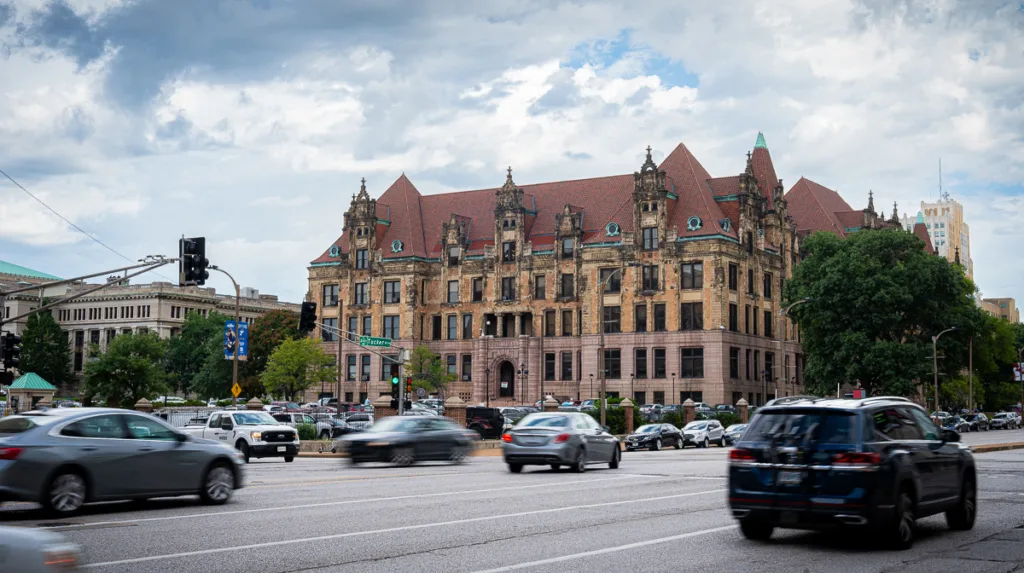
But during the pandemic, members say they were informed that the club would be moving across the street, to Centene’s new Plaza C Building at 7676 Forsyth Boulevard. The building had Class-A amenities (and the new space proved striking) but members grumbled at both what felt like a fait accompli from the board of directors and the particulars of the new building: Parking felt significantly more difficult, while the actual club space didn’t feel as welcoming. And the view from the fifth floor was a massive downgrade—ironically, because it faced the club’s former digs, which were more attractive from the inside than out.
“When you were sitting up in the Saint Louis Club in the old 7800 Forsyth building, and there was a beautiful summer evening and you could see downtown, the sun would go down, and you’re looking across the street at the prettiest building in town, the Centene Building,” says one longtime member. “Now you’re in the Centene building in the corner down low with no view, and you’re looking out when you’re in the bar at the ugliest building in town, 7800 Forsyth.”
He adds, “They underestimated how much people enjoyed the easy parking and the access to those views.”
Discontent only snowballed from there. Members were hit with a monthly fee to cover the cost of the new space, and then a four-figure special assessment on top of that. “They lost a lot of members,” the member says. “They didn’t think the views were there anymore, and then the assessment came, and so it was just a cavalcade of negative energy, and people just started peeling off right and left.”
In another irony, the club’s departure from the Pierre Laclede Building opened up an opportunity for a rival club. The Missouri Athletic Club ended up opening a Clayton outpost in the same space the Saint Louis Club had just vacated, complementing its offerings in downtown St. Louis and in West County.
It’s not clear what will happen at Monday’s meeting, but the longtime member who spoke to SLM suggests that even club boosters may decide to throw in the towel rather than pay another assessment after already being forced to subsidize a move they didn’t support. He notes that the club now costs about $800 a month when it’s in essence just a dining club—one with superior food and wine, sure, but one where members must pay for meals on top of their monthly fees.
It doesn’t help that private clubs no longer hold the cache they used to with up-and coming executives. Attorney Al Watkins, himself a former Saint Louis Club member, notes that the younger lawyers he works with no longer see the appeal. “They kind of all said the same thing, which was, ‘Well, it’s really not my thing, people don’t want to meet me there, and it’s not a business-getter like it may have been back in the ’50s,’” he says of younger colleagues, who he says gave the club a try before canceling. “They just didn’t move with the times.”
As for the longtime member, he believes the Saint Louis Club presents a cautionary tale. He says the club’s recent moves are rooted in bad governance from leaders who failed to listen to members. “These clubs are so ephemeral,” he says. “In the moment they’re wonderful, but they can die in about two seconds.”