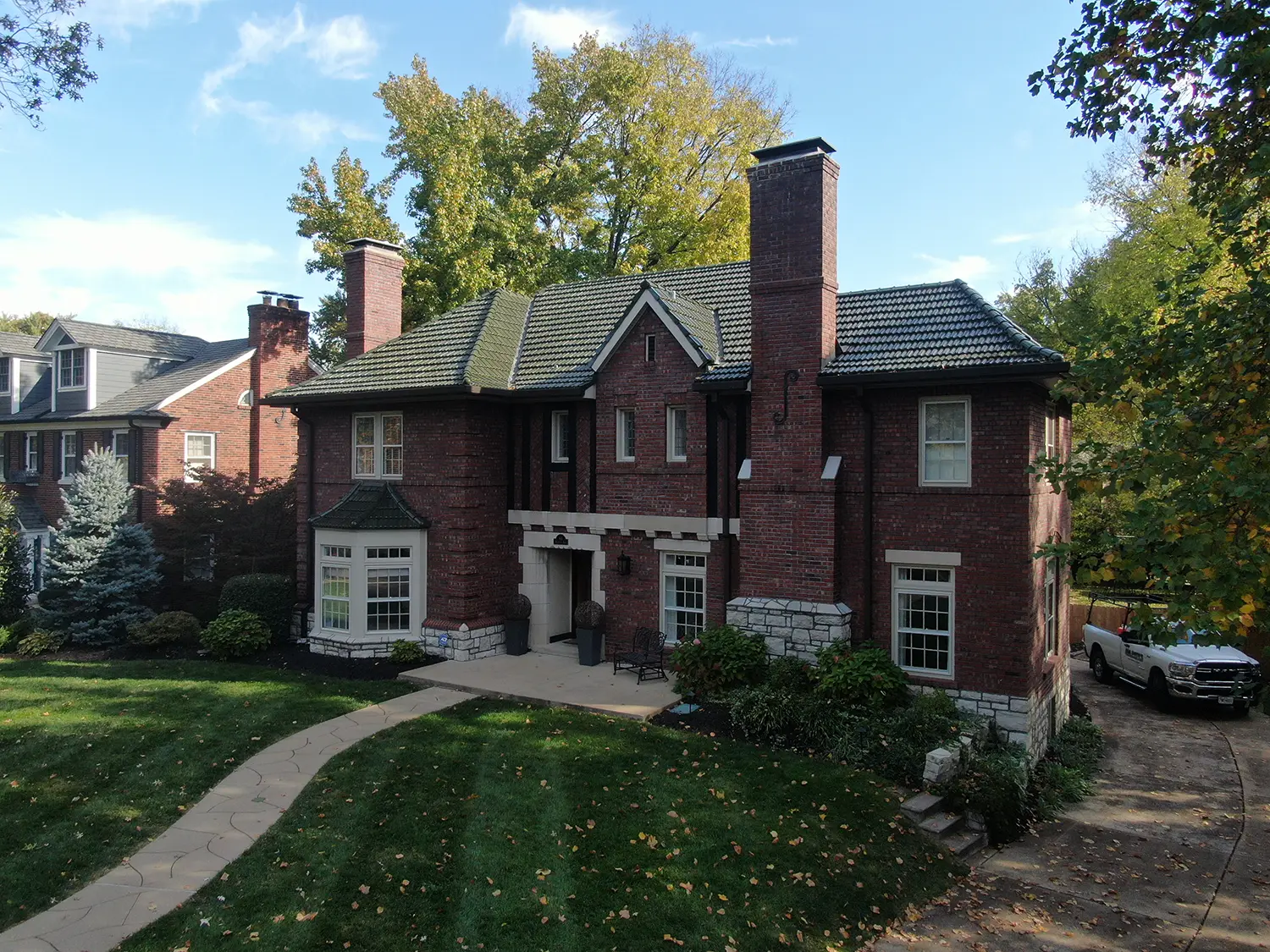
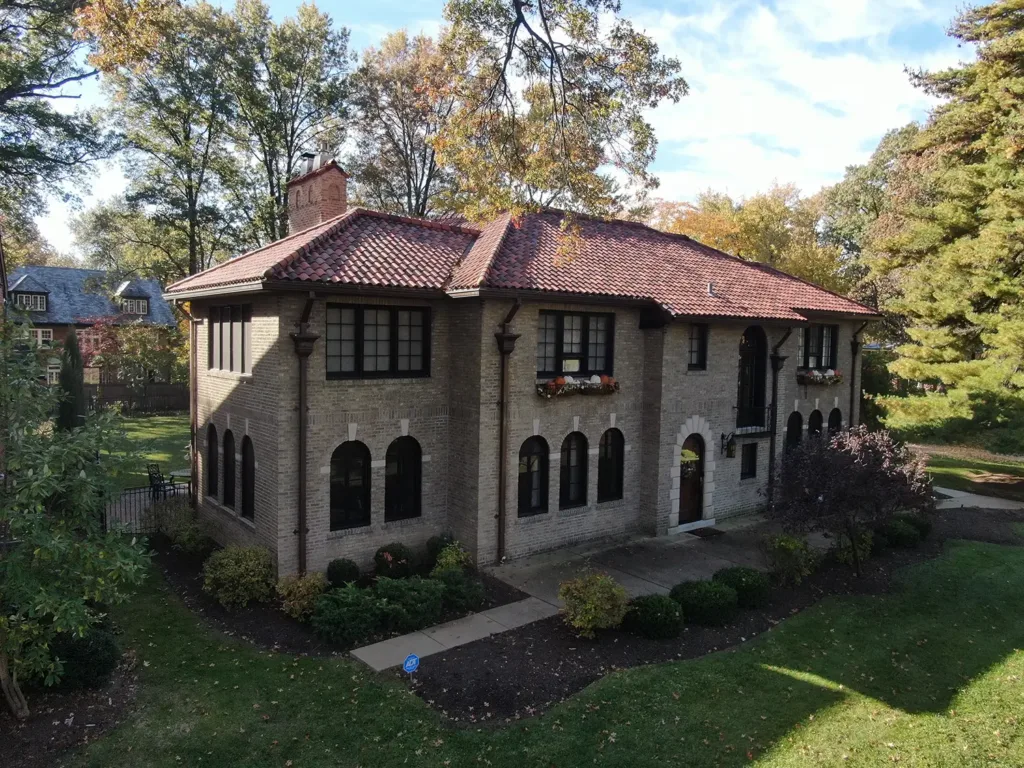
When a storm tears through a historic neighborhood, the damage it causes isn’t just to shingles and siding—it’s often to the delicate craftsmanship that defines a street’s character. In St. Louis, many century-old homes are topped with distinctive slate or terracotta Spanish roof tiles, materials chosen as much for beauty and longevity as for protection. But when those roofs are damaged—like how they were by the May 2025 tornado that blew through the area—homeowners are discovering a unique challenge in trying to replace them.
The problem begins with availability. Many of these decades-old tiles are no longer in production, making it difficult to find authentic replacements. Very few companies still produce tiles that fit the bill—with just one major company in the Midwest making them: Ludowici, which has been around since 1888.
Get a weekly dose of home and style inspiration
Subscribe to the St. Louis Design+Home newsletter to explore the latest stories from the local interior design, fashion, and retail scene.
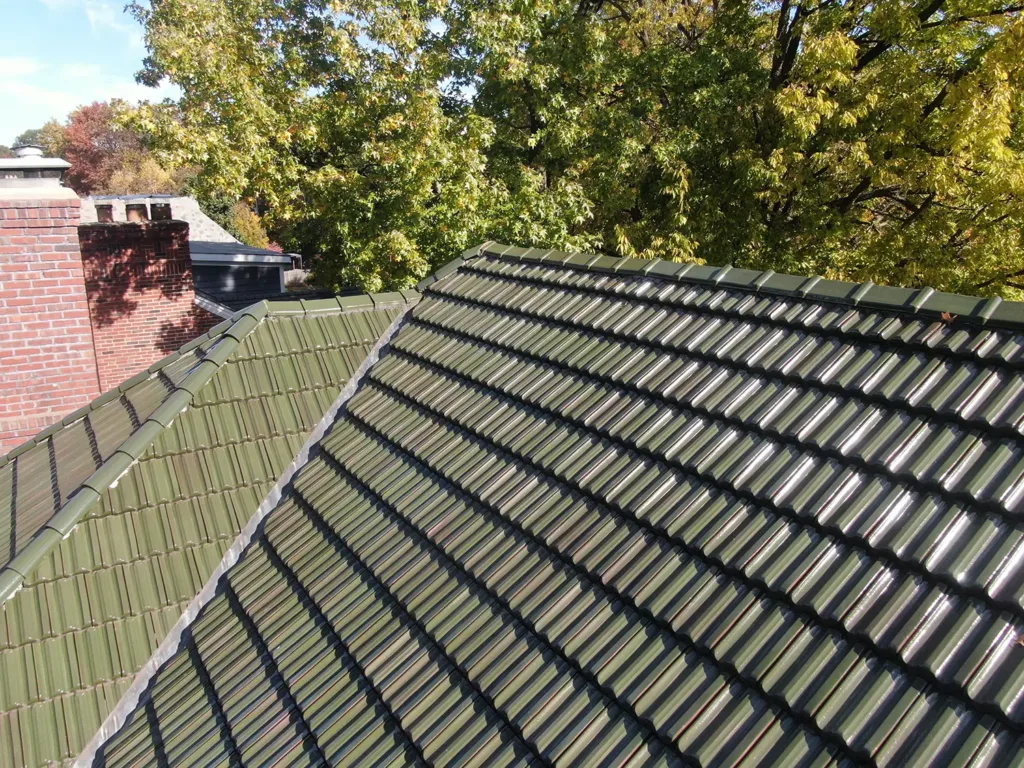
While their tiles may not be manufactured in the exact same way they were 100 years ago, Ludowici has the ability to replicate both their own historic tiles and those originally created by other, now-defunct companies. This service has become invaluable to many St. Louis homeowners. As Lauren Bock, director of marketing at Ludowici, explains, “You can actually mail the piece in so we can measure it and see if it’s something that we still have in production today, or if it’s a historic piece that we can replicate. We are still able to take a mold and reproduce the exact tiles people are looking for.”
Beyond looks, Bock highlighted the lasting benefits of using historic roof tiles—such as the clay terracotta tiles for which Ludowici is known.
“Longevity,” she says. “It’s very durable, and we’re rated for pretty much all-weather events. Water doesn’t penetrate it the way that it does some other materials. It also won’t fade or warp the way wood does. They should really last well over 100 years.”
Yet, homeowners face not only sourcing challenges but also regulatory ones due to the fact that many of the areas hit are part of historic districts, which have their own set of regulations when it comes to maintaining historic aesthetics. This has also caused a surge in need for these historic tiles—as many homeowners feel they don’t have another option due to strict rules.
“The storm hit essentially five local historic districts,” says Bob Bettis, director of the Cultural Resources Office for the City of St. Louis. “And each of those districts have varying strictness of the rules and relation to the roof of materials.”
While some neighborhoods have no regulations, the historic districts—such as in the Central West End—do. Bettis clarified that it’s not the government that originally put these rules in place, but rather that “the neighborhoods wrote their own rules.”
Homeowners having to wait to find tiles that fit the bill has created long delays. Searching and waiting for tiles, often to no avail, has slowed the process of repairing many storm-damaged homes.
Mark Volmer, a St. Louis resident who lives north of Forest Park, has a home with green Ludowici tiles from the early 1900s that were damaged by the storm. Between the regulations, insurance battles, and long delays, it could be more than a year until his roof is repaired.
And like many, he had “never even thought about” the tiles on his roof, he says, until the storm hit and several roofing companies approached him, hoping for his business repairing the historic and high-value tiles. However, at this point, the “main battle,” he adds, is working with his insurance company to try and have the original tiles that are no longer in production replicated by Ludowici–which would cost hundreds of thousands of dollars more than opting for a somewhat similar tile that is in production today–and hopefully one that the historic district would allow.
Currently, the choice between replicated tiles or an “equivalent tile” is still in the hands of the insurance company. When he finds out which style of tile he can use, it will then be several more months before he can even obtain the material.
“I’ve heard a little over 6 months, but I’ve also heard closer to 15 months,” he says.
However, there is now a glimmer of hope. Just last month, Mayor Cara Spencer signed Executive Order 90, loosening some of the strict regulations.
“While all of St. Louis needs and deserves zoning reform to remove burdensome regulations, the need to move even more urgently in the neighborhoods damaged by the tornado is obvious,” Mayor Spencer said on Aug. 25. “This executive order brings quick, localized reform to remove barriers for those who have lost so much, effective today.”
For residents, this change makes a huge impact—particularly because it prevents them from having to appear at a public hearing. As Bettis put it, requiring storm victims to do so “seems harsh.” The new flexibility–which could allow some homeowners to replace their roof tiles with an alternative type of tile or material to what was originally in place–allows his department to weigh hardship when considering alternative materials or solutions.
“That’s a good thing,” notes Bettis, “because if she hadn’t done that, the other path would be for an applicant or a homeowner who couldn’t adhere to the code to be required to have a public hearing at the preservation board.”
Even so, progress has been slow. Bettis noted that many homeowners are still waiting for roofing companies to inspect their properties.
“They’re overwhelmed,” he says of both the tile companies and the contractors who specialize in historic roof repairs. “The demand to get the products is super hard all of the sudden because you also have a thousand people who want to fix a slate roof or a tile roof. And the way it’s worked out is that there’s just not enough manpower on the ground. There’s not enough slate or clay tile available. It’s just a matter of too much too fast.”
Indeed, the backlog isn’t only about sourcing materials but also the labor needed to install them. Bob Frederic of Frederic Roofing says that it can take “12 to 18 months for that type of material” to arrive. While his company has some workers trained in historic tile installation, only a handful of local firms have full crews dedicated to that specialty.
“It’s going to take a long time for all those roofs to get replaced,” he says. “These roofs are going to take two months, three months to do, each of them. So it’s a slow process.”
Still, despite the challenges, there is optimism for the future. Ultimately, while restoring the roofs of historic homes may take time, there’s still hope for homeowners wanting to preserve the original look of their homes.
“We really love historic preservation,” says Bock, “and hopefully these homes go back to what they were.”
And for residents who are still worried, Bettis says that the Cultural Resources Office is ready to help. “We’re just doing our best to weather the storm together,” he says, acknowledging the unintended pun. “We’re just trying to help folks as much as possible.”