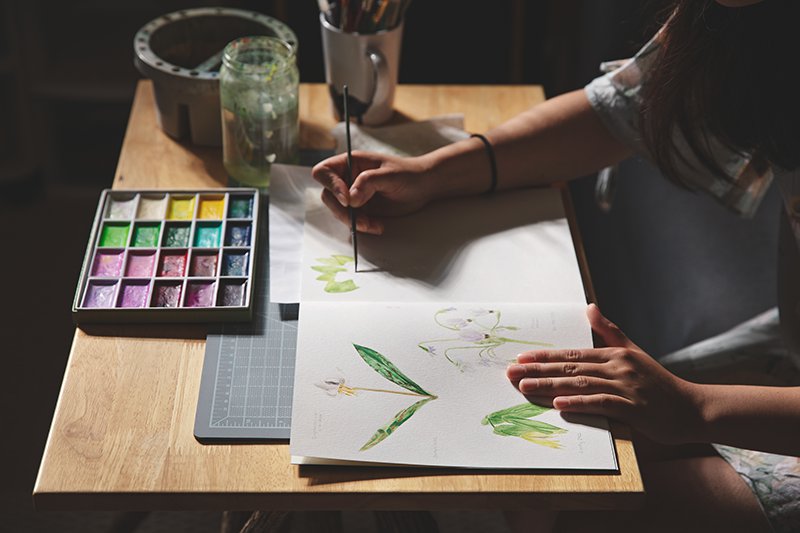
As a land manager of the Kennedy Forest in Forest Park, Catherine Hu must identify plants at various stages of their growth cycle. The role has inspired Hu, 28, to paint images of some of those plants and flowers in order to learn more about their shape, color, texture, and other characteristics. In September 2021, she began selling the paintings through her company, Sedges Have Edges Art.
Although the business is relatively new, Hu’s passion for nature is not. She’s had her hands in the soil since she was a little girl, helping her mother tend the home garden. After graduating from the University of Wisconsin with a master’s degree in conservation, she completed a graduate project at Shaw Nature Reserve in 2017.
Get a weekly dose of home and style inspiration
Subscribe to the St. Louis Design+Home newsletter to explore the latest stories from the local interior design, fashion, and retail scene.
“When I started in the conservation field, I had to learn my plants fast, and I used painting as a way to learn,” she says. “You have to look at a reference photo for hours and notice every little detail. I challenged myself to be more and more realistic in my painting. Becoming a better painter has made me a better botanist.”
What does your job entail? I take care of the natural areas [Hu is part of the nature reserve team that manages the forests, prairies, savannas, and wetlands in the park] and do ecological restoration in Kennedy Forest, in the southwest corner of Forest Park. I help damaged and degraded ecosystems to be healthy again. A lot of my job involves invasive species removal, like removing honeysuckle and winter creeper.
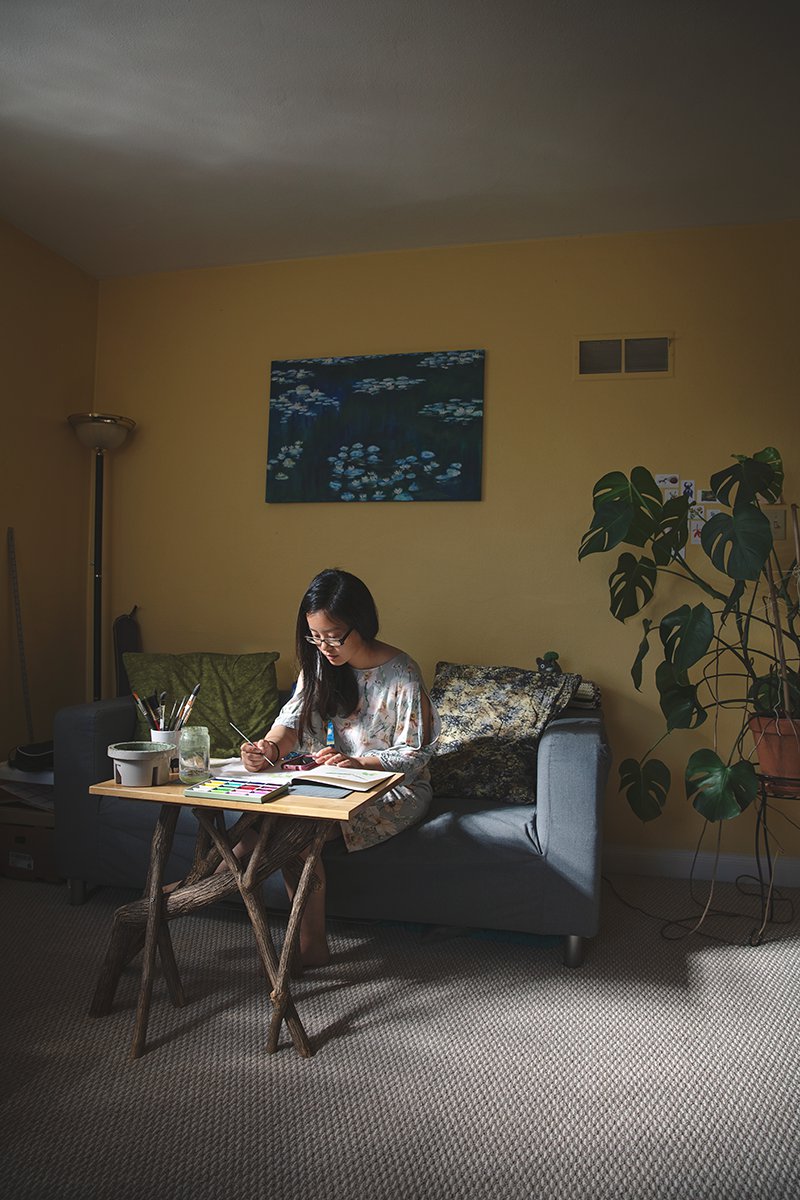
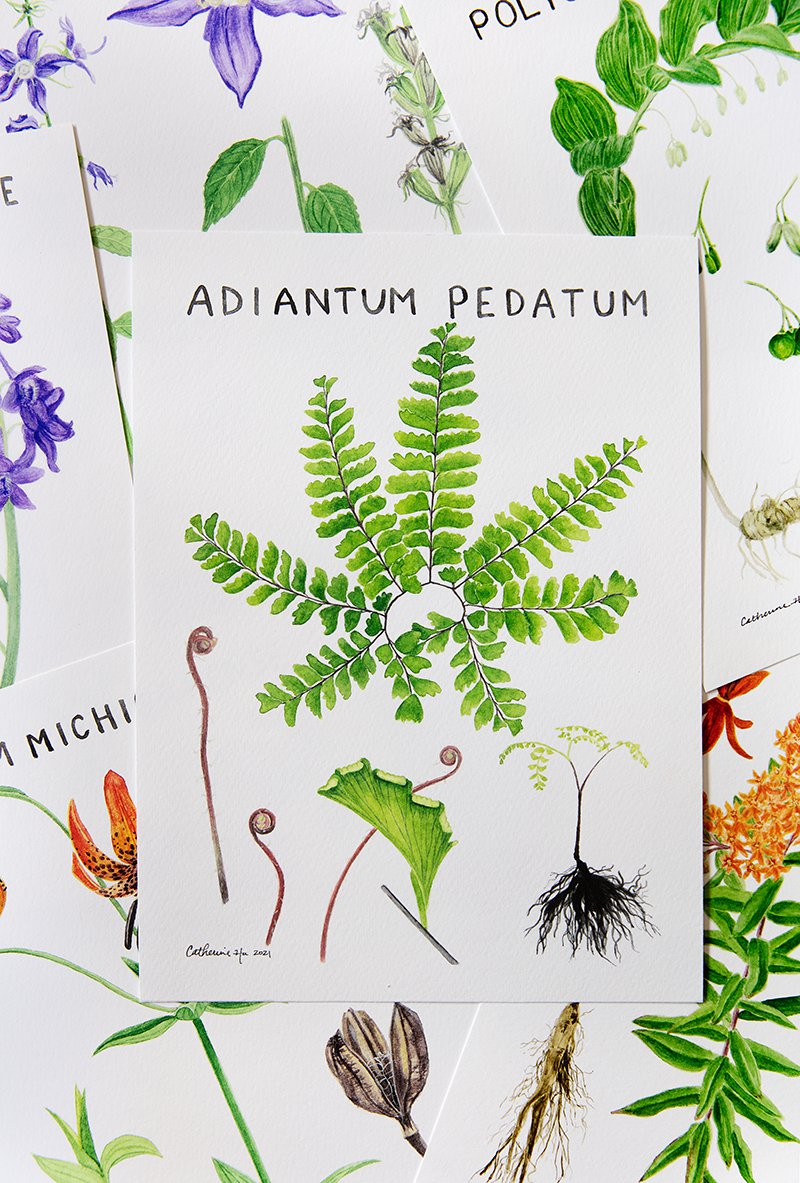
You use techniques such as lifting and layering to make your work look realistic. What can you tell non-art people about them? Layering is the technique I use the most. Since I primarily work in watercolor, which is translucent, layering is particularly effective. I use a lot of layering to build color, to create more depth and achieve a 3-D look. Because I’m trying to show veins within leaves or one petal on top of another, layering is a means of shading to show depth. Lifting is a process of removing paint. If I make a small mistake or want to lighten an area, I dab with a cloth to literally lift off the paint.
What inspired you to start drawing flora and fauna? I paint the plants I come across every day in my job. I first focused on learning the flowering stages but have moved on to studying plants at all stages of growth. What does a plant’s seed look like? What does it look like when it first pokes out of the ground? My next goal is to illustrate the relationship between plants and animals, particularly insects. Many of these species have evolved together and, as a result, have interesting characteristics.
How does your work differ from that of other botanical artists? One thing that sets my work apart is that I’m so immersed in the subject; I know a lot about the plant that I’m painting. There are other artists that do a way better job technically, but I focus on showing parts of a plant that help with identification. For example, if the number of veins in the leaf matters, or the number of petals, I will include that in my painting. These are the details that are important to me. I’m not just concerned with what looks pretty; I’m interested in the realistic features that make a plant a species. I’m painting to learn.
Where can people buy your art? My work is available at Union Studio and through my website and Etsy shop. It’s also available at in-person events and gallery exhibits.
Can you explain the meaning of the name Sedges Have Edges? The name comes from a poem used to help remember the differences between sedges, rushes, and grasses—all plants that look very similar to the average person but really are quite different: Sedges have edges; rushes are round; grasses have nodes all the way to the ground.