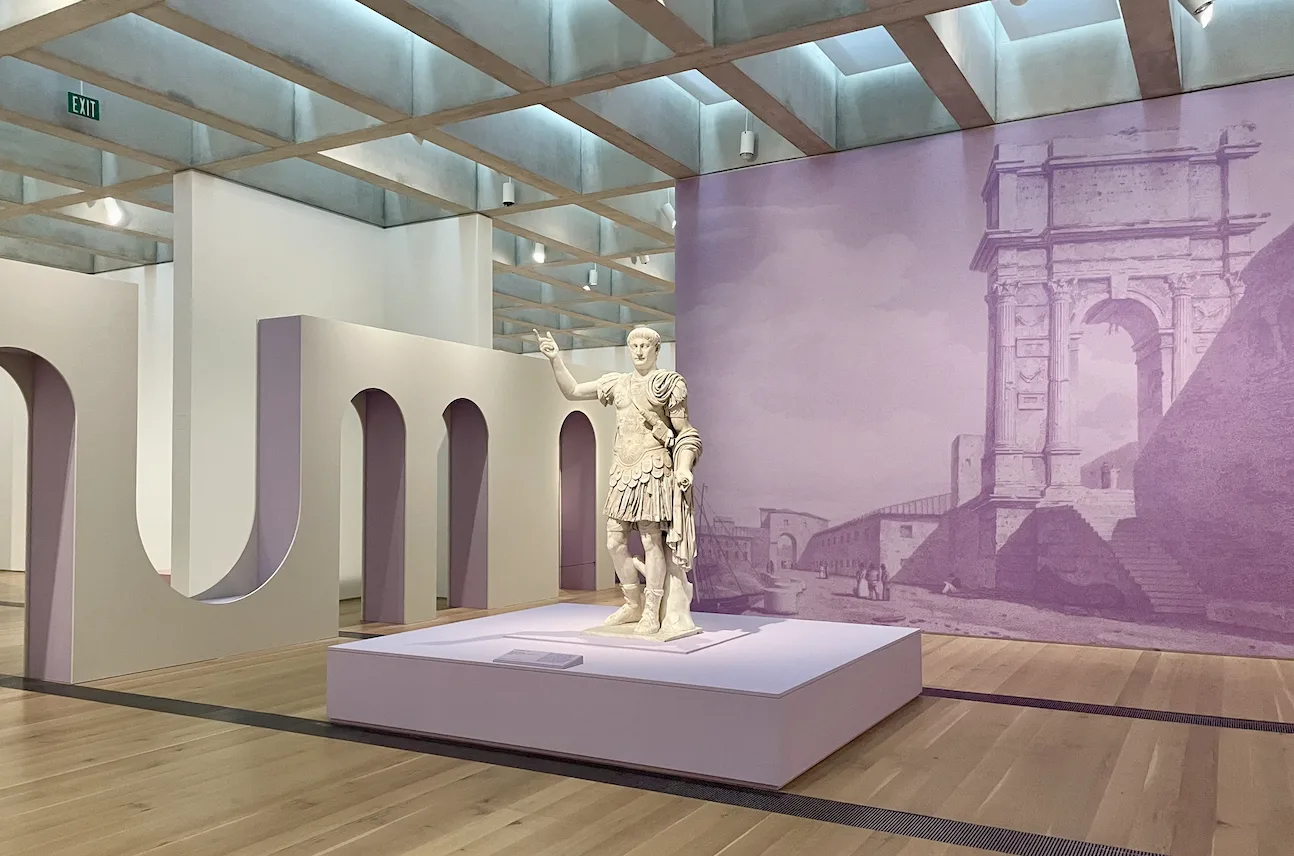
Stately portraits, raucous frescoes, delicate jewelry, and intricate mosaics—all these treasures and more fill the galleries of Ancient Splendor: Roman Art in the Time of Trajan. The new special exhibition at the Saint Louis Art Museum officially opens on March 14, with a member opening celebration on March 12 and public preview on March 13.
The exhibition, which includes pieces from the SLAM collection alongside loans from The National Roman Museum, The National Archeological Museum of Naples, the Vatican Museums, and more, is a thoughtful overview of Roman life in the time of Trajan, the second of Rome’s “Five Good Emperors.”
Stay up-to-date with the local arts scene
Subscribe to the weekly St. Louis Arts+Culture newsletter to discover must-attend art exhibits, performances, festivals, and more.
Ancient Splendor is curated by Lucrezia Ungaro, archaeological curator of the city of Rome, alongside Hannah Segrave, SLAM’s associate curator of European art to 1800, who oversaw the local presentation.
“As a part of research for the exhibition, I and a lot of members of the team looked at other ancient exhibitions to get inspiration, but also to think about how we could do things really differently,” Segrave says. “That was very much the charge—to design a show that gave us a new perspective on ancient art.”
That charge has led to a spectacular exhibition that invites guests into the Roman world. The design is almost theatrical, guiding visitors from section to section using minimal architectural structures. They imply the ancient world without distracting from the objects themselves and offer glimpses of what’s to come along the way.
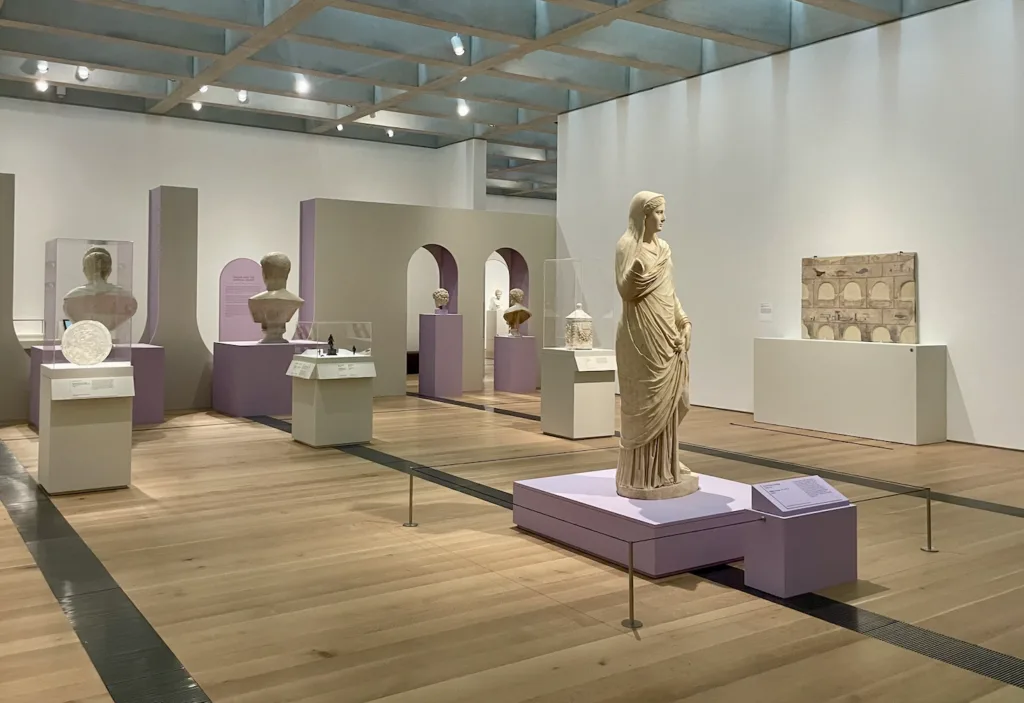
And what’s to come is impressive. The around 160 items featured in the show are divided into sections covering imperial portraiture, daily life among the Roman elite, rest and recreation, religion and myth, civic life and entertainment, commerce, and the power of Trajan’s empire. Unprecedented loans from Italian collections have brought many of these pieces to the United States for the very first time, and several have been specially cleaned and restored for display in Ancient Splendor.
A large bust of Plotina, wife of Trajan, for example, was conserved in preparation for its trip to the U.S. The backside of the bust, which can be viewed from the religion and mythology section of the exhibition, shows the stark difference between a cleaned portion of Plotina’s hair compared to where the grime of age obscures her braids.
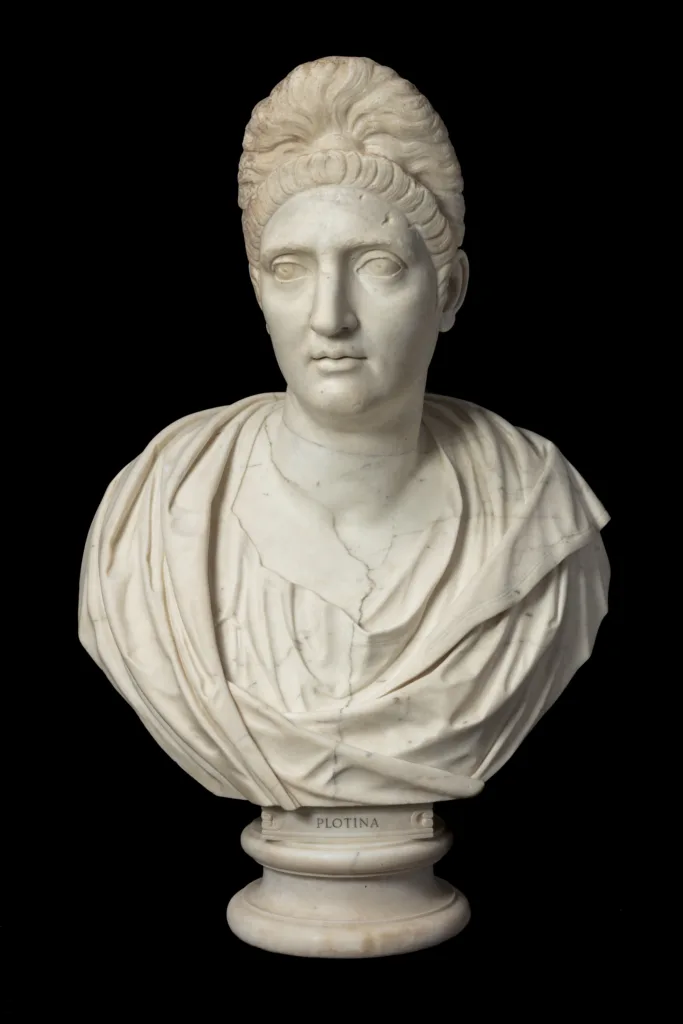
“You can see some of the area that still retains its dirt and grime, and it is night and day,” Segrave says. “The courier who came from the Vatican, he’s one of their conservators. And every single time we hung one of the Vatican objects, he would just be beside himself. He’s like, ‘It’s like I’m seeing the objects for the first time. They look better here than they’ve ever looked at home.’ So we have been feeling great pride in that.”
READ MORE: 10 art exhibitions to catch this month
Imperial power is a central theme of Ancient Splendor, with plenty of coinage, busts, and full-scale sculptural portraits of Trajan, the Empress Sabina, and Caligula. But the exhibition also takes time to consider everyday life, priorities, and experiences. Visitors can explore galleries and displays devoted to the Roman ideal of “otium” (leisure), women, and the workers who fed Rome. Small boxes spread throughout the galleries offer an extra sensory experience—smells of the ancient world. Visitors can lift the lid and take a sniff to experience the floral aroma of a religious ritual or the sharp fish sauce scent of a convivium.
“This show is such a feast for the eyes. But we really wanted to give this more immersive experience and try to think about how we could engage all of the senses,” Segrave says.
Perhaps Trajan’s largest contribution to the art world, Trajan’s Column, the Roman landmark that commemorates Trajan’s triumph during the Dacian Wars, sadly couldn’t make the trip abroad. (It has stood in Rome for the better part of two millennia and is about 100 feet tall.) But that hasn’t stopped Ancient Splendor from celebrating its impact. An interpretation gallery includes an infographic about the column’s spiral bas relief, a video explaining the column’s construction, a 3-D printed panel that visitors can interact with, and a chance to contribute to SLAM’s own “community column” with hand-drawn scenes.
“Trajan’s Column tells the story of the two Dacian wars spiraling around this kind of collective history of Rome,” Segrave says. “We wanted to have our community do that as a part of the exhibition as well.”
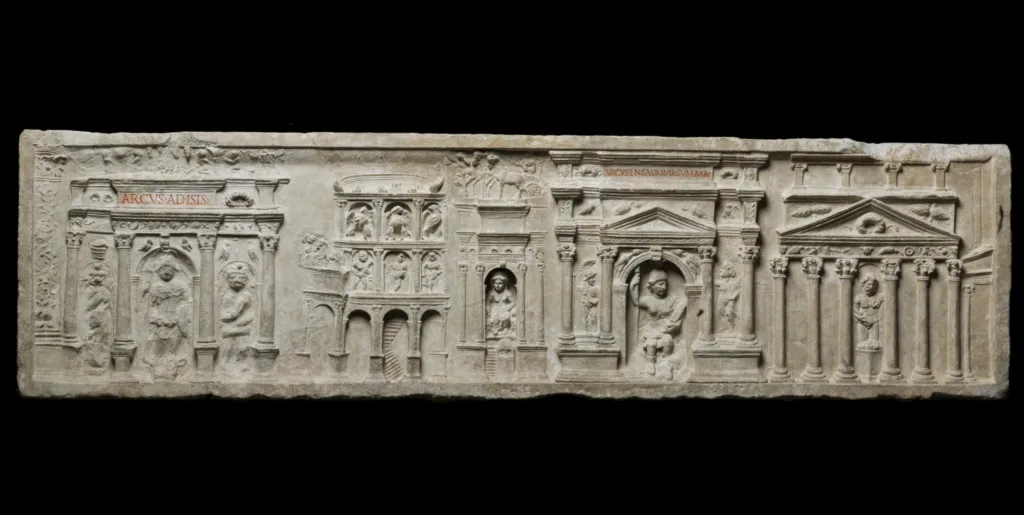
The full exhibition forms a loop, beginning and ending in the same gallery with the impressive “Statue of Trajan from Minturno.” It’s a wise construction for an exhibition that nearly requires multiple laps. Items initially glimpsed through the show’s architecture, like the “Relief from the Tomb of Haterii,” beg for a second viewing once you’ve scanned the intricate front details.
“This is, I believe, the very first time it’s ever been displayed with the back open,” Segrave says. “In the Vatican Museum, they display in these steel frames that everything is inserted into. In the course of exhibiting and researching the exhibition, we realized that the original tomb architectural carving is preserved on the back. And so we were able to design the exhibition so that we could see it from both sides for the very first time.”
Segrave encourages visitors to make as many laps as they need—it was all part of the exhibition team’s plan to keep people exploring the details of these relics of the past while they’re with us.
“I feel so lucky to work with such an incredible team,” Segrave says. “It’s one of the great privileges of working in such a wonderful place with just brilliant, kind, and creative people who have made [Ancient Splendor] into something even bigger and better than I could have imagined. I love that we have the space for the objects to just breathe and to spend time with them. And I hope people come back again and again.”
Ancient Splendor: Roman Art in the Time of Trajan runs March 14–August 16 at the Saint Louis Art Museum. Tickets are available on site and via MetroTix. For more information and a full list of events, visit slam.org.