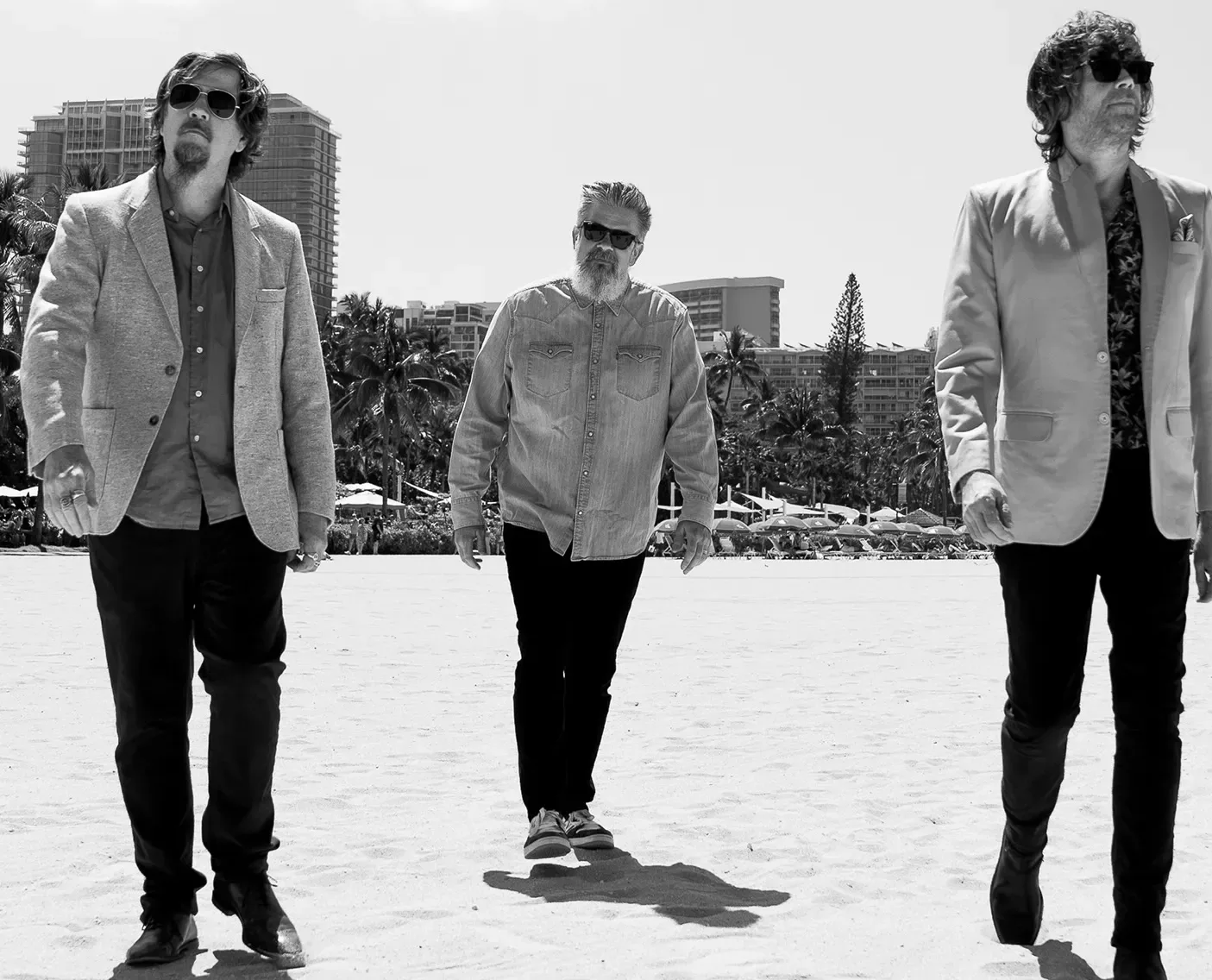
Following a sold-out show at Delmar Hall in May, The Mountain Goats were recently announced as the direct support for grunge legends Candlebox for a short run of shows in September, which includes a show at The Pageant on September 17.
The announcement also coincided with the release of “Candlebox,” the third single from the Mountain Goats’ latest album, Days, which chronicles the story of a small-time band who almost made it, reflecting fondly on their time opening for Candlebox on tour. Ahead of The Mountain Goats’ second visit to St. Louis in a year, SLM got the chance to chat with frontman John Darnielle about “Candlebox,” Days, and the power of great opening bands.
Get a guide to the region’s booming music scene
Subscribe to the St. Louis Music newsletter to discover upcoming concerts, local artists to watch, and more across an eclectic playlist of genres.
Take me through the origins of the song “Candlebox.”
The lead-up to it is that my wife, who also writes music, was at a music residency in Virginia. So I was on solo dad duty for a week or two, and it was in the summer. Summer is traditionally a very productive time for me. After I drop the kids off at camp, then it’s just me in the house, so I tend to start working on songs. I was writing this album that had a ’90s sort of focus, but not exclusively. There’s a song about Renaissance, which is a ’70s prog band, but there’s a very ’90s focus to a lot of this stuff. I sat down, and I was thinking about bands from that era that I hadn’t thought of in a minute. I was at the piano, and I thought of Candlebox. I didn’t look them up to see how they’re doing or anything else. I just went, “I’m going to write this song about a band that gets the nod to go on tour with Candlebox, and they never amount to much else.” This is a common story. There are a million bands that opened for big bands back in the day who you never heard of again, for various reasons. And so that’s what it was about. And when we got to the studio, I said to the producer, John Congleton, “I want you to make this one sound as close to an actual ’90s track as we can get.” And [drummer Jon] Wurster was completely down. He pointed out that if it was actually the ’90s, the drums would be louder than anything else on the track. And Matt Douglas laid down that huge electric. I played the solo. And then my friend Matt Nathanson—who’s the reason that we’re having this conversation, because he ran the open mic night where The Mountain Goats first started—back in the ’90s, he loved everything that was going on. He was very into the moment, whereas I was an indie guy. I listened to stuff that nobody had ever heard of at the time, for the most part. And so I called Matt, and I said, “You have to be on this track.” And he did that amazing bridge, all those backing vocals, and the guy that chimes in at the end of the bridge, that’s Matt. So that’s the story of the song.
This sort of band on the rise, almost on the verge of breaking, has popped up in your songwriting before. “Candlebox” feels like a mirror image of something like “Shelved” off of Goths. What is it that draws you to this subject?
So that’s a good question. The band in “Shelved” is one that’s struggling with changing styles in music. That’s the issue there. But when you don’t have the ambition to be materially successful, when it’s not one of your calculations, then the whole thing is different for you than if that’s an important part of it. A band who jumps on a tour and finds out that the business is not really so much about making music, that it’s only part of it, is going to have the same sort of rude awakening. Whatever line of work you go into—journalism, nursing, music, science—once you get in, your idea of what it was going to be like and what actually constitutes a workday are at odds. I think that’s true in probably every line of work. My line of work is music. And so when you go into music, you go, Oh wow, music is only a little part of what you do. Like people think touring is great, and it is great. But also you’re away from home all the time. Unless you don’t like your home, that’s not a great place to be. In the end, I do think it’s a universal story about the disconnect that happens between your dreams and what happens when you start actually engaging them.
You guys are opening for Candlebox here in St. Louis. By this point, Candlebox has obviously heard the song. How have they responded to it?
Oh, they dug it. As it happens, they haven’t toured in a minute, so that’s a nice thing to have their name present. They get the story because everybody saw stories like that. Everybody remembers, Remember that band that opened for us? They were kind of good. What happened to them? But band stories like that are sort of these hidden stories that probably only the friends or the people who were in the bands know. And in our song, the manager runs away with what little money there is. It’s like a movie of the week, and if it was a real movie of the week, then the band would maybe reunite and get one big show or something like that.
How did this support slot come together?
When bands are touring and they need support or they need an opening act, they send out through their booking agency or through their managers what are called avails. And these go out to clubs and promoters and say what a band is available to do or what they’re looking for. It’s like a job posting. This [avails listing] crossed my manager’s desk that [Candlebox] were looking for support. He said, “It’s right in the middle of our busy season.” I said, “Alright, see if we can get on one or two shows though.” And he said, “I’ll do it. I know this manager.” They talked, and we were able to find a couple slots, and I’m very excited for it. We’ll see what Candlebox’s fans make of us, but we hope to surprise some people in a positive way.
This whole record has some has a lot of reverence for those bands and the mid-to-late ’90s. What made you want to build an album around all of that?
Well, it started as a joke on social media. I had a funny song idea that I wasn’t actually going to write. It was going to be called “Contemplating Pearl Jam in the Carolina Dawn.” So I sang a pretend first verse and chorus of it out in my backyard, and I uploaded that, and I said, “This is from our album Grunges, which will be the sequel to our album Goths.” But there was not going to be any such album. A bunch of my mutuals were like, “Please do that.” And I was like, “No, no, no, I’m not going to do that.” But at that point, I had written a fake track listing for this fake record. And one of the songs was called “Song for Layne Staley.” But I have a poem, which is not the same as the lyrics to the song, about Layne Staley, because he’s a very sad story. Then I started thinking about how these sad stories of young men who get lost in their fame, they feel one kind of way when you’re young. You don’t really understand much about it, and when you’re older, you go, My god, by the time he was 21, this guy was sort of lost in the wilderness, but he’s also getting famous, the worst thing could happen to you if you have some problems and demons. I started thinking about that, about how some of these stories feel different as you age, from further down the line. In that way, I’m sort of able to both engage nostalgia and keep nostalgia a little bit at arm’s length. I don’t like to just look at the past and go, Oh, wasn’t it nice?
As you pivoted away from the fake idea of Grunges, how did you settle on the idea of Days as the topic for the album?
I started to ask myself, What is it that’s funny? And what is it that’s attractive in that idea? And it is something to do with measuring the distance from the past to now and with calculating how different the past looks as you go on. I mean, any given day, today, this conversation, you and I, we’re having a good conversation that feels one kind of way today. And 30 years from now, if we’re both lucky enough to be alive and remembering it, it will have a somewhat different flavor just from being so far in the past because so many things will have happened between now and then. So that’s what I started looking at. The title track notices that your days are short, that you don’t actually have the time to get the full measure of them no matter how many of them you get. So by picking a particular sort of epoch from the early ’70s through the mid ’90s, I’m able to zoom out and then zoom in on thinking about how short our time is.
Coming off of two pretty high-concept records, Jenny from Thebes and Through this Fire Across From Peter Balkan, how was the process different putting together this record, which on its face is a little bit less high-concept and story-driven?
For me, when I’m writing a record that’s rooted in a very restrictive—for lack of a better term—concept like those two, I have to be careful that I’m not writing a song that sounds like I’m just trying to move the action down the line. That’s a concern of mine, that I don’t want to write songs that are placeholders to get the action from one place to the next. That’s a real challenge writing a thematic album. You want to keep the action moving, but you also want each song to have as much weight as it can carry. When I’m writing an album, I write a bunch of stuff that doesn’t get included. Whereas with these other records, a couple songs drop, but for the most part, it’s such a focused process. Whereas writing this record, I have a loose area to enter, but there’s a lot more freedom, I think. Freedom is a mixed bag. I had a song about a thrash metal band that I was super happy with, but it didn’t make it. “Untitled Song for the Singer from Viking,” it was called. And I had a couple others that just seemed to take it tonally here or there. So it is a question of if you do a lot more sort of collage from your parts instead of painting. If you’re writing a big story, you are doing a painting and maybe you erase and add, but all the elements stay on the canvas. Whereas with this, it’s like you make a bunch of stuff in the same area and then you figure out which ones go well together.
This is the second time this year you guys have played St. Louis, and you’ve been no strangers to St. Louis over the years. What is your relationship to the city?
It’s funny. I think the first time I played St. Louis was the Rocket Bar in 1997, I think. And a band who became popular, called Bright Eyes, was opening for us. And they weren’t old enough to be in the venue before doors. They could only be there when they were working. I saw them and they blew me away. Connor [Oberst] was a force of nature. But we’ve just always had some really good shows. I remember specific shows. I forget what year the Tuttlingen Warriors tour was with me and Peter [Hughes], just the duo. Peter on bass and me on guitar. But that was a really legendary show. I can’t quite remember the venue. I can see the inside of it, but I can’t quite remember.
That was the Old Rock House, I believe.
That’s exactly right. And the thing is, having a good show in a town is really a matter of chance. Although the setlist varies less than it used to, the more members you add to the band, the less room you have to completely mix up the setlist every night. But there’s always an element of chance with us that maybe I play a song that happens to pop real nice, or maybe because my patter isn’t planned, I tell a story that makes people laugh, which I did that night. I talked about the “Take Me Fishing” commercial, if you remember that, the old commercial encouraging fathers to spend more time with their children. And I remember telling that story and it was funny that night. And so you develop a relationship through the accident of maybe having a good show one time and the next time you come back, maybe you have that energy of like, Oh wow, it was great last time we were here. And the people coming have that same thing. It’s like they’ve come to the show again because they enjoyed it last time. And we just had a bunch of good shows in St. Louis over the years. And it’s real cool.
What excites you most about this short run of shows that you guys are doing with Candlebox?
I’m playing with Candlebox! But also, it’s a change of pace. And I have to say, I used to be very resistant to the idea of being the opening band because my thought was, if you like my stuff, you already know that. I’m not going to be able to sell it to somebody who hasn’t already engaged with it. That’s how I felt about The Mountain Goats back in the day. I don’t really think that’s true anymore. I think what we do can really bring pleasure to people who haven’t heard of us. That if they see us, they will be pleasantly surprised the opening band kind of kicks ass. I’m really excited for that because that’s the function of being an opening band, to reach some people who didn’t know your stuff and who might find a place to connect, who might find stuff that they’re entertained by.
There’s truly no greater surprise than not knowing who you’re about to see and just having your mind blown.
It’s great. Or even if it’s not mind-blowing, if you just enjoy it. Well, I wasn’t expecting much from the opener, but I wanted to be in my seat, and they were great. I think, as concert-goers, we often start going, What time’s the headliner on? That’s when I’m going to show up. And so, if you show up on time and you catch a good opener, it’s a great night. It’s really fun.