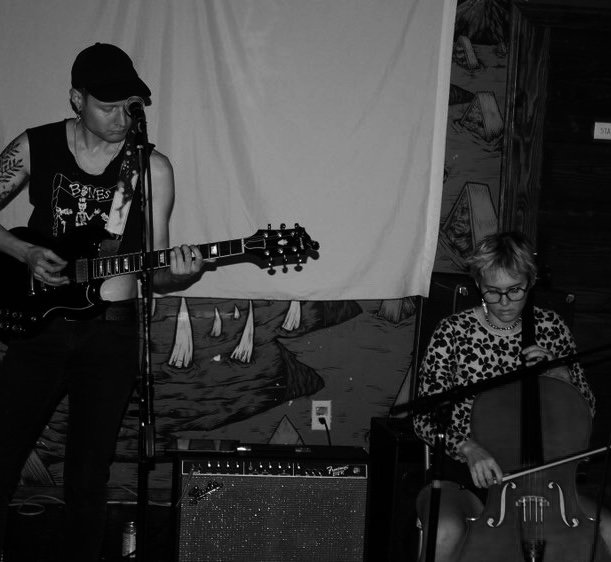
From organizing community-focused music events to performing as the duo Lucky Shells, cellist Mere Harrach and guitarist Jesse Rae broaden the scope of St. Louis music both onstage and behind the scenes. After two years of sculpting a sound inclusive of improvisational music and focused songcraft, Lucky Shells presents its self-titled debut album, a divergent set of seven tracks available now on Bandcamp.
“Right away our music chemistry was great. It was really easy for me to play with the stuff Jesse wrote. But we actually started off playing Connie Converse covers together,” Harrach says, recalling the very first practice between the two.
Get a guide to the region’s booming music scene
Subscribe to the St. Louis Music newsletter to discover upcoming concerts, local artists to watch, and more across an eclectic playlist of genres.
Connie Converse is a deep cut even for music historians and record collectors. Her work in the New York City music scene in the 1950s is among the earliest recordings in the singer-songwriter genre. Converse was infamously private, and she became so reclusive that she cut off contact from family altogether and disappeared in 1974.
Despite learning six songs, Harrach and Rae never performed their Connie Converse set for an audience. Instead, the duo formed Lucky Shells, an ambitious sound-art project that draws influence from the roots of American singer-songwriter music while painting with a sonic palette from the shoegaze, new wave, and free-jazz genres.
Before moving to St. Louis, Harrach lived in Kirksville, Missouri, where they attended Truman State University and spent much of their free time volunteering at the local arts and community space Aquadome, which operated from 2017–2020. Harrach recounts this period as a deeply inspiring time spent playing music with friends and organizing concerts and other events.
“I have a hard time with giving direction sometimes. I really like playing in other peoples’ projects, more so than having them play my own music,” Harrach says. As of this writing, Harrach performs in several different bands, including Jenerator Jenkins, Planters, Piracy, and Orange Foods. While they started on the cello at age 11, Harrach didn’t begin songwriting until after college.
“I play guitar for myself, and I like to write poetry for myself. If they line up, it makes a song. The process is therapeutic for me,” Harrach says, describing their solo folk endeavor, Mold Gold. The project’s Bandcamp page hosts more than 50 songs recorded from late 2019 to November 7, 2024—the release date for the latest full-length album, a blue a dog can see.
“I really like doing recording projects. Not really the recording itself, but the mixing part where you’re also adding some layers is just really fun for me. When I play shows solo I am often a lot more nervous. I typically feel more comfortable playing music with other people,” Harrach says.
It was at Mold Gold’s first live performance in May 2022 where Harrach met future Lucky Shells bandmate Rae. By the end of that same year, the pair had not only played their first show together, but they also co-founded the monthly Experimental Open Mic concert series, which is still ongoing today.
“I had recently been reading about the Kitchen scene in New York. This community center and venue was the starting point for many musicians—Arthur Russell, Talking Heads, Laurie Anderson. It was open to a lot of different forms of media,” Harrach says.
Starting in December 2022, Experimental Open Mic was hosted once a month at the Sinkhole before moving over to the Kerr Foundation in August 2024.
“I thought it would be really great if St. Louis had a space similar [to the Kitchen] that people could just show up and show off their works,” Harrach says. “There are so many open mics in town for guitar music and singer-songwriters, so we wanted to make sure there was a place for people doing electronic, noise, video, and performance art.”
Experimental Open Mic adheres to a few structural rules to promote a smooth experience for both performers and attendees. Sets are capped at 11 minutes, and sign-up lasts from 7 p.m. until the show’s start time at 8 p.m. Although no one needs to pre-register, visual artists are encouraged to reach out via the showcase’s Instagram if they have any special needs such as a video projector.
“I think open mics should be open to anyone and any kind of form of art. A lot of people have a special secret talent that might not otherwise see the light of day, so I think it’s really amazing I’ve been able to see a lot of those with Experimental Open Mic,” says Rae, whose first live performance was at an open mic night at a small bar in Edwardsville, Illinois, in 2008.
Rae’s earliest experiences with music included playing the Miracle Piano Teaching System, a 1990 Nintendo video game designed to instruct young and novice musicians. Rae also took up cello and percussion at an early age before picking up the guitar in high school. After performing in a few short-lived projects, including a stint on saxophone, Rae joined Punk Lady Apple, a multifaceted punk band that ended in February 2024 despite gaining momentum in the local music community.
“My time spent in Punk Lady Apple was very inspiring. Being around some of the most talented and ambitious people really drove me to take music seriously again,” Rae says. While Lucky Shells is Rae’s most active project, they occasionally perform flute and loop-based experimental music under the name Fault.
“With Fault, I’ve always had this fascination with the flute and woodwind instruments in general. I’m not very well-versed in playing flute, but I find that it’s a good vehicle to create soundscapes and produce the kind of horror movie–style scores that I’ve been enamored with for a lot of my life,” says Rae, whose future plans include a full-length Fault album made using techniques and experience gained while recording for the new Lucky Shells release.
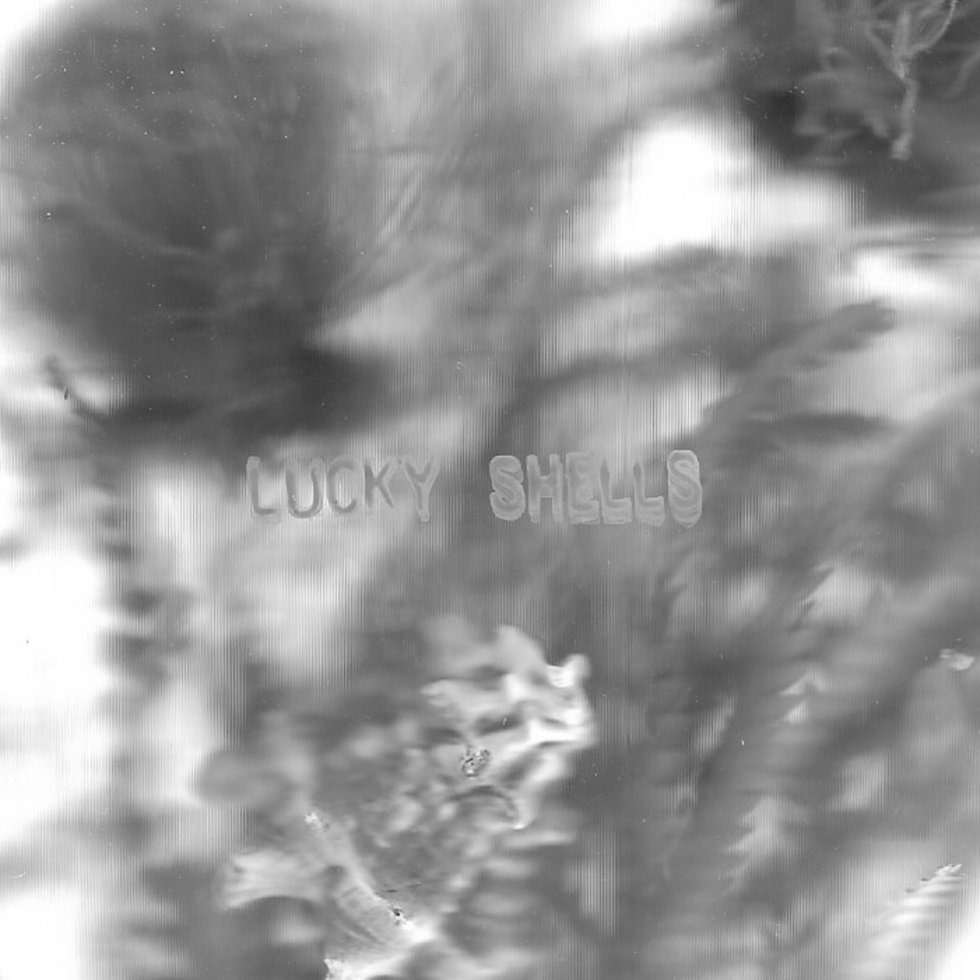
“For [the Lucky Shells album] it was about realizing my capabilities and limitations and applying them to the recordings,” Rae says. “A lot of the process was just learning Ableton and relating my understanding of professionally recorded music and the albums I love.”
Although Harrach and Rae are multi-instrumentalists who have performed in many different bands, the pair describe their songwriting process in Lucky Shells as wholly collaborative, with both members bringing ideas to the table. The duo writes songs with flexible structures, which means that every live show offers a different experience even if the setlist is the same.
“Once we started writing together, we were interested in different forms of improvisational music, from free jazz to harsh noise. Moments of silence and improvisation can add a lot of dynamics and keep the songs fresh and fun,” Rae says.
Onstage, Lucky Shells uses both musical hints and non-verbal cues to navigate structures that can be influenced by mood, environment, or even audience reaction. When working on the album, however, the pair took a slightly different approach by recording cello, guitar, keyboard, and vocals one instrument at a time.
“There are moments on the album where we break off into quieter parts that are more freeform, but it was a lot more structured by the end,” Rae says.
Live improvisation is still present on the aptly-titled “lucky shells theme,” but most of the new record instead features additional layers of bass, synthesizer, and auxiliary percussion to flesh out the pair’s deft songwriting. While drum machine is a more recent addition to the band’s live show, electronic beats are featured throughout the self-titled release.
“I think the album takes deep breaths and releases at times,” Rae says. “I hope people can maybe find catharsis through it.”
The new album has been an ongoing process since the formation of the band in 2022, with the most recent recording sessions happening this year. Thanks to David Beeman of Native Sound Studio, Rae borrowed quality microphones and a compressor to re-record certain sections of the album, leading to an overall upgrade in sound quality.
“I wanted the record to sound the best that it could. I felt like we deserved that to put out something memorable that I could listen to years later,” Rae says.