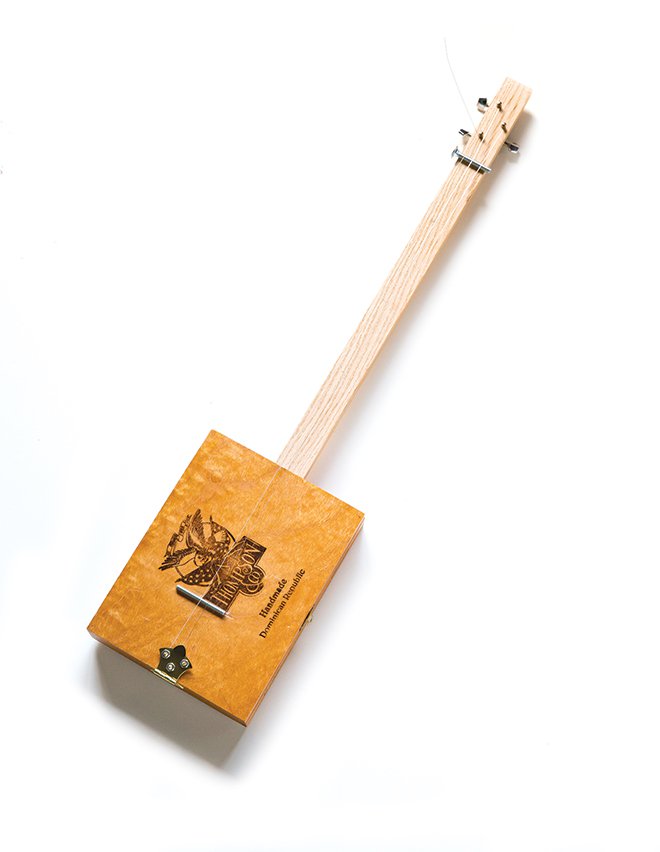
Three strings, three chords, and a box of junk. Toss in a little ingenuity, and you have everything you need for a back porch summertime blues session. The art of making guitars from cigar boxes dates to the mid-1800s, but in recent years these junkyard instruments have been subject to a resurgence in DIY circles. To build our own cigar box guitar, SLM sought the expertise of Gary Herget, co-founder of the St. Louis Cigar Box Festival, held this year on June 3 at Highway 61 Roadhouse and Kitchen in Webster Groves.
1. Gather materials.
Get a guide to the region’s booming music scene
Subscribe to the St. Louis Music newsletter to discover upcoming concerts, local artists to watch, and more across an eclectic playlist of genres.
Cigar boxes can be found on Craigslist for about $3 a pop. Pick up three guitar tuners and a pack of acoustic guitar strings (0.09-, 0.17-, and 0.26-gauge) at your local music shop. Then head to your neighborhood hardware store for everything else: a 3-foot length of 1-by-2-inch poplar or other medium hardwood; two 2.5-inch pieces of ¼-inch threaded rod; a 1.5-inch hinge with six screw holes; and wood glue. Total supply cost: about $30.
2. Attach neck.
Cut a 1.5-by-¾-inch rectangle into the box’s right sidewall. The hole should be positioned so that the neck can slide through and rest flat against the inside of the lid. Be sure the neck is lined up straight, then glue it to the box. Use clamps or heavy books to weigh down the neck while the glue sets (about24 hours).
3. Set scale length.
Use a knife to make a shallow notch near the middle of the box, where you’ll set your “bridge,” a threaded rod. From here, measure 25.5 inches up the length of the instrument and make a similar notch in the neck. You’ll place the other rod here.
4. Install tuners and tailpiece.
Two inches above the second notch, use a ¼-inch drill bit to make three holes to fit your tuning pegs. Screw the tuners into the backside of the neck, then drill the hinge into the bottom of the instrument with the loose end pointing down the neck.
5. String up and play.
Feed the strings through the hinge holes and into the tuners so that the thickest string is on top and the thinnest on bottom. Tune the strings to G, D, and G. Grab a smooth piece of metal or glass for a slide and start strumming.