There was fanfare and palpable relief earlier this year when Governor Mike Kehoe signed into law sweeping legislation designed to boost the economic prospects of downtowns across the state. And now, backers of the Missouri Innovation, Public Safety, and Accountability Act say they’re already beginning to see results, even as the state and cities are still devising how to fully implement the newly created programs.
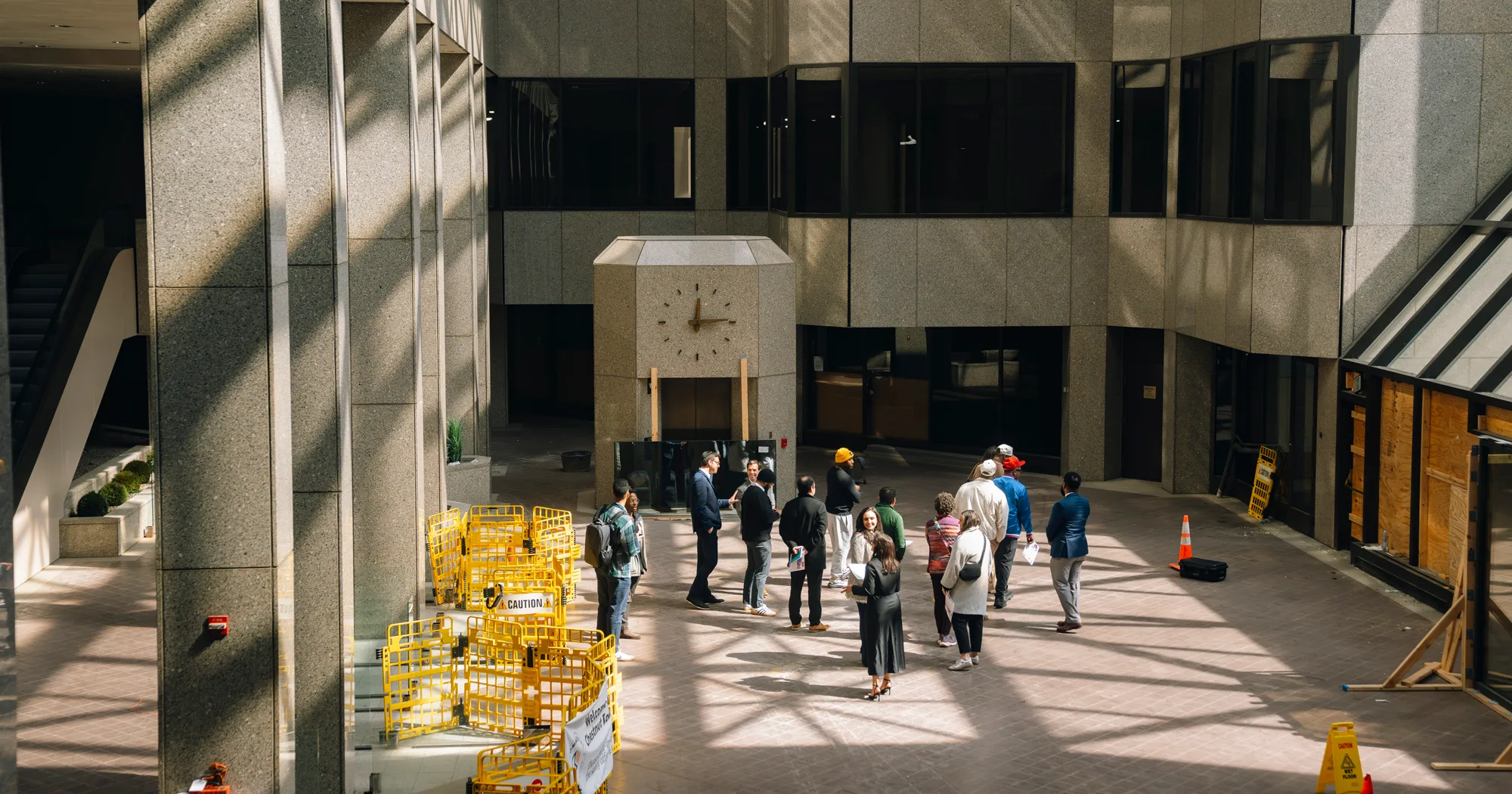
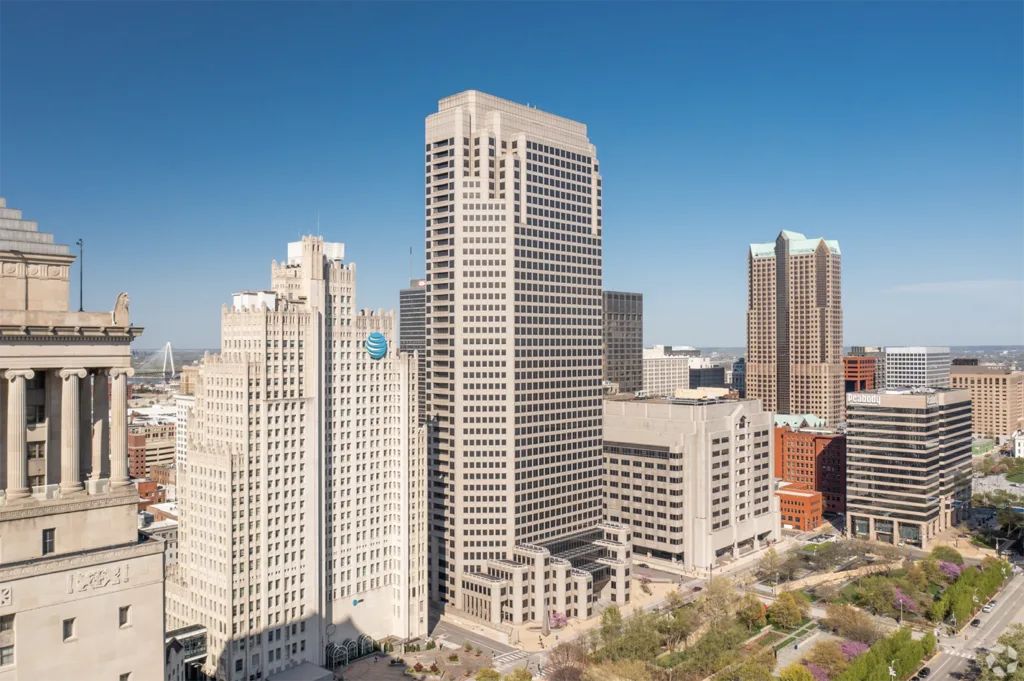
“We’re already seeing increased interest in the market,” says Charles Goldman, managing partner of the Goldman Group, which focuses on the adaptive reuse of historic property, primarily into multifamily and mixed use. In the vein, he’s leading a roughly $350 million plan to redevelop the long-vacant and massive AT&T Tower downtown from office to residential use.
Keep up with local business news and trends
Subscribe to the St. Louis Business newsletter to get the latest insights sent to your inbox every morning.
Also interested in getting involved are business partners Dave Marson and Tyler Wallace, who say they’ve recently started exploring the opportunity to invest in Downtown St. Louis.
“A lightbulb went off for both Dave and I, that this is super advantageous, super interesting,” says Wallace. “We understand what a heavy lift it is to get something like this going. Dave and I have both been good with our long-term vision and seeing what this could be, not only two, three years down the road, but 10, 15, 20 years [too].”
The two come from the world of food manufacturing, having most recently sold Marson Foods in 2025. They’re interested in establishing a new facility in the St. Louis region. Wallace says the new legislation and seeing Goldman’s commitment to the AT&T Tower piqued their interest.
“Something like this starts the momentum, and people have to get on board. It takes a lot of other smaller ancillary projects centered around these larger projects for something to be like this to be super successful,” he says. “There are a lot of people kind of sitting on the sidelines that need a little bit of a push.”
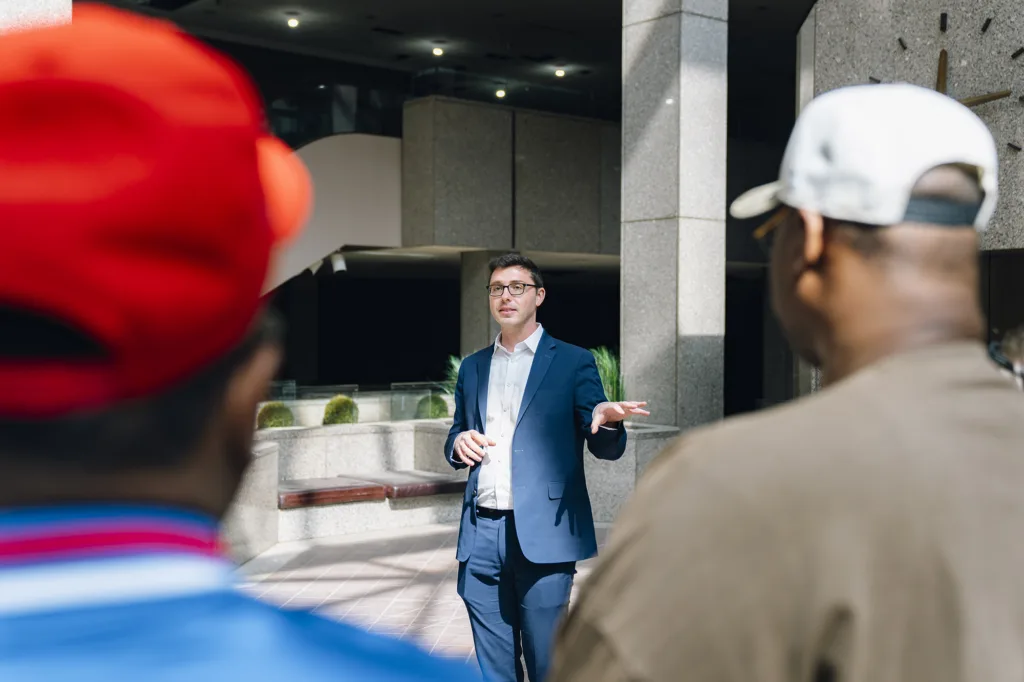
It’s exactly what Goldman hoped would happen. He says his own plans depend on others investing in their own projects alongside him.
“If the community around AT&T is not being developed and improved at the same time and pace, the likelihood of success is much lower than if the community were improving alongside it,” he says.
Goldman was a key advocate for the new law, and his project stands to directly benefit from one of its new provisions, state tax credits capped at $50 million annually for up to 25 percent of certain conversion expenses. He says they’re essential to his project’s viability.
While these tax credits became an easy proxy for describing what the legislation does, Goldman is more keen on how the new law lays out a clearer structure for development to occur in a place like St. Louis. The region’s reputation as a challenging place to get projects completed precedes itself, something Goldman has heard frequently in conversations with investors and other developers beyond St. Louis since launching his quest to transform the AT&T Tower.
“The biggest [sentiment] has been, ‘The project sounds great, but the market is strained,’” he says. “It’s important to say St. Louis doesn’t have a great track record. Investors look and they see property depreciation, population decline, and public safety issues. Whether perceived or reality, it doesn’t really matter. These things come together and they frankly deter investment.”
But Goldman sees the framework laid out by the Missouri Innovation, Public Safety, and Accountability Act restoring confidence in the St. Louis market.
“Its perspective on the economy is very holistic, broad, and comprehensive and it recognizes that individual projects are not what result in a successful community,” he says. “It’s a whole host of things, including basic quality of life improvements that create connectivity block-to-block.”
Part of this comes through the ability for cities to create “innovation zones,” which are designed to benefit their core and must be organized around a defined downtown or designated main street. Those areas come with a collection of incentives designed to boost new development and other forms of investment, but also ones to lure out-of-state employers and encourage existing companies to keep jobs downtown.
There’s also a provision to have half of new sales and income taxes generated within an innovation zone be applied back into it, with the majority going to public safety or infrastructure expenses. And the law has the Missouri Department of Economic Development establishing a standardized project development scorecard, as well as having cities establish a “one-stop shop” to coordinate development, business, and incentive applications for projects within an innovation zone.
“It creates a more cohesive, predictable, and certain framework for investment,” Goldman says. “Helping investors see that downtown and that the city has a broader, comprehensive strategy and vision for what it could become. And not just a pipe dream, but the actual tools and resources to help the city become greater and attract investment and improve its quality of life.”
The state Department of Economic Development is working to finalize their rules and regulations, which Goldman says they’ve told him is likely to come by the middle of next year. St. Louis also has to develop the plans to make its downtown an innovation zone as well as establish that one-stop shop for development applications.
On that front, St. Louis Development Corporation president and CEO Stephen Westbrooks sees the benefit of having a more streamlined and efficient process for developers.
“It builds transparency into what that approval process is: the application process, review process, the way applications may be routed across the different departments and quickly arriving at a decision,” he says. “That would be something new for the city. We have to think about how we best leverage technology; online applications and things like that, that can help make the process as efficient as possible.”
Westbrooks calls it the kind of innovation that would greatly improve how St. Louis reviews development proposals, offering applicants better expectations of what kinds of incentives they’ll likely be approved for and how long it all will take. These operational changes will initially only apply to projects within the innovation zone boundaries (which the city must still determine), but he sees how they could eventually apply to development projects in general.

“I think it does create opportunities for us to explore how some of the solutions that we design as part of this legislation may be more broadly applied in the future,” Westbrooks says. “But we’re taking it one step at a time.”
Still, he sees this new law, once fully implemented, creating broad opportunities for businesses to invest and contribute to the redevelopment of downtown St. Louis.
“It really is a much larger opportunity than thinking about this as office-to-residential conversion that might impact a couple of large assets downtown,” he says. “When you really get under the hood and start thinking about what this legislation is asking, you start to see that it can have significant impacts on the way that we do development.”
And that could help people like Wallace and Marson. Wallace is clear that he and Marson aren’t traditional real estate developers, and don’t plan to be. But he says they can still fit into the constellation of downtown revitalization given their background in food manufacturing and intention of continuing in that space.
“It doesn’t need to be our main manufacturing facility, but that does allow for us to develop things that are ancillary to our core business,” Wallace says. “There’s a lot of other general opportunities that we’ve been looking at. Potentially doing some type of innovation center or R&D type facility where we can even do some masterclasses, [or] education centered around food and baking, and stuff like that.”