For years, Detroit served as the go-to example of the kind of American city to avoid turning into.
The Michigan city suffered blow after blow—the 2008 financial crisis threatened to topple its dominant car manufacturing business sector, its mayor was embroiled in a corruption scandal that resulted in a criminal conviction, and the city’s municipal bankruptcy filing in 2013 was the largest in American history when measured by debt (over $18 billion).
Keep up with local business news and trends
Subscribe to the St. Louis Business newsletter to get the latest insights sent to your inbox every morning.
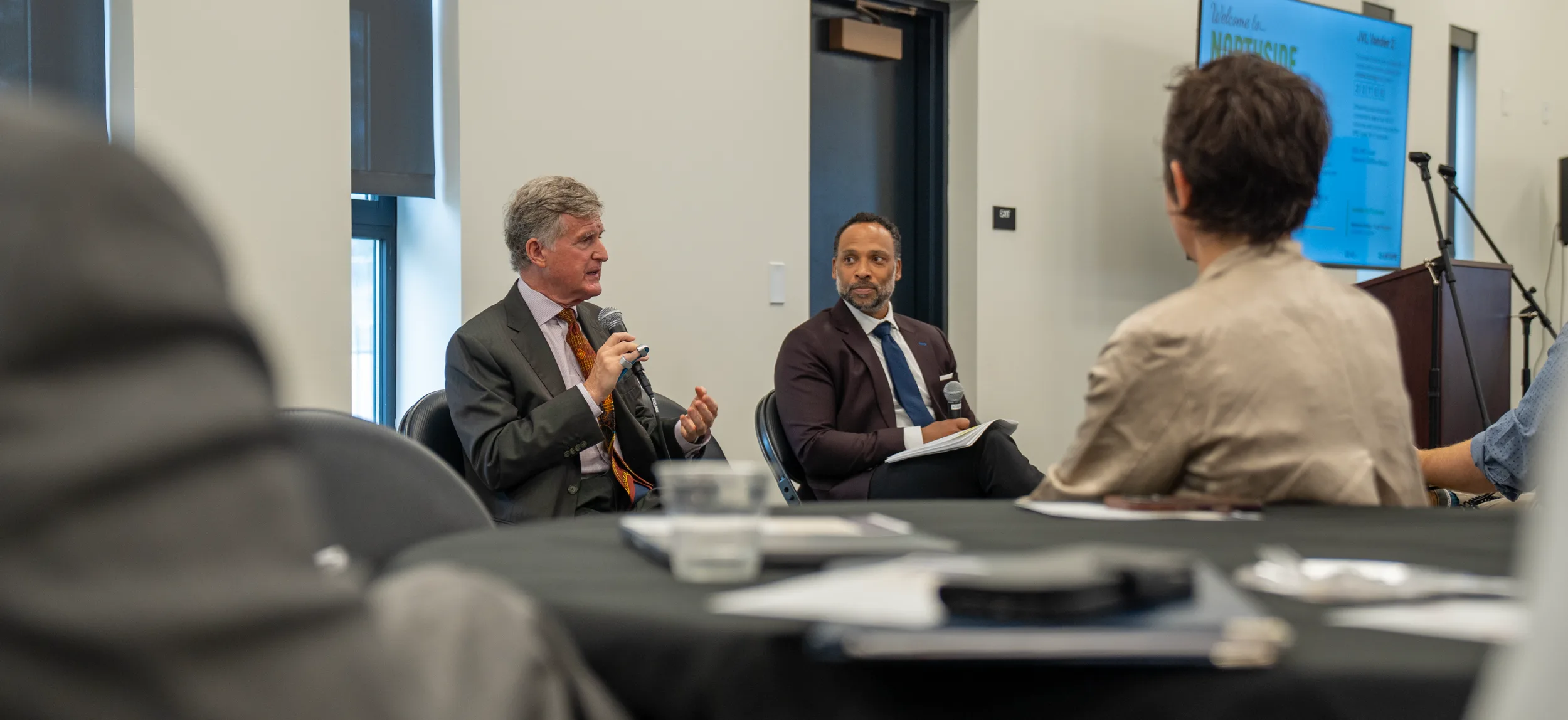
“Detroit was everyone’s poster child for municipal dysfunction, not only politically but financially. The combination of the indictments and the bankruptcy were devastating,” said Rip Rapson, president and CEO of the Detroit-based Kresge Foundation.
But the city has managed to leave many of those problems in the past, earning praise from The Wall Street Journal and The New York Times for its thriving downtown and overall rebound. Naturally, local leaders in St. Louis want to spur the same kind of turnaround, and looked to glean lessons and pointers from Rapson and the Kresge Foundation, a philanthropic organization that looks to boost American cities through grantmaking and social investing in a variety of sectors.
Rapson obliged during a Tuesday morning event moderated by St. Louis Development Corporation president and CEO Stephen Westbrooks. It also featured remarks from St. Louis Mayor Cara Spencer, St. Louis Community Foundation president and CEO Kelvin Adams, and James S. McDonnell Foundation vice president of strategy and programs Karl Guenther.
Rapson has had an upfront view to Detroit’s struggles and triumphs, having come to the organization in 2006.
“We were looking at a level of blight and abandonment that by any municipal standard, was almost unimaginable—100,000 vacant and abandoned and blighted properties. The tax base was non-existent.” he said. “For the better part of three or four years, Kresge worked with other philanthropies and a handful of private sector actors to put together some form of scaffolding, bodies of work that could hold until the public and the private sectors resume their rightful role.”
He said the foundation pieced together a “sort of municipal agenda” that gave way to addressing challenges of commercial corridor revitalization; helping local hospitals, educational systems and arts and culture organizations regain their footing; and organizing community hubs in neighborhoods with significant vacancy and blight as a way to understand what could be redeveloped and what should remain open space—“trying to understand in very particular terms what kinds of investable propositions could land in those places,” Rapson said.
He added that it’s essential that local residents and organizations are empowered to form and execute plans that directly affect their neighborhoods. Collaboration was a throughline in his comments, as he noted that no one type of organization—be it public, private, philanthropic or community based—could alone deliver the type of change that was needed.
Rapson reiterated this when describing an expectation that Detroit’s business community could by itself figure a way out of the mess.
“No mayor can pull this off alone. No civic culture can pull this off alone. No nonprofit culture can pull this off alone, and no business community can pull this off alone,” he said. “I don’t mean to make it sound so simple. It’s very complex. It often involves very difficult negotiation and frustration and politics. Who’s in charge? Who’s really taking the lead on this?”
One of the most poignant moments came when Rapson hit on the perils of inaction.
“Stasis is a crisis. Whether it’s health disparities, underemployment, disinvested neighborhoods, whatever it is,” he said. “In many ways I think that’s what you have in St. Louis. I mean, to drive through the Northside of town and think that’s OK is not OK.”
Ultimately, Rapson argues Detroit’s success was less about specific projects, such as revitalizing its riverfront, building a new streetcar, or converting empty lots into new uses, than it was about creating a feeling for those in the city.
“We created a quality of life in Detroit that was vibrant, even for people without deep resources,” he said. “That means you don’t just focus on downtown. You focus citywide and you give people a sense that this is a place they want to build.”
When reflecting on Detroit’s journey and the road ahead for St. Louis, Rapson sees kindred spirits.
“You have a set of assets here that is just stunning to an outside observer, that don’t always seem to work in unison, that there seems to be divergent trains of thought about how to move forward,” he said. “[It] just struck and strikes me as deeply reminiscent of Detroit.”
The local panel of speakers said Rapson’s comments resonated with them as they took on a hopeful tone when describing St. Louis’ future.
“I think for the first time in my lived experience in the St. Louis region, the critical mass of the business community, the philanthropic community, the civic community, and the population at large recognizes that we have to come together in some very meaningful ways to address and fix the underlying structural issues,” Mayor Spencer said.
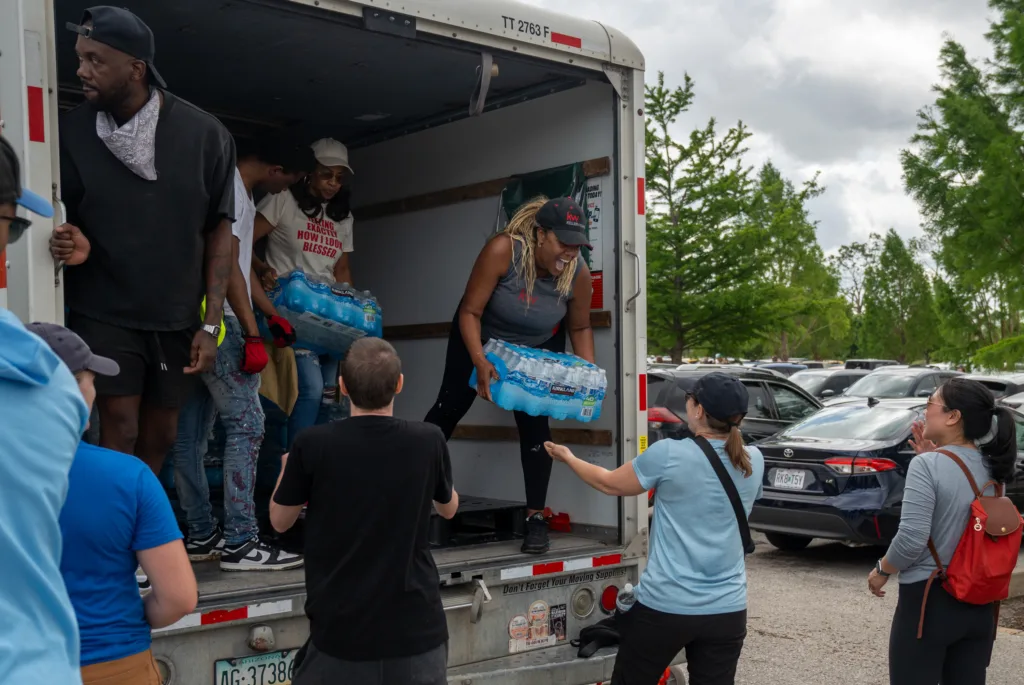
It’s a perspective she underscored by describing the way many aspects of the St. Louis community—private corporations, local nonprofits and community organizations, regular citizens, and the local government—all had the will to mobilize in response to last year’s devastating tornado.
The St. Louis Community Foundation’s Adams noted a similar alignment taking root in the broader region, but lamented how easily local organizations get distracted by other priorities. He points to Detroit’s bankruptcy as clarifying priorities for local action.
“In Detroit, it seems that you’re playing the long game. You’re willing to do the hard work over time,” he said. “St. Louis has to think about the same thing. How do we commit to long-term addressing [of] serious problems and not address it for three, four or five years, let it go [and] look at something else.”
The various plans for different aspects of St. Louis’ revitalization drafted by a litany of organizations in the region are evidence of this, Adams added.
“First of all we have too many plans,” he said. “Part of the challenge is that we have not built the muscle around implementation.”
Rapson agrees, and added that successful implementation of revitalization projects depends on effective collaboration. “Create constellations of folks who have that competence, who have that commitment, and maybe even that capital to build that machinery,” he said.
Many points in the discussion drew hushed murmurs of agreement from attendees, many representing local nonprofits engaged in these kinds of efforts on the ground. A few commented afterward, however, on the noticeable lack of representatives from key local business organizations “who would have benefited” from hearing the conversation as well.
Each speaker concluded with a call to action for driving positive change for the region. Spencer implored the audience to engage with people or groups they may vehemently disagree with.
“I challenge you to think about what if they’re right. What if there’s some validity to their perspective, or maybe their perspective is rooted in something that has some real validity behind it, and identify something that you can agree with,” she said. “I think at the core of all of our motivations across all of these segments is the desire to see St. Louis succeed.”
Guenther of the James S. McDonnell Foundation agreed with that viewpoint when it comes to working collaboratively.
“Inherent in that might be conflict, debate, dialogue, and to remain committed and engaged in working through those processes together around real, tangible, actionable change,” he said.
Adams issued the challenge for individuals to shed their egos and consider how they can work in concert with others.
“What’s my role in the work of change?” he suggested they ask themselves. “Who else is doing the work that I can partner with? How am I impacting the residents that I want to impact?”
Rapson also shared how local philanthropy can evolve the way it supports revitalization efforts.
“Expect your philanthropy to take risks. If there is anything philanthropy can do, it can move outside the comfort zone of a private sector or a public sector,” he said. “Take risks that are commensurate with the magnitude of the challenges this community faces.”