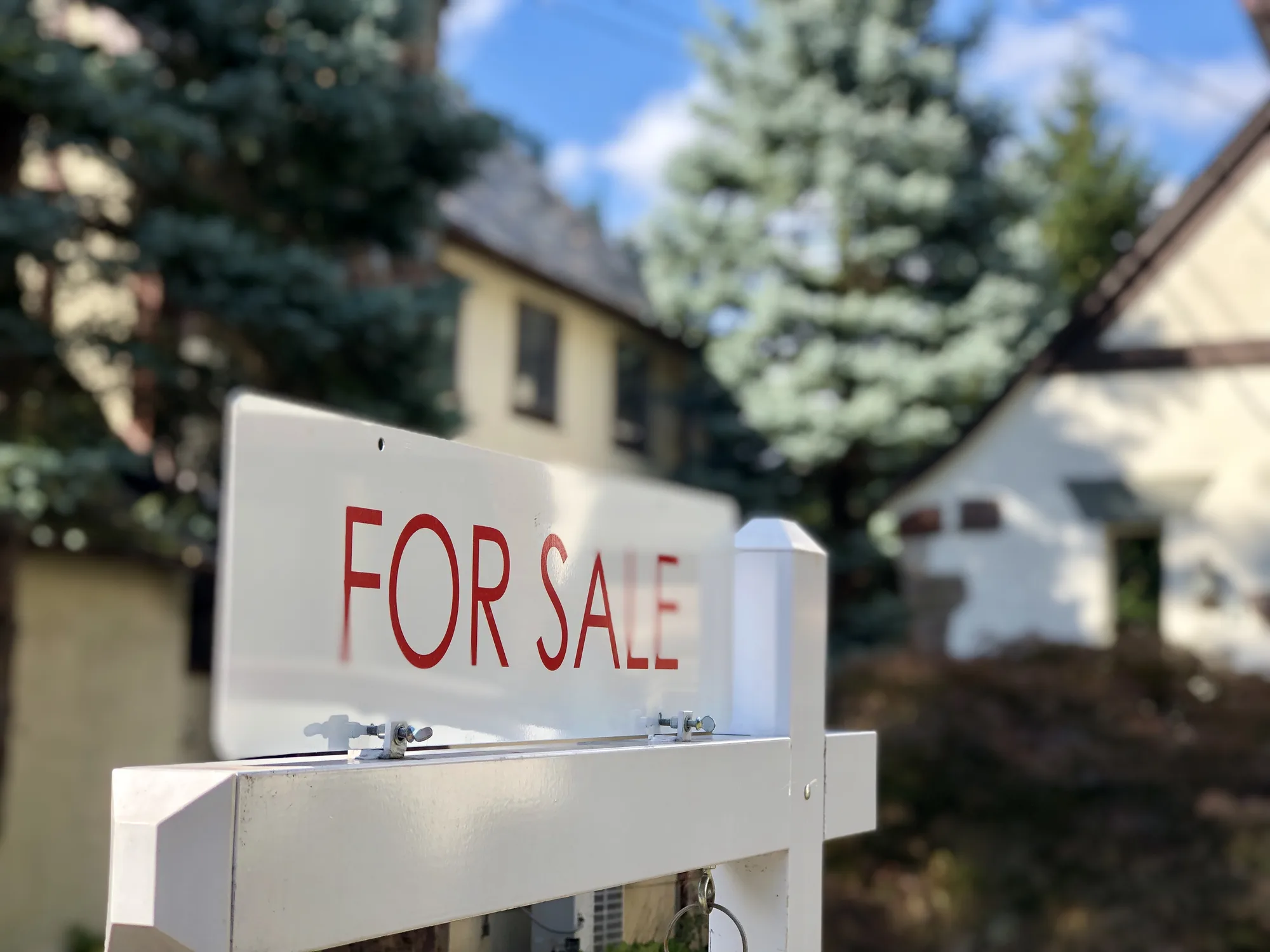
In some parts of the U.S., the real estate market is cracking. Nashville, for example, has become a buyer’s market, with sellers outnumbering prospective buyers by 111 percent. Austin is even worse, with 128 percent more sellers than buyers, according to a Redfin analysis. That’s left sellers forced to slash pricing or try to wait things out for months. Some are delisting their homes entirely.
Things are much better in St. Louis (a sentence you may be unaccustomed to reading). Local real estate agents say they’re coming off a great 2025 and they anticipate that once things get a little warmer, 2026 should be just as good.
Keep up with local business news and trends
Subscribe to the St. Louis Business newsletter to get the latest insights sent to your inbox every morning.
“We don’t have the vulnerability or the variability that these other markets can have,” says David Lemon, a real estate agent known for his popular Instagram videos. “We just don’t have that. Our highest of highs are not as high as anybody else, but neither are our lowest of lows. Our standard deviations just are smaller.”
Indeed, both Austin and Nashville were dealing with red-hot demand, which led to building booms giving way to an oversupply that now seems to be turning into a bust as many buyers decide to sit things out.
For its part, St. Louis has seen demand exceed supply ever since the early days of the pandemic. Predictably, prices increased. The number of days on the market dropped. But things never reached the frenzy that happened in the Sun Belt, and as a result, our return to normalcy has been much slower and healthier. As the market has cooled a bit, it’s been less a crash landing and more a case of greater opportunity for buyers. Now, local agents say, it might take a month to get a home under contract—and it might get one offer over asking, not 12. That’s a balanced market, not one in distress.
That said, in some parts of St. Louis, cautions Ted Wight, an agent with Dielmann Sotheby’s International Realty, houses continue to fly off the market. Sellers in highly desirable subsections of the market such as Ladue, Kirkwood, and St. Louis Hills can still expect multiple offers soon after being listed.
“Last year, if you had a home in Kirkwood, you could easily get 10 offers, and it could go for 20 percent over asking price, and then, like, waving inspections,” he says. “It was a little wild. It was exhausting for buyers.”
Both Wight and Lemon expect that to continue this year—but only in the metro’s most popular markets. “The mid-county areas close enough to the city, but in school districts that people typically really love, are always going to be that way,” Lemon predicts. “And for the higher end market, let’s say anything above $750,000, they’re also going to be quite competitive, especially if they’re move-in ready homes, and they will continue to be that way for out throughout 2026, there is no doubt.”
It’s in neighborhoods perceived as less desirable, and for less desirable houses, where the St. Louis market now feels in balance. “It might be a fixer-upper, a good house that just needs to add some cosmetics to it—you’re seeing that last on the market for multiple weeks right now,” Lemon says. “That’s where buyers are getting a much better chance of getting something under contract on their first offer.”
And so the savvy buyer might head to those neighborhoods first rather than try to compete in the hotspots. Both Lemon and Wight mention Affton as an area where people are now seeking out comparative bargains. Wight also says Overland is seeing activity.
The real estate market is always much quieter in December and January, but starts to shake off its hibernation in the early spring. Both Lemon and Wight foresee a busy spring, summer, and fall.
But even with more balance, this may not be a market for investors looking for bargains. Overall, Wight cautions, years of slow and steady price increases have made their mark, to the point that out-of-town buyers who’ve heard about St. Louis’ inexpensive real estate often find themselves offering a gentle corrective to locals: No, this is no longer cheap. Data from the St. Louis REALTORS show that home prices were up 9.1 percent in December from the year prior—and the 2024 marker already reflected years of steadily climbing sale prices.
Wight says, “If we compare now to St. Louis pre-COVID, you used to be able to buy a nice house for a million dollars in Ladue, and now suddenly, that same house probably cost you $2 million. That cute bungalow in St. Louis Hills that you used to be able to get a while back for like $180,000, it’s now 325,000.” And that, it appears, is St. Louis’ new reality.