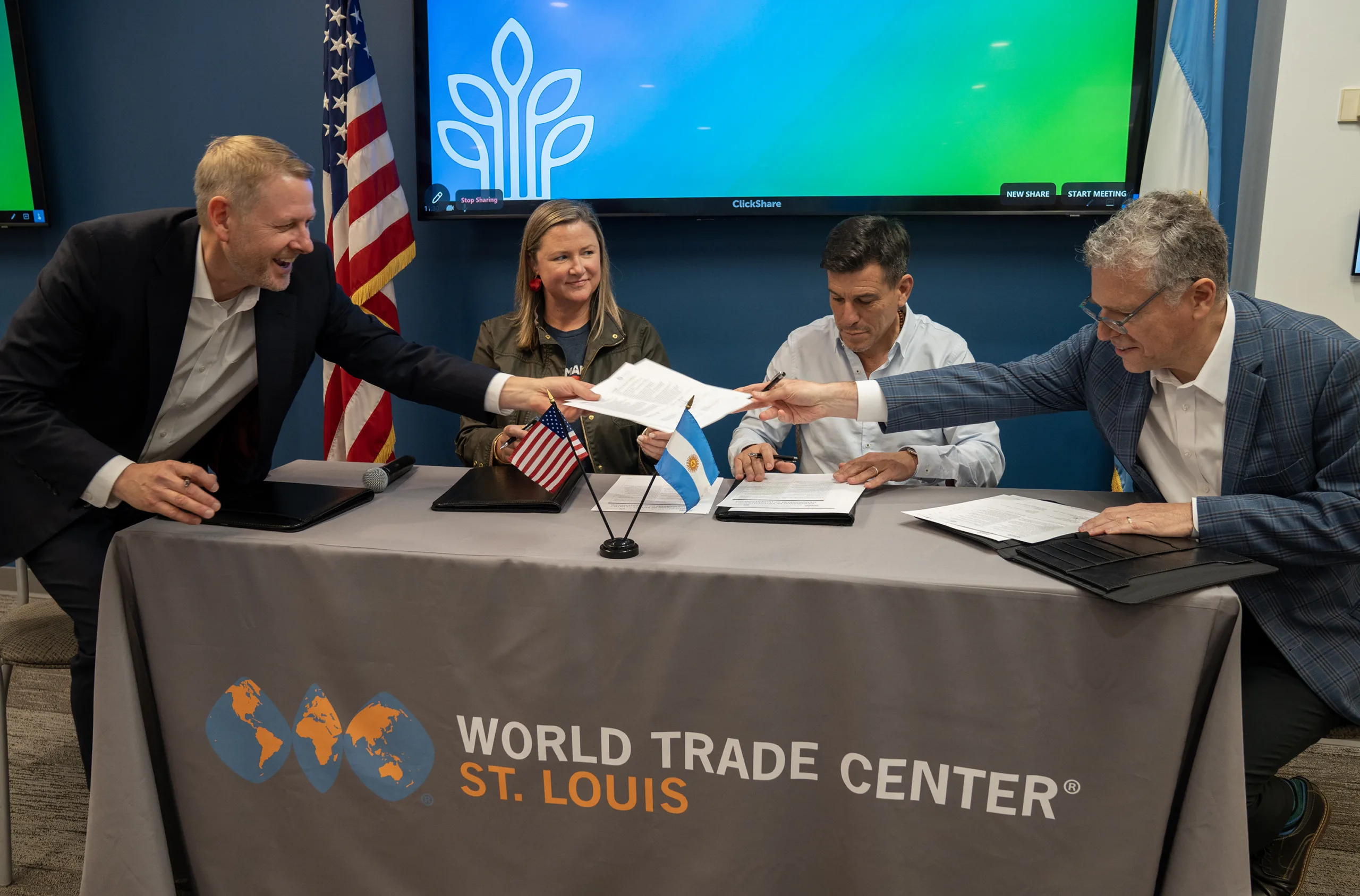
Leaders in St. Louis’ agtech scene doubled down on their efforts to make the region a global player in the sector with the signing an agreement Friday to collaborate closely with their industry, academic, and governmental counterparts in Córdoba Province, Argentina.
The signing of the non-legally binding memorandum of understanding came at the end of a trip to St. Louis by a delegation from Córdoba that included the province’s governor, head of economic development, minister of bioagroindustry, and other high level agriculture and innovation leaders in Argentina.
Keep up with local business news and trends
Subscribe to the St. Louis Business newsletter to get the latest insights sent to your inbox every morning.
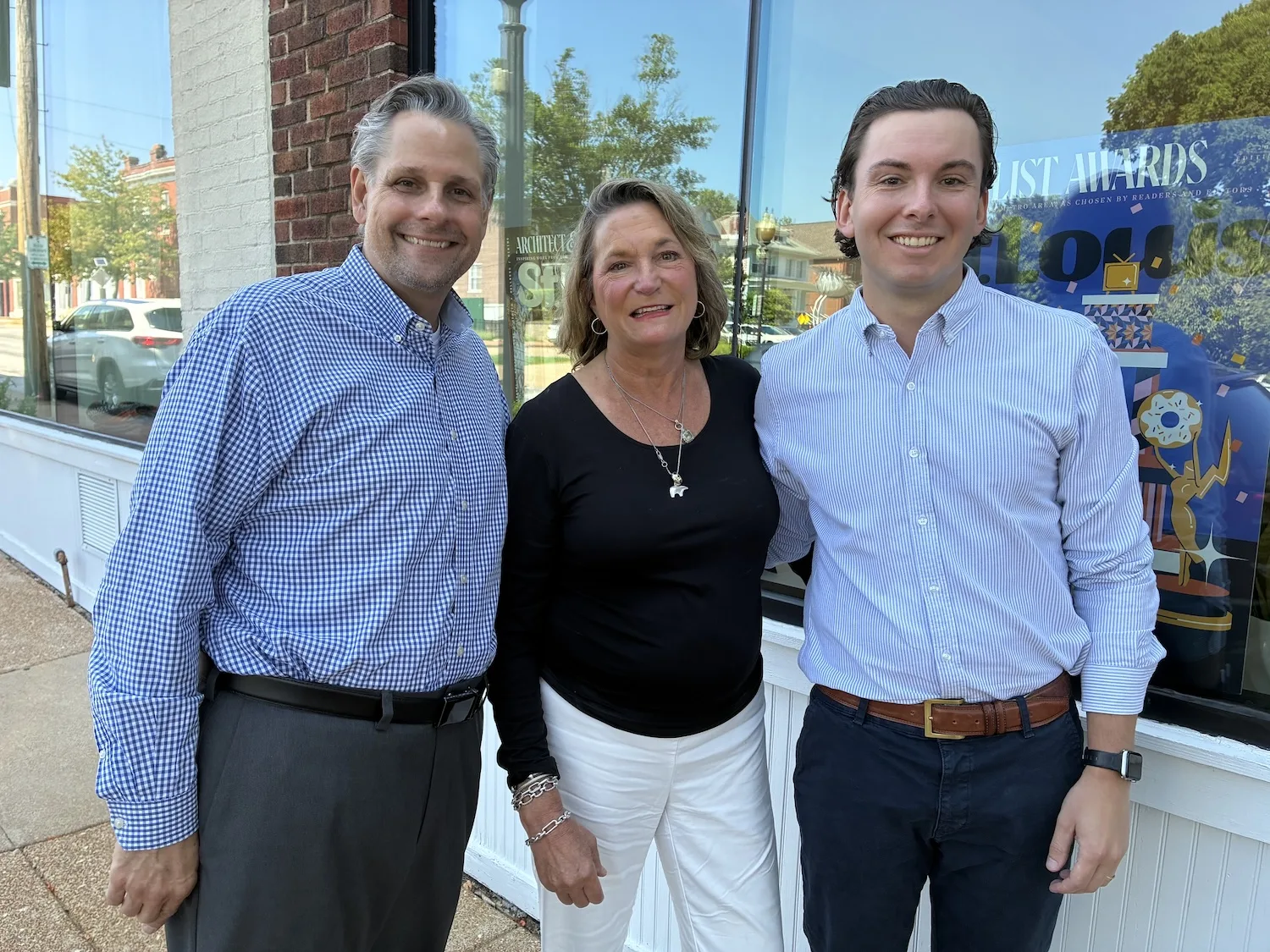
“There will likely never be another time that [they] are [all] here at the same time,” says Stephanie Regagnon, interim executive director at the Yield Lab Institute, a St. Louis-based nonprofit think tank that focuses on the agtech, food and agriculture sectors.
She says the visit and agreement are a natural extension and evolution of the relationships St. Louis started building with Argentina nearly a decade ago. The agreement calls for agtech-related organizations in St. Louis and Córdoba to strengthen communication and information sharing and to facilitate ways for companies in either region to expand or relocate to the other.
“It provides an opportunity for businesses here who want to look towards South America, Latin America, whether it’s business relationships, a new market for their goods,” says World Trade Center executive director Tim Nowak.
The same goes for businesses in Argentina looking to find footing in the North American market.
“You have a home here in St. Louis,” he says. “You’ve got an opportunity to do business, make connections in a region [where agtech] is our strength. This is what we do best.”
Gonzalo Valenci, executive director of Córdoba innovation agency, says the province has an eye on connecting agricultural development with innovation and wants to visit what it considers advanced innovative ecosystems, like St. Louis has.
“It’s not strictly a business trip,” he says. “It’s more like a building relationship trip to see what further opportunities we can generate.”
Valenci says that could be more startups from his country establishing roots in St. Louis, through applying “for instance, to Arch Grants,” or more connections between the academic institutions in each respective region.
“We also want startups from St. Louis to come to Córdoba,” he says, adding their placement in the southern hemisphere effectively gives U.S.-based companies exploring agricultural innovations a second growing and harvesting season each year.
Regagnon shares this sentiment, emphasizing the new agreement builds on the Cultivar Initiative led by The Yield Lab Institute (with support from local organizations including BioSTL, World Trade Center, and 39 North). It strives to create more collaboration and partnerships between St. Louis and South and Latin American agricultural and food-related companies and organizations, she says.
“This initiative has been gaining momentum, and now there’s going to be some additional capacity to really make Cultivar what it could be,” she says. “Outcomes [such as] startups coming to St. Louis, [or] startups based in St. Louis growing more rapidly due to these connections to South America.”
Regagnon stresses the newly formalized relationship will be far from one-sided.
“We have a lot to learn from Córdoba and a lot to learn from our friends in [Latin America], specifically on things like farmer engagement,” she says. “We need to reciprocate this visit and take a whole delegation there very soon.”