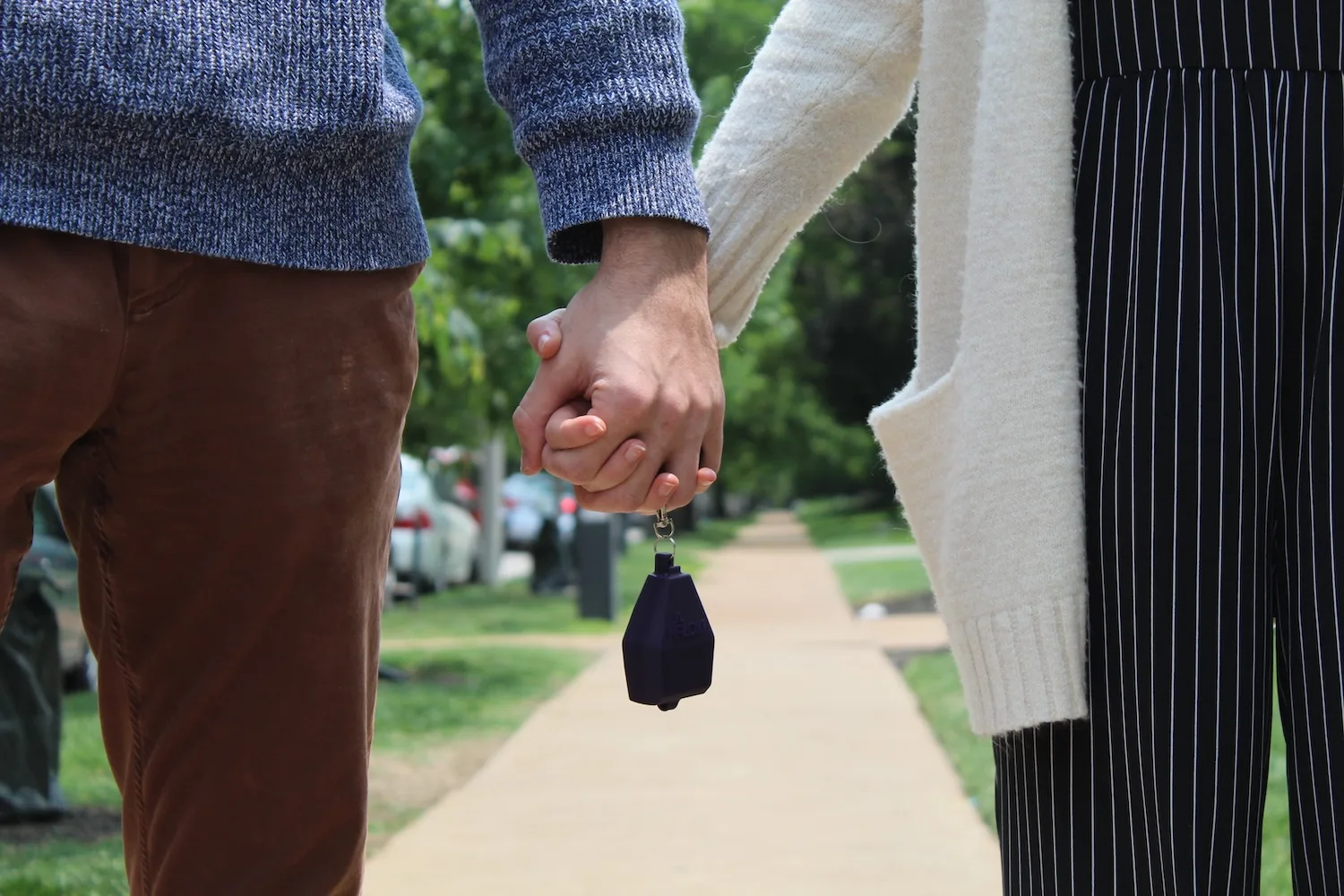
One sweltering August night, when the fire alarm went off in their dorm and the air conditioning was broken, two undergrads found themselves sitting outside and having their first conversation. The first thing she asked him was, “What is your deepest darkest secret,” and because he was so bewildered she asked, he told her. Now, after almost eight years together, the couple is set to be married at the Saint Louis Art Museum in April of 2026, and together, developed a product to help save lives. It’s called Nalox-1, and their company, nCase Tech, is all in on St. Louis.
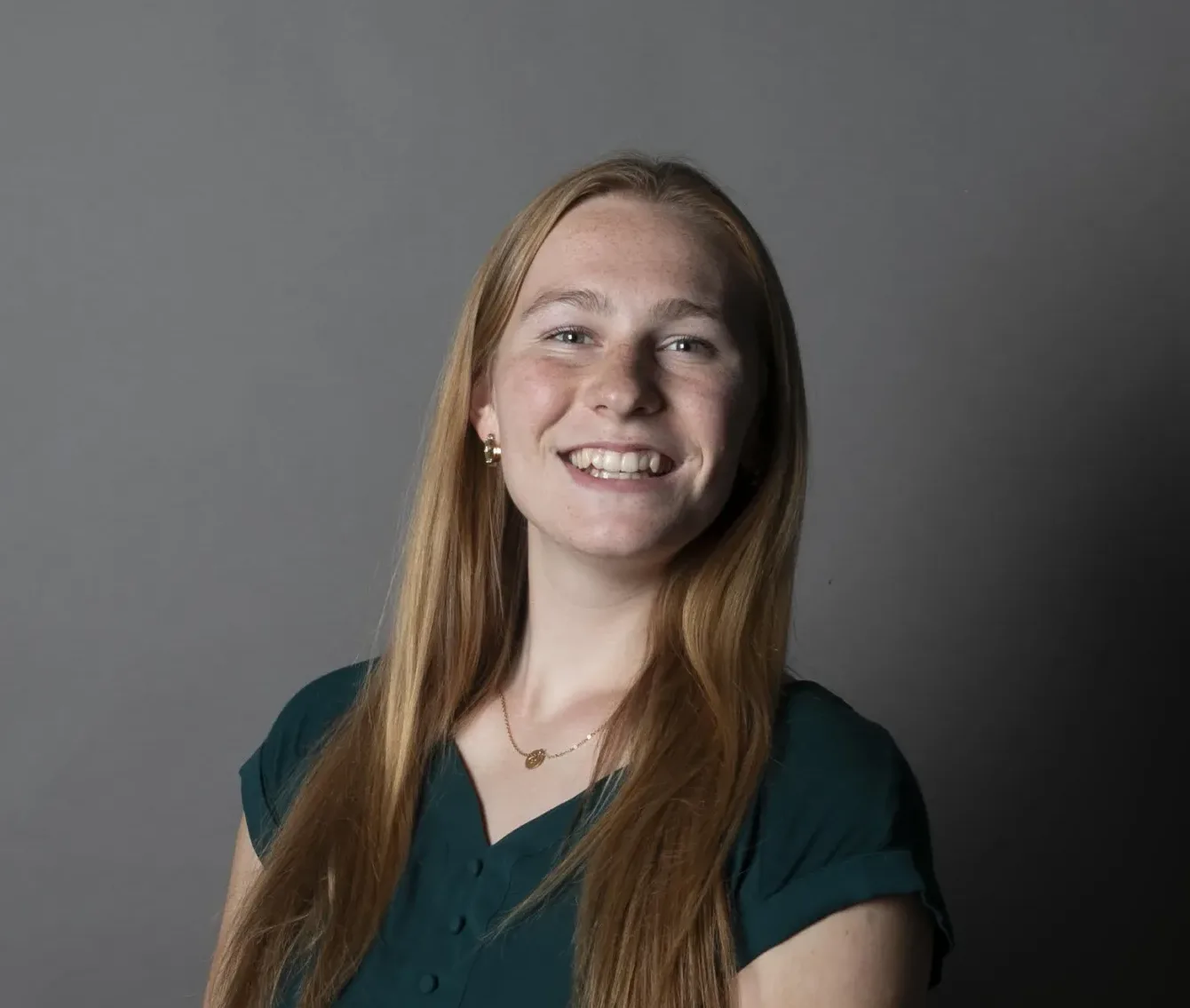
Matthew Bitner-Glindzicz and Danielle Wilder are from opposite sides of the country. They met in the middle, at Washington University. Here, they fell in love with each other, but also with St. Louis.
Keep up with local business news and trends
Subscribe to the St. Louis Business newsletter to get the latest insights sent to your inbox every morning.
After that first conversation on a hot summer’s evening, Bitner-Glindzicz was around more and more, slowly incorporating into Wilder’s friend group. Why? Well, he broke his leg trying out for the ultimate Frisbee team and couldn’t make it farther than her room on his crutches. In typical college fashion, their first kiss was part of a truth or dare game, and their first “official” date was a fraternity party. Wilder is a double legacy as WashU, as her parents met there. Not that there’s any pressure for their kids to one day do the same or anything.
The couple moved in together right as the Covid-19 pandemic was beginning. “While everyone else was out buying toilet paper and stocking up for the end of the world, I was picking out picture frames and throw pillows for our new apartment,” Wilder says. The couple had a foster fail and adopted their first fur baby Glover soon after. He got (and lost) a job in engineering; she started medical school, also at WashU.
Last January, a group of Wilder’s friends happened upon someone who had overdosed near Tower Grove Park. It wasn’t her first experience with a deadly overdose: When Wilder was working as a marketing intern with Manchester United FC in London, she received news that a friend from high school had overdosed on opioids and died at age 20. She wasn’t able to return home to attend the funeral.
“It was one of those tragedies that leaves you feeling so helpless,” Wilder says.
That day in South City, some of Wilder’s friends had received Narcan training just the day before, but none of them had the medication on hand. Again: helpless.
Narcan is the nasal spray version of the medication Naloxone, which can reverse an overdose and be the difference in someone surviving an overdose or not.
“It was that same feeling of helplessness as before, especially as people in medicine, that’s our job, and it feels like we’re failing,” Wilder says.
One of their friends began putting individual packs of Narcan on her keychain, but it’s a fragile container: It continuously broke.
Bitner-Glindzicz remembers Wilder walking into the couple’s apartment, saying, “There has to be something we can do to help so people can have this on hand.”
That’s when Bitner-Glindzicz’s engineering brain kicked in, and began the creation of their product. Nalox-1 is a soft rubber case that can hold a single dose of medication on your keychain or in your bag. It’s easily accessible, small, and even has a QR code on the back linking to instructions for how to administer the life-saving medication.
While it was initially designed for Narcan, medications like epinephrine and diazepam are now offered as nasal sprays and will also fit in the case. Instead of carrying around an Epipen, you can have a nasal spray version on your keychain.
After many prototypes and testing (including running over the case with a car, putting it in the blender, and dropping it off a building) the two manufactured 120 cases. They dispersed them between 120 people in St. Louis, including emergency medicine physicians, toxicologists, harm reduction workers, drug users themselves, and addiction recovery specialists.
That trial run found that only 18 percent of those who owned Narcan before often or always carried it, but after getting Nalox-1, 79 percent reported carrying it often or always. Of those who hadn’t owned Narcan previously, 65 percent reported carrying it on them often or always.
But the most impactful part was the data that showed 10 percent of their test subjects had used the case and medication to save a life—that’s a total of 12 people, four of whom previously had not carried the medication.
Because of Nalox-1, those four people had the medication, and saved lives.
But they couldn’t have done it alone. They credit the startup community in St. Louis, which offered an outpouring support for their mission and their product.
“When we first started approaching the community and all these organizations they saw it was truly a solution that can make a difference in this community that we love, and said we are going to do anything possible in order to support it,” Bitner-Glindzicz says. “The amount of help people have offered us, the connections, it’s really just been so reaffirming every step of the way. This is why we love this city, because people turn out for their own city.”
They chose St. Louis to be the home base for their company because of the city’s strong sense of civic pride. The people here accepted them with open arms, eager to help in any way they could.
“I feel like there’s also a more personal sense of responsibility for the people around you here and for your community,” Bitner-Glindzicz explains.
The couple plans to stay in St. Louis, and grow their company in the city they have come to love. That remains the case even if Wilder’s upcoming medical residency pulls her to a different part of the country.
The two have made it through the trials of the past few years, surviving on peanut butter quesadillas and fried food from the bar Bitner-Glindzicz works at to keep the lights on.
“It’s been so rewarding for us to go through this together,” Bitner-Glindzicz says. “Neither of us would have been able to drive this to success on its own.” Building the product together has forced them to see the world through each other’s eyes—and compromise on a product that makes sense, he says.
Wilder explains that working together, just like a relationship, is never 50/50.
“It’s hard not to build resentment when things tip in different ways,” Wilder says. “Especially as a medical student, I think signing up to date me, or any medical student, for that matter, is tipping the scales already in an unfavorable direction.”
Grace Jalboot became friends with the couple during their time at WashU, and was a beta tester for the product. She’s been able to witness the pair grow as a couple and as business partners.
“They know how to talk, communicate and disagree, and they’re able to bring that in their business,” Jalboot says. “They approach a business challenge similar to how I’ve seen them approach any normal conflicts in their personal relationship, which is to say that I think they’re both very good at leaving their egos at the door and putting the company first.”
Even with the occasional disagreement, the couple has managed to find joy in the process and each other.
“We’ve been really lucky,” Bitner-Glindzicz says. “We’ve always just noticed that whenever we’re together, things just work out better.”
Their startup funds came from a WashU startup competition, donors and friends and family. The couple has sold out of their first batch of cases, which retail for $8.95. Their company has grown to include 10 additional members. The couple’s next steps are producing more cases, hopefully in multiple colors, and getting them in as many hands as possible.