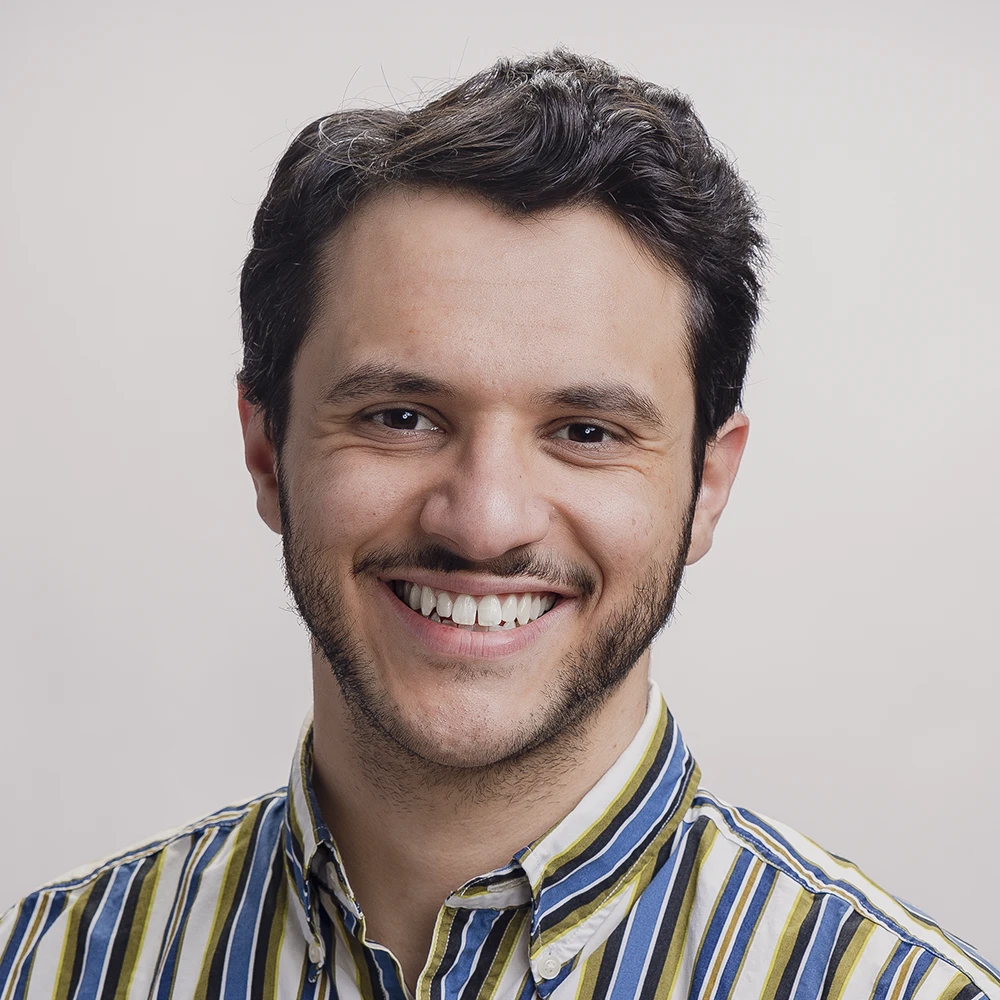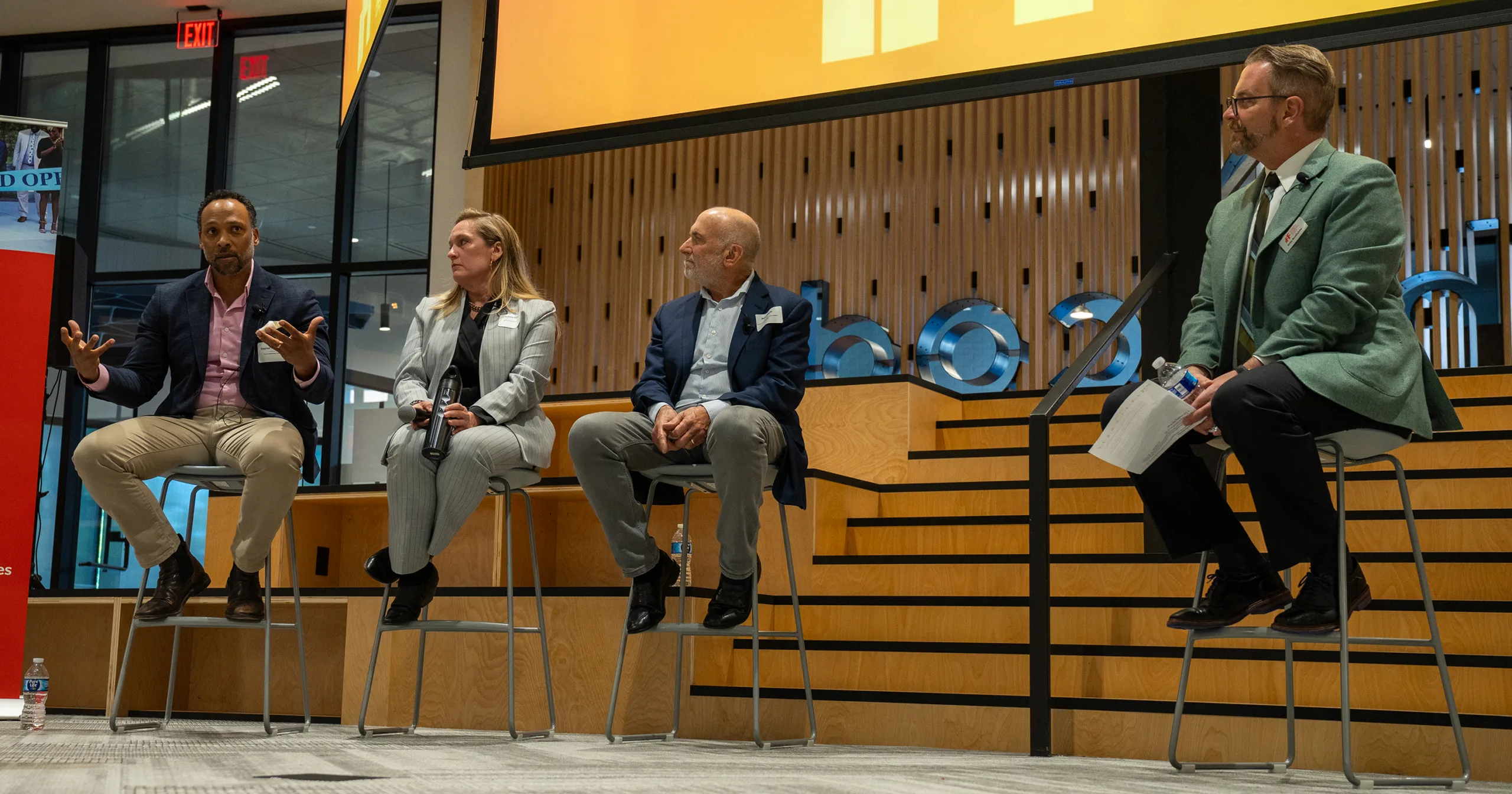
As the community development financial institution IFF marks two decades of work within St. Louis, the organization’s new CEO Kirby Burkholder is steadfast in its commitment to the region Burkholder has local experience, as he helped lead IFF’s early expansion efforts into the Gateway City, which he says is a natural fit for the kinds of financial and community support his organization provides.
“I really see St. Louis as our first anchor city,” he says. “Even though we had started to do work in a couple of other cities, this is a city we made a deep commitment to.”
Keep up with local business news and trends
Subscribe to the St. Louis Business newsletter to get the latest insights sent to your inbox every morning.
Founded in Chicago in 1988 as the Illinois Facilities Fund, IFF expanded into St. Louis in 2006. It has enviable connections here: The executive director of IFF’s southern region, Stephen Westbrooks, recently left the organization to take a job as CEO of the St. Louis Development Corporation. Westbrooks previously supervised the organization’s 14 employees in Missouri, including six at the office in the Delmar Divine in St. Louis (the others are in Kansas City).
Westbrooks says that having continued commitments from organizations like IFF is vital for his work, specifically the city’s continued recovery from last year’s tornado and SLDC’s mission as a whole.
“There was a need for coordinated action and investment before,” he says. “The tornado dramatically emphasized the need for that action, that coordination, and intentionality around investment and layering capital, where it needs to go to help support thriving communities.”
As the largest nonprofit Community Development Financial Institution in the Midwest, IFF provides non-appraisal based lending to get capital to nonprofits in the region that need it, but might have trouble accessing it because of historical disinvestment and the devaluation of built assets.
“Specifically in St Louis, part of our theory of change is, we want to have nonprofits thrive, and part of that is having strong balance sheets, and part of that is helping them build net assets over time,” Burkholder says. “When organizations have facility ownership or net assets or strong balance sheets, then come what may, disasters or economic cycles, they have more equity and resources to be able to weather the storm.”
From 1988 to 2025, IFF has deployed nearly $2 billion over the 10-state region where it operates, including over $200 million in the St. Louis area. Burkholder points to projects IFF has supported in St. Louis, including ones at the Herbert Hoover Boys and Girls Club, Tabernacle Community Development Corporation, Annie Malone Children & Family Service Center, and Justine Petersen.
Burkholder says IFF is keen on deploying another billion dollars in the next five years over the states it covers.
In addition to loans like the ones that helped to save St. Mary’s High School, IFF offers new markets tax credits expertise, real estate consulting, and community development assistance. Burkholder says IFF can also play the role of intermediary, helping “to get the money to the last mile.” As an example, he points to Michigan, where IFF administered close to $60 million on behalf of the state, distributing some 3,000 grants to about 1,000 providers.
“Philathropy and government can look to CDFIs at scale like IFF to be responsible inter-mediators,” Burkholder says. “It’s difficult sometimes for someone to say, ‘I’ve got a policy objective and I want to get money out to every part of the community,’ and getting it there is typically a challenge.”
This is the space where Burkholder says IFF plays a valuable role as a “channel partner” to organizations like the James S. McDonnell Foundation and St. Louis Community Foundation. IFF’s real estate team has been directly working with the former on tornado recovery since last year, he says, and has also leveraged its expertise with early childhood education centers into support as well.
“We’re uniquely equipped to go to places where it’s harder for others to go, and then we can organize the capital behind us,” he says. “[Community Reinvestment Act] motivated banks, hospital systems, religious orders, those resources can come through us and then we can be a channel to actually get those resources out to [the] community.”
As an organization, Burkholder says IFF is interested in amplifying and championing the projects that community groups and nonprofits are spearheading in response to last year’s tornado to organizations interested in offering financial support. He says he’s having those conversations.
“Some of it is taking on-the-ground innovation and ideas, and then using those to go upstream to the capital markets, as it were,” he says. “Then thinking about the relationship, so that in the course of that conversation, we’re bringing the grassroots learning to the grass tops, and we’re getting the grass tops’ capital activated, but not in a way that that burden is on every single nonprofit in North City to [make the case for capital].”