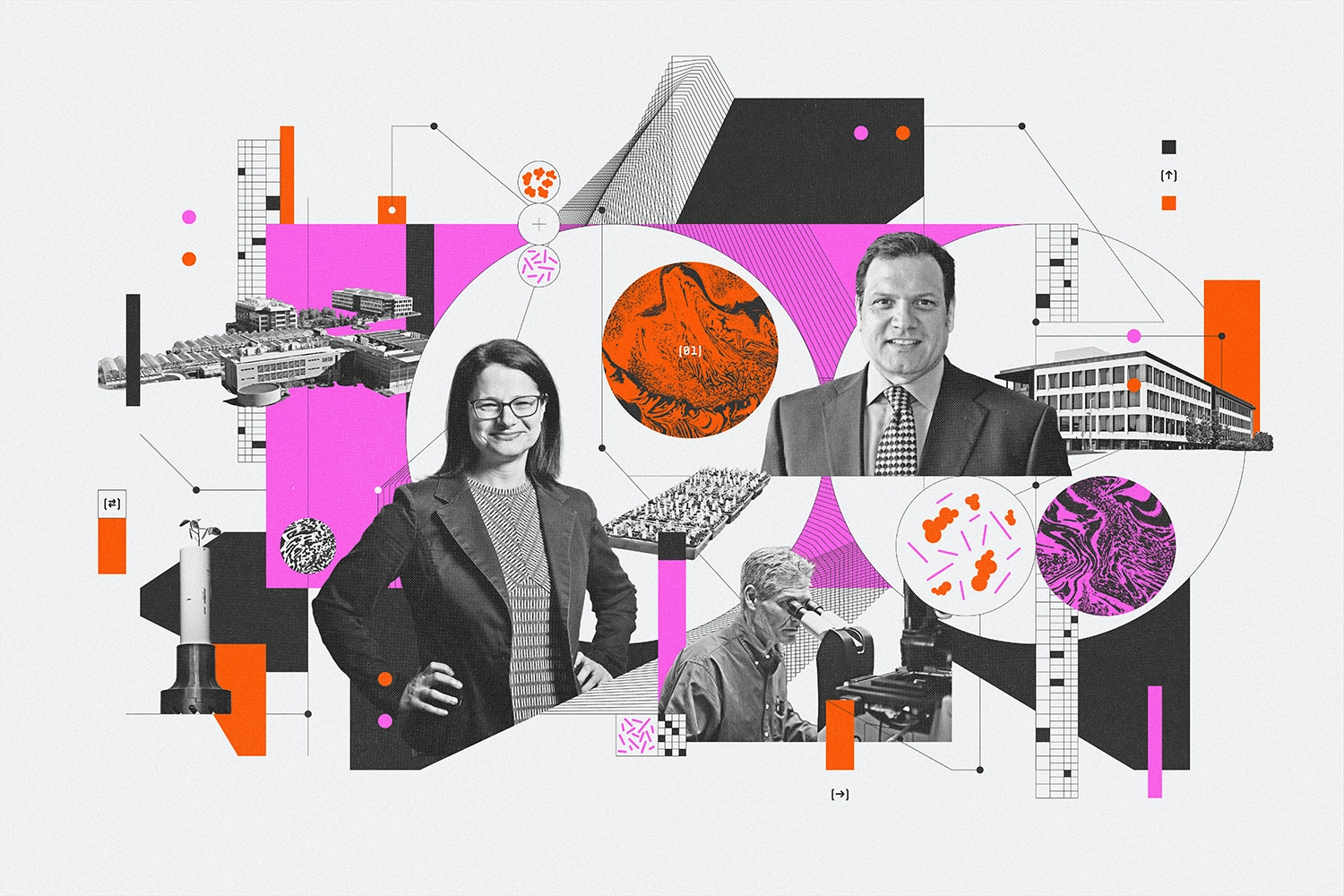
Twenty-five years ago, a consulting firm came to St. Louis at the request of civic and economic development leaders who had begun to notice a pattern that was hard to ignore. The region had real scientific weight—major universities, plant science expertise, and a strong base in medical research and corporate research and development—but it wasn’t consistently producing companies at the same rate as peer regions.
The question became: Why did bioscience companies start in St. Louis but leave to grow elsewhere?
Keep up with local business news and trends
Subscribe to the St. Louis Business newsletter to get the latest insights sent to your inbox every morning.
The answer had less to do with science than with what surrounded it, the Battelle Memorial Institute study concluded. Venture capital was thin at critical stages. Commercialization pathways were fragmented. Research often stalled between discovery and startup formation. And outside perception lagged behind the strength of the work being done locally. The report prescribed a set of five strategies and 21 recommended actions that would go on to shape ecosystem-building efforts over the next two decades.
“People would try to start a company here, and there was no infrastructure, no ecosystem to support that,” says Donn Rubin, founding president and CEO of BioSTL. “So they would take their idea someplace else, usually California or Boston.”
The implication was blunt: Without structural change, St. Louis would continue producing discoveries that grew elsewhere.
“Most people have no idea that there is an infrastructure, a coordinator, a quarterback behind this. They see a biotech company and think it just appears. They don’t ask how it happened.”
The Ecosystem
A quarter century later, a new assessment has returned to answer what has been built in response. At its core, that response has been the construction of an ecosystem designed to connect research, capital, and commercialization more tightly than before.
Among what has emerged are successful startup companies such as New Leaf Symbiotics, CoverCress, and Spearhead Bio, as well as Geneoscopy, Wugen, SweetSpot from Aegis digital health, and Sentiar, whose work spans microbial tools used in commercial agriculture, new crop systems, gene-editing platforms, as well as precision diagnostics, cell and gene therapies, digital health technologies, and augmented-reality surgical navigation, aimed at shortening the distance between discovery and deployment.
Some emerge through BioSTL’s BioGenerator program, which turns early research into startups with funding and operational support. Others take shape in the 39 North district and adjacent Helix Center infrastructure, where shared labs and proximity to the Danforth Plant Science Center keep companies close to the science that drives them.
“This concept of an innovation ecosystem is relatively novel,” says Justin Raymundo, vice president of innovation ecosystem building at BioSTL. Comparable models include Research Triangle Park in North Carolina and Massachusetts’ cluster of life sciences innovation districts, as well as Norwich Research Park in the U.K. “You need government, industry, risk capital, academic institutions, and philanthropy. BioSTL pulls that together.”
Since the original Battelle study, bioscience jobs in St. Louis have grown more than 53 percent, a sign that the sector has expanded even as other parts of the broader regional economy has remained relatively stagnant. Leaders point to bioscience as one of the clearest engines of growth in St. Louis, and a potential source of longer-term economic relevance if current momentum continues.
“Twenty-five years ago, St. Louis had world-class research institutions, but the infrastructure needed to turn discovery into companies and sustained economic growth was still underdeveloped.”
Hubs of Innovation
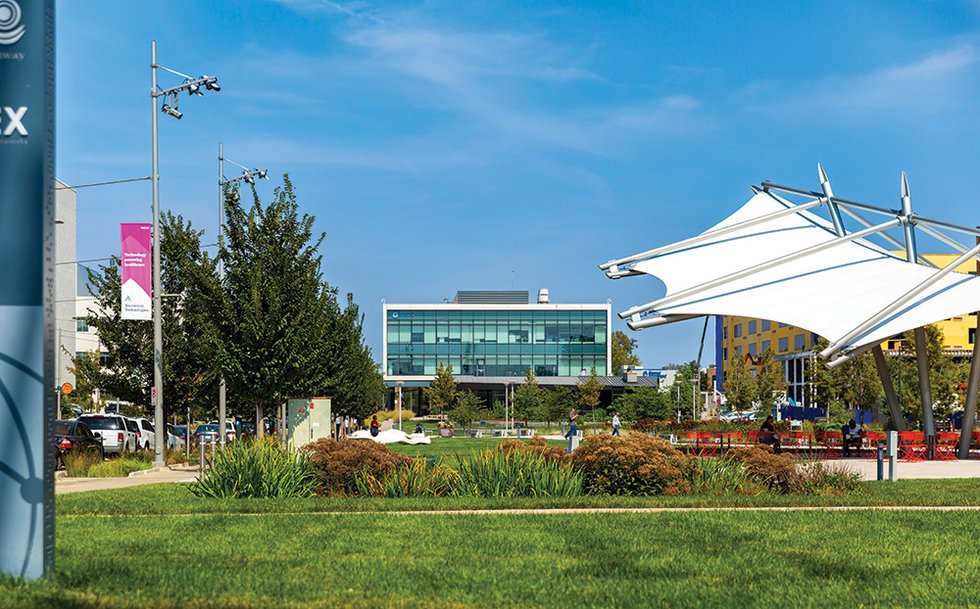
The Cortex Innovation District in Midtown is one of the region’s most visible engines of commercialization, concentrating startups, research institutions, and corporate R&D in a dense urban environment designed to speed collaboration. It now hosts hundreds of companies and has drawn more than $1.3 billion in investment, functioning as an entry point for founders testing whether ideas can scale in St. Louis.
“Twenty-five years ago, St. Louis had world-class research institutions, but the infrastructure needed to turn discovery into companies and sustained economic growth was still underdeveloped,” says Sam Fiorello, president and CEO of the Cortex Innovation District.
Fiorello says Cortex was designed to create the kinds of interactions that help move ideas out of the lab and into companies. “At Cortex, founders are constantly interacting with scientists, investors, corporate leaders, and other entrepreneurs who have already navigated the challenges of building a company,” he says. “Those relationships accelerate problem-solving, reduce isolation, and often lead directly to partnerships, hiring opportunities, investment, or commercialization pathways.”
The Danforth Plant Science Center has become a global anchor for plant biology and agricultural innovation, serving as both a research engine and an early-stage translational hub where scientific discovery increasingly connects to commercialization pathways. Its work spans basic plant science to applied crop technologies, with an increasing emphasis on moving promising discoveries out of the lab and into new companies and industry partnerships.
“Innovation ecosystems are anchored by a discovery engine,” says Karla Roeber, vice president of external affairs in the office of the president at the Danforth Plant Science Center. “The Danforth Plant Science Center and Dr. Danforth’s vision for it enabled the agtech ecosystem to establish, grow, and thrive in St. Louis.”
That role has become more intentional over time, as the center has expanded its ties to industry partners and startup activity, helping bridge a historically wide gap between academic plant science and market-ready agricultural technologies.
39 North, the innovation district anchored by the Danforth Center, has formed a concentrated hub of plant science and agtech activity, physically bringing labs, startups, corporate researchers, and investors together, removing friction for discoveries to move into new enterprises.
“In agriculture, proximity matters as it relates to labs, facilities, and equipment,” says Emily Lohse-Busch, executive director of 39 North, who previously led Arch Grants.
“Today, more companies are starting, scaling, and staying in St. Louis than at any point in our modern history.”
The Capital Gap
Capital was one of the original weaknesses identified in 2000. At the earliest stages, that gap has been partially rebuilt. BioGenerator now plays a key role in seeding companies. Arch Grants offers non-dilutive grant funding designed to attract founders to the region. Angel networks and public-private programs fill out the early-stage pipeline. As companies mature, national and global venture investors increasingly participate.
Still, the system runs into a familiar constraint of capacity, Rubin says. “We could be doing three to four times more in terms of startups right now, with almost an assurance of what’s going to come out the other end of that funnel because of the track record; it’s become very predictable that for every $1 that we invest, we bring $60 around the world into these St. Louis companies.”
Leadership has evolved alongside capital. Where the ecosystem struggled early on to find operators with experience building bioscience companies, the region now blends local founders, recruited executives, and hybrid leadership teams that bring outside expertise into early-stage companies. The result is faster formation but an ongoing question about how much of that prowess becomes permanently embedded locally.
“Today, more companies are starting, scaling, and staying in St. Louis than at any point in our modern history,” Fiorello says. Rubin notes that within BioSTL’s portfolio of companies that started in its labs and/or in which it has invested, the retention rate in St. Louis is about 93 percent.
University technology transfer at WashU and Saint Louis University has also become more structured, with clearer commercialization pathways and tighter integration with ecosystem partners. Still, the hardest challenge remains timing: aligning discovery, funding readiness, and market validation closely enough to consistently produce companies rather than isolated successes.
If the internal system is more connected, awareness of it still lags outside the region. St. Louis now hosts international partnerships and recurring conferences and summits that bring global investors and entrepreneurs into the region. But recognition has not fully caught up.
“Most people have no idea that there is an infrastructure, a coordinator, a quarterback behind this,” Rubin says. “They see a biotech company and think it just appears. They don’t ask how it happened.”
“Not all the instruments wake up every day with the same mission we have. Investors want to make money. Companies want to pursue their own strategy. We have to align interests that are not exactly the same.”
Sustaining Momentum
Today, BioSTL operates less as a traditional institution than as a coordinating function across the ecosystem, connecting capital, policy, research institutions, and founders.
“We integrate people, capital, policy, global connectedness, and startups. You can’t have any of that without a central organizer,” Rubin says. “We are the conductor of the orchestra.”
But the system only works because its parts are not trying to do the same thing. Investors are chasing returns. Universities are pursuing research and reputation. Companies are focused on growth. The alignment comes not from shared goals but where there’s overlap.
“Not all the instruments wake up every day with the same mission we have,” Rubin says. “Investors want to make money. Companies want to pursue their own strategy. We have to align interests that are not exactly the same.”
The original 2000 assessment warned that St. Louis risked becoming a place that generated innovation without consistently capturing its value. Today, the picture is more complex. Companies are forming, capital is deeper, and the infrastructure is real.
“We have something real here now,” Rubin says. “The question is whether we’re willing to keep building it at the speed that possibility requires.”

St. Louis Magazine’s “Spotlight on Bioscience” series is supported by BioSTL, a St. Louis–based nonprofit dedicated to turning the region’s world-class research strengths into high-growth startups, a skilled workforce, and a globally recognized innovation hub.