As we prepare to wave goodbye to the year that was 2025, it’s an apt moment to take stock of the significant developments and storylines that have shaped the business landscape in the St. Louis region.
There was a lot that happened, and this list certainly isn’t an exhaustive recap. But it does contain most of the major highlights.
Keep up with local business news and trends
Subscribe to the St. Louis Business newsletter to get the latest insights sent to your inbox every morning.
• Key leadership positions turned over at a variety of local institutions
Likely the most obvious on this list would be the new occupant of Room 200 at City Hall, after Cara Spencer won a resounding victory over incumbent mayor Tishaura Jones in April. Spencer’s election brought new and familiar faces to the city’s government, while some of the top leaders from Jones’ time as mayor exited.
Notable for the business community was the departure of the Community Development Agency’s leader, Nahuel Fefer, and the removal of Neal Richardson as the president and CEO of the St. Louis Development Corporation.
Spencer persuaded Otis Williams to come out of retirement and lead SLDC on an interim basis. Williams had previously led the quasi-governmental entity that oversees incentives and staffs the city’s various development boards for nearly a decade. Spencer’s administration has yet to fill Fefer’s role.
The shakeups in city leadership also coincided with turnover at other key organizations tied to promoting and advancing St. Louis’ brand and image. Jason Hall’s departure to Columbus left the business advocacy nonprofit Greater St. Louis Inc. in search of a new CEO, a role they filled with Ron Kitchens in September. And Explore St. Louis brought on Brad Dean to lead the local tourism agency.
Well-established local institutions added new leaders too with changeovers in the top roles at the Danforth Plant Science Center, the Missouri Botanical Garden, Great Rivers Greenway, and Saint Louis University, to name a few.
In all reality it’s too soon to say what all this change will yield for St. Louis’ trajectory in the long term. It’s certainly worth keeping an eye on in the next few years.
• Plans for the city’s portion of the Rams settlement fell apart
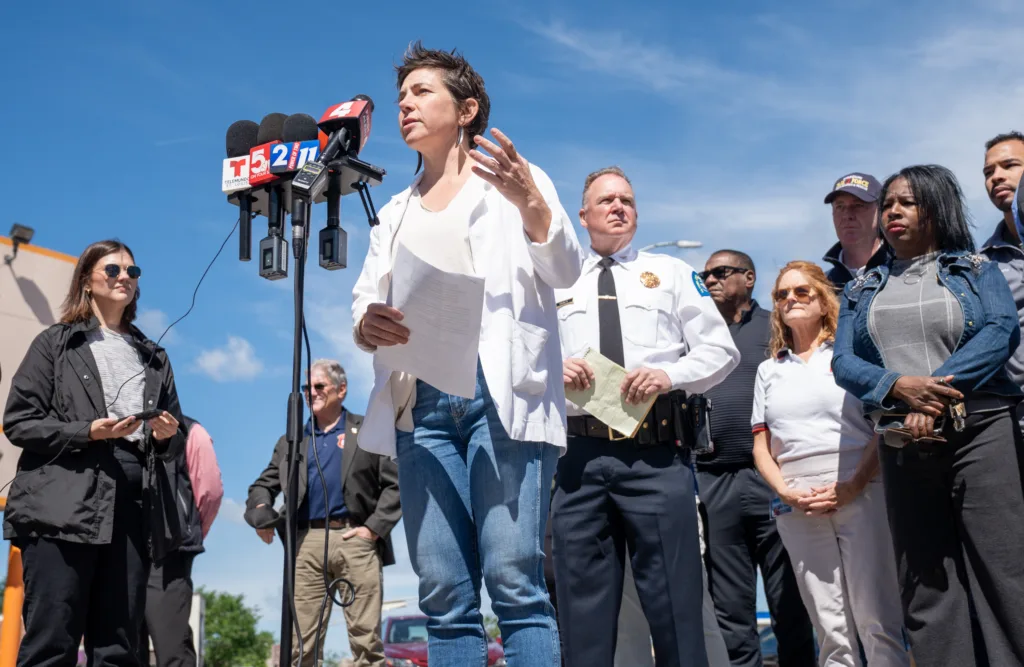
It’s crazy to think that just 10 months ago, the dominant story (at least in the City of St. Louis) was about what the Board of Aldermen was going to do about the quarter-billion dollars it had available from the settlement with the NFL … well that, and ire over how the city handled an unusually severe January snowstorm.
While the debate over how to spend such a large sum of money collapsed spectacularly, there were silver linings to that outcome. Leaving it unallocated meant the city had funds it could immediately draw from to support a response to the EF3 tornado that ripped through North City in May.
At the time, some aldermen had argued scrapping the spending plan was prudent given early indications that the Trump administration was going to cut or rescind federal money that cities and other organizations had come to expect and rely on. That argument now looks prescient.
• The Trump Administration’s cuts hit deep
Speaking of, the president made good on his promises to drastically scale back certain federal programs and grant money. It felt like every other week brought new revelations of local institutions or nonprofits that were forced to triage programming.
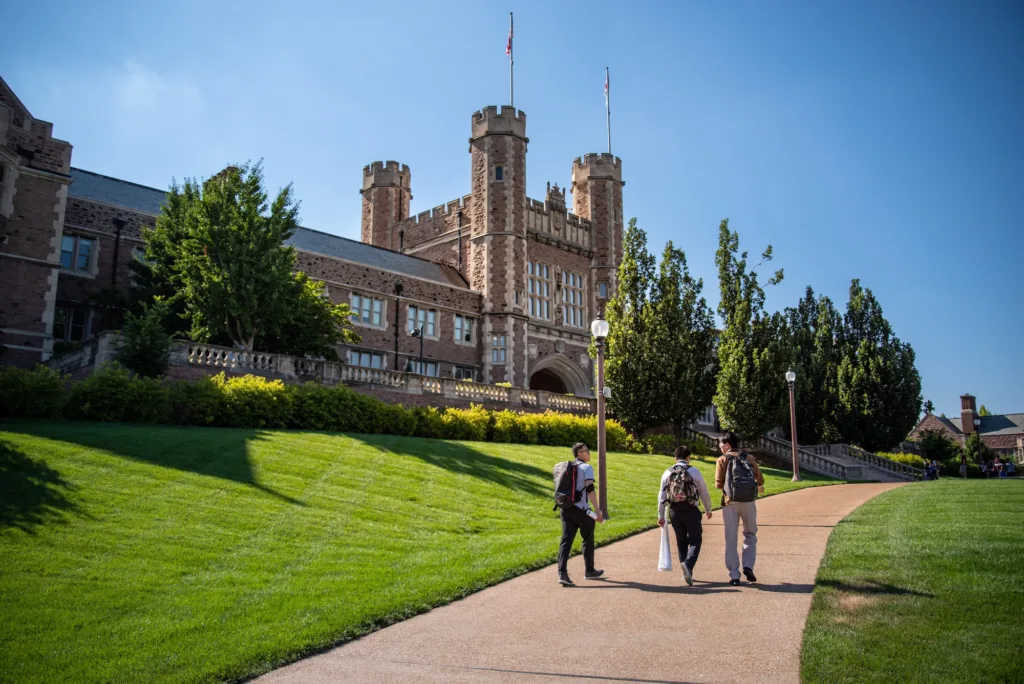
Local universities felt their share of pain, too. Washington University, which has traditionally been among the top recipients of National Institutes of Health funding, saw fewer awards this year. The private university paused some construction projects and cut hundreds of staff amid a budget crunch, brought on in part because of the cuts.
Other organizations also faced challenges related to federal funding, including the International Institute, which furloughed 60 percent of its staff and briefly paused preparations for the Festival of Nations. The organization managed to put on its marquee event despite the challenges.
Major development projects were scuttled or severely hampered by cuts. In July, the Department of Energy pulled its financial support for the Grain Belt Express transmission line project that aims to connect cheap wind energy generated in the Plains with energy consumers further east. That project still appears to be moving forward, unlike ICL Group Ltd.’s plans for a $574 million manufacturing plant on the North Riverfront. The company cut the project entirely after losing a $197 million grant from the DOE.
• Downtown saw a lot of change, most of it positive
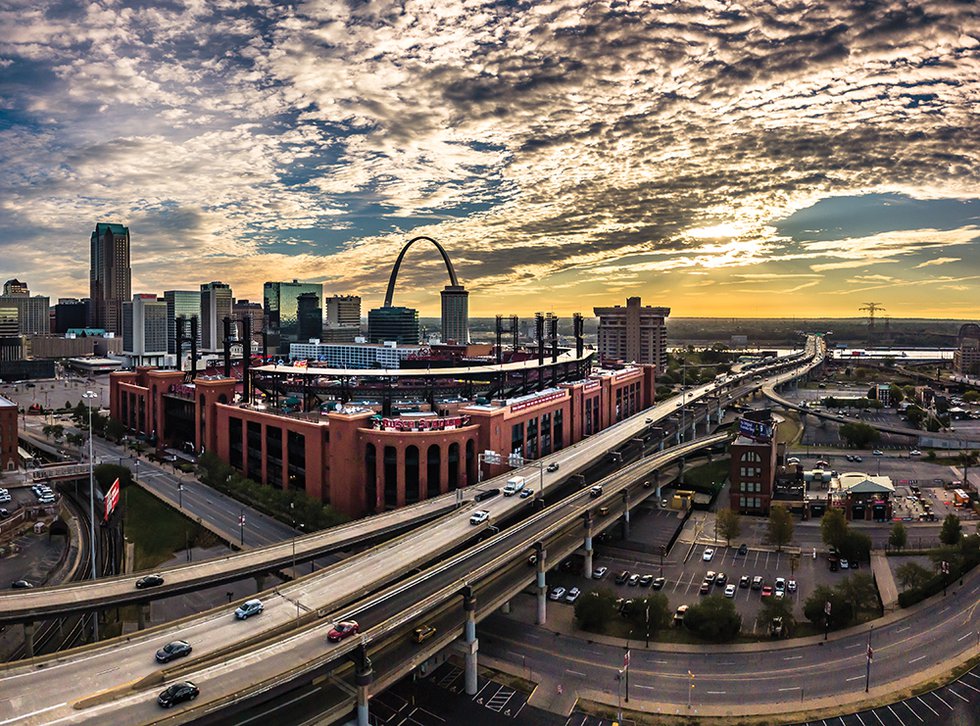
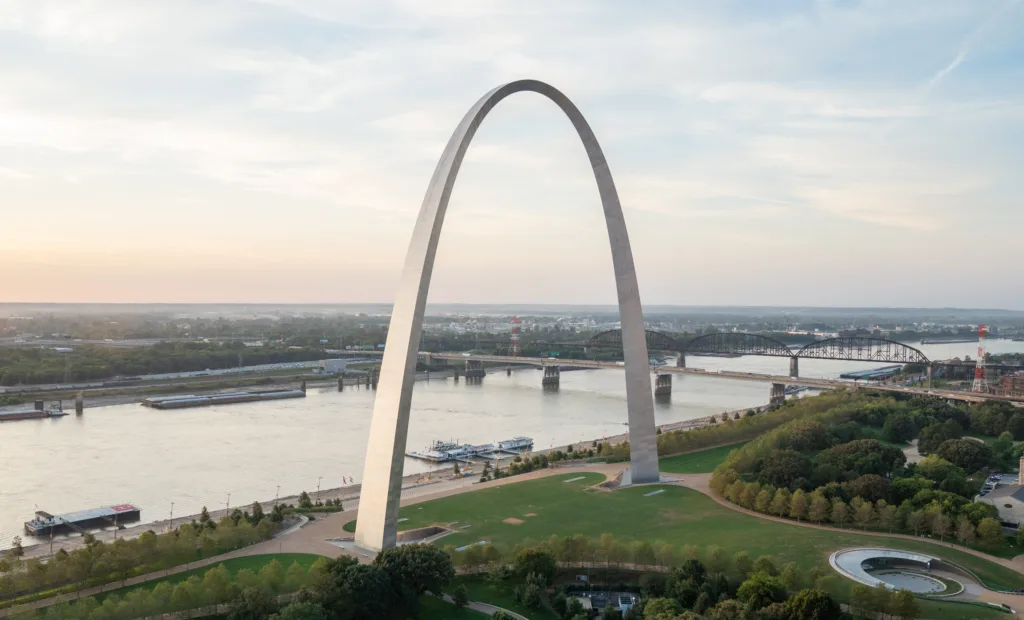
The year 2025 will likely prove to be a pivotal year for the narrative surrounding downtown St. Louis. Gateway Arch Park Foundation’s continued attention on the Millennium Hotel site was key. In just one year, the nonprofit announced The Cordish Companies would pursue a $670 million redevelopment, gained ownership of the site, and started demolition work on property where nothing has happened for more than a decade. And executive director Ryan McClure has helped inject new energy into the neighborhood with the idea to further reconnect downtown to the Arch grounds with a potential cap to I-44.
The city made progress dealing with another albatross of a building in the Railway Exchange, buying up property around the former office building and keeping the eminent domain case moving forward. Meanwhile, private developers such as Alex Oliver of Oliver Properties continued to turn around the fortunes of historic buildings along Washington Avenue, adding new and comparatively affordable rental units to downtown’s stock. Steve Smith’s New + Found kicked off a $195 million redevelopment of Mansion House, modernizing the offerings of the historic mid-century highrise that overlooks the Arch.
Downtown also got a boost when state lawmakers passed (and Gov. Mike Kehoe signed into law) a new entertainment district designed to beef up security and ensure event revenue guarantees in an effort to land more major events. The news from the state capitol was a mixed bag, though, as lawmakers again failed to pass a bill allowing tax credits for large office-to-residential conversions, which will likely be essential to redeveloping the AT&T Tower that’s sat vacant since 2017. (The Goldman Group remains committed to that project.)
Of course there were some departures, notably Peabody Energy, which opted to decamp from its namesake building to an office off Manchester Road and I-270 in Des Peres.
But taken as a whole it feels like there’s a lot more to be excited about than sour on in the St. Louis region’s core, with momentum that should extend into next year, too.
• Data Center-palooza
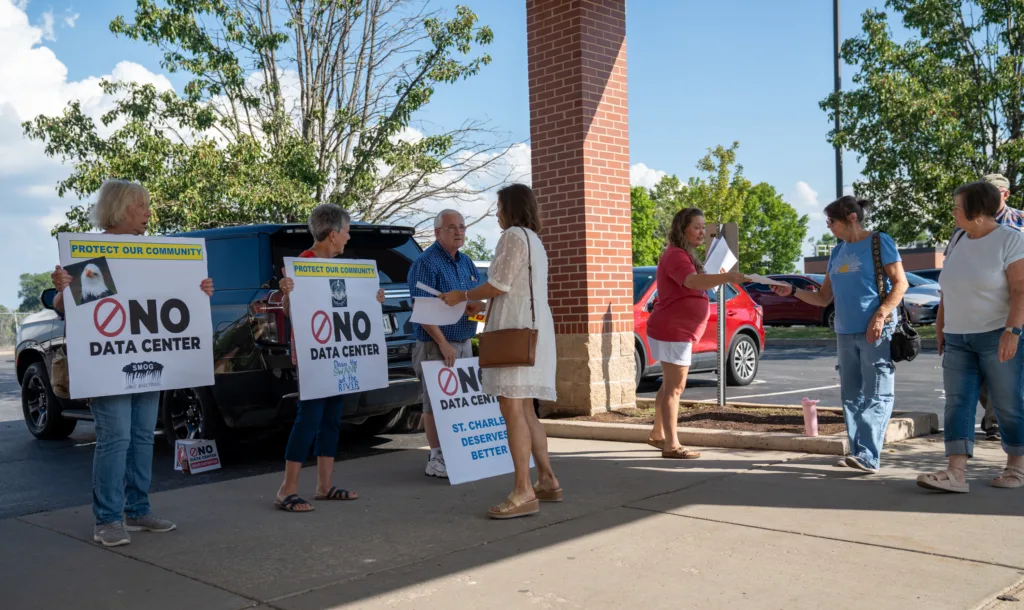
The St. Louis region could not escape the heated debate that these billion dollar proposals generated. Attention to data centers exploded into the public consciousness over the summer as St. Charles leaders considered a proposal for a 1.5 million square foot data center on 440 acres in a part of the city that floods regularly. Residents made their distaste clear, with special anger that key details of the development (including the end user) were withheld from them.
St. Charles leaders voted to ban the consideration of any new data center proposal for a year, but that didn’t stop new projects from popping up elsewhere in the region. City residents rallied against the prospect of a new data center next to The Armory, as did residents in Festus when plans emerged for a massive development in their part of Jefferson County.
For concerned citizens, it’s starting to look like a game of Whac-a-Mole as developers chase the heaps of cash sloshing into generative AI, all of it contingent on a fast and massive buildout of new large-scale data centers.