This past summer, just weeks before sealing a $6 billion deal meant to bring a new public company to St. Louis, some local businessmen say they learned a surprising truth about their would-be partner: “David Wilcox” wasn’t his full legal name.
About 18 months prior, in February 2024, Wilcox, an Idaho-based businessman, had approached Rob Feldman with an audacious idea. The two men had met at an industry conference in 2022, and now Wilcox proposed his Evolution Metals LLC purchase Feldman’s Missouri-based Critical Mineral Recovery as well as four South Korean companies specializing in other aspects of the critical mineral supply chain. Evolution would then merge with a Chicago-based special purpose acquisition company called Welsbach Technology Metals Acquisition Corp and, voila, through the magic of what’s known as a special purpose acquisition company, St. Louis would be home to a new, publicly traded company worth $6 billion and poised to cash in on the booming need for critical minerals essential to iPhones, electric vehicles, and computer chips.
Keep up with local business news and trends
Subscribe to the St. Louis Business newsletter to get the latest insights sent to your inbox every morning.
This could have been a big deal, both for Feldman, his attorney Al Watkins, and the city of St. Louis. Said Watkins at the time: “I still have not determined with certainty the last publicly traded company to move their world headquarters into St. Louis. It may very well have been during the Eisenhower administration.”
The plan was for the SPAC deal to close in July and for the new company to go live on NASDAQ July 11 (ticker symbol: $EMAT). There was even talk of company leadership ringing the opening bell.
Then, Watkins says, in late June they found out that David Wilcox’s full name was William David Wilcox, Jr. Watkins says this seemingly minor detail proved to be major after it led to other revelations. Says Watkins, “The alarm did not abate.”
As to the exact nature of the alarm, Watkins only speaks elliptically to whether he believes that he and Feldman were misled, but suggests that he had concerns about Wilcox as the would-be company’s leader. He says, “When information comes to light which causes pause for thought, more in-depth research and more thought is often required. When alarming information comes to light, one is often compelled to make sure certain folks no longer appear on your dance card.”
One piece of alarming information Watkins says he was previously unaware of was that Wilcox had another, similarly named company called Evolution Metals Corporation, which had been the subject of recent litigation, including a lawsuit by a Memphis hotel magnate named Martin Belz who said Wilcox owed him $700,000. Another lawsuit filed by a New York man named Joseph Barbato claimed Wilcox hired him as the chief operating officer for Evolution Metals Corporation and then stiffed him on more than $560,000 of wages; in an amended complaint, another man, Timothy Foley, joined the lawsuit, claiming that he was owed more than $700,000 in wages as well. In addition, Barbato and Foley allege that Wilcox improperly spent hundreds of thousands of dollars of company funds on personal matters, including vacations, restaurant meals, pets, and cigars. (Belz’s lawsuit has since been dismissed in a way that would allow him to later refile, which he has not yet done. The lawsuit by Barbato and Foley was apparently settled in mediation, with the confidential agreement approved by the court.)
“There were multiple pieces of an alarming puzzle which came together at the end of June,” says Watkins. “The prior use of ‘Evolution’ in yet another business was but one of the pieces.”
William David Wilcox Jr. also had messy legal matters in Idaho, court records show: a pending charge for driving while intoxicated and a child custody battle. He’d also been making a series of increasingly expansive records requests seeking information about calls to law enforcement made by the woman with whom he is in the paternity suit. These records requests are detailed by Wilcox himself in a lawsuit he filed against Blaine County, Idaho. (That suit was closed earlier this month; the paternity suit is scheduled for trial early next year.)
In August of this year, Wilcox ended up having to spend two nights in a Blaine County, Idaho jail for the DUI charge. On November 4, he was hit with a misdemeanor charge of violating the order of protection that had been taken out against him. He pleaded not guilty two days later; the case remains pending.
Did Feldman and Watkins overlook some red flags in an attempt to get the $6 billion deal done? After all, Feldman was at one point due to get as much as $700 million. Watkins concedes that the proposed deal engendered excitement. “With the harsh benefit of hindsight, there were many nuances and what appeared to be small idiosyncrasies which were counterintuitive, didn’t make sense, or induced one to tilt their head much like a dog hearing a pitched sound,” he says with characteristic loquaciousness. “While they were not overlooked, they did not at first trigger elevated trepidation or concern. Toward the end of June, I realized the list of nuances and idiosyncrasies required full reconciliation.” He adds, “Something which to this day has not been forthcoming.”
***
SLM got in contact with Wilcox through the Florida-based attorney John Arrastia, who represented Wilcox in the lawsuit brought by the Memphis hotel magnate as well as in his Idaho paternity suit. In a letter written on behalf of Wilcox, Arrastia agreed that the deal collapsed in late June, just days before the planned closure—but not for the reasons that Watkins said.
Arrastia suggested in his letter that there were two reasons behind its unraveling, and one was Watkins. According to Arrastia, Watkins had been under the impression he would be given an executive position in the new company as its chief legal officer. On June 25, Watkins was told he would in fact not be offered such a position. “Shortly afterwards, on June 30, 2025, the merger agreement between Critical Mineral Recovery, Inc. and Evolution Metals LLC expired by its own terms and was not renewed by the parties,” wrote Arrastia.
Watkins disputes that, saying that while he represented a company that was very much in the deal, he himself very much was not. “The deal was between companies,” he says. “While it is flattering to think I somehow became a lynchpin to what was billed by Evolution to be a multi-billion dollar deal, the assertion I led to the collapse of the deal is folly fueled by fear on the part of the guy behind the curtain. All that’s missing is a pair of ruby red slippers and a field of poppies.”
The other reason for the deal’s collapse, Arrastia wrote, was a catastrophic fire that occurred at Critical Mineral Recovery’s 25,000-square-foot lithium-ion battery processing plant near Fredericktown, Missouri, on October 30, 2024.
On that day, the facility’s $8 million, supposedly state-of-the-art fire suppression system turned into a fire acceleration system, its hoses emitting oxygen rather than water. Along with the smoke from the plant, myriad lawsuits claim that hazardous chemicals including cyanide and hydrogen chloride were released into the air. Numerous personal injury lawsuits have been filed against Feldman’s company by people in the Fredericktown area saying they have suffered physically from the chemicals’ release. A lawsuit seeking class action status has been filed in federal court seeking both monetary damages as well as the establishment of a court-supervised medical monitoring system for people exposed to toxic substances and fumes.
In the wake of the fire, Watkins remained adamant the SPAC deal was still on. He even went to Fredericktown personally to try to assuage the ire of angry locals. In addition to Evolution’s C-suite staff headed to St. Louis, he said that the company would employ 450 blue-collar workers in and around Fredericktown.
But Arrastia wrote in his email that, by the summer of 2025, six months after the fire, the company still hadn’t recovered. “At that point in time, I believe Critical Mineral Recovery Inc. had yet to rebuild its facility and did not have operations, revenue, or employees,” he wrote.
Watkins scoffs at the idea that the fire at the plant scuttled the deal, noting that Wilcox’s Evolution re-evaluated the acquisition afterward and both parties agreed on a lower purchase price: $400 million, down from $700 million. “The revised deal was scrutinized by Evolution’s accounting firm and disclosed as part of public filings with the SEC,” says Watkins. “This occurred in 2024, well before the termination of the CMR merger agreement in early July 2025.”
To Watkins’ point, just a few days before the deal’s collapse, Wilcox himself said in a June 27 press release that Missouri was still very much part of the plan for the future company. “Our plans are to replicate the Korean operations we expect to acquire into Missouri, creating a major industrial campus,” he said.
That press release carried a St. Louis and a Chicago dateline. A few days later, Critical Mineral Recovery—and the St. Louis operation—would be cut out.
***
From a local perspective, there was much about the Evolution Metals deal that made sense. There were a few things that didn’t.
The deal was premised on the same ideas upon which Rob Feldman had already found success: that the demand for critical minerals is only going to grow, along with the demand for EVs and computer chips; and that there are plenty of these critical minerals in old electronics that can be recycled. In 1996, Feldman founded Interco, an electronics recycler that every year buys, dismantles, and processes millions of pounds of “eScrap”—old monitors, keyboards and TVs. His Critical Mineral Recovery in Fredericktown was, until it burned down, one of the world’s largest lithium-ion battery processing facilities: Old batteries went in one side of the operation, valuable critical minerals came out the other side.
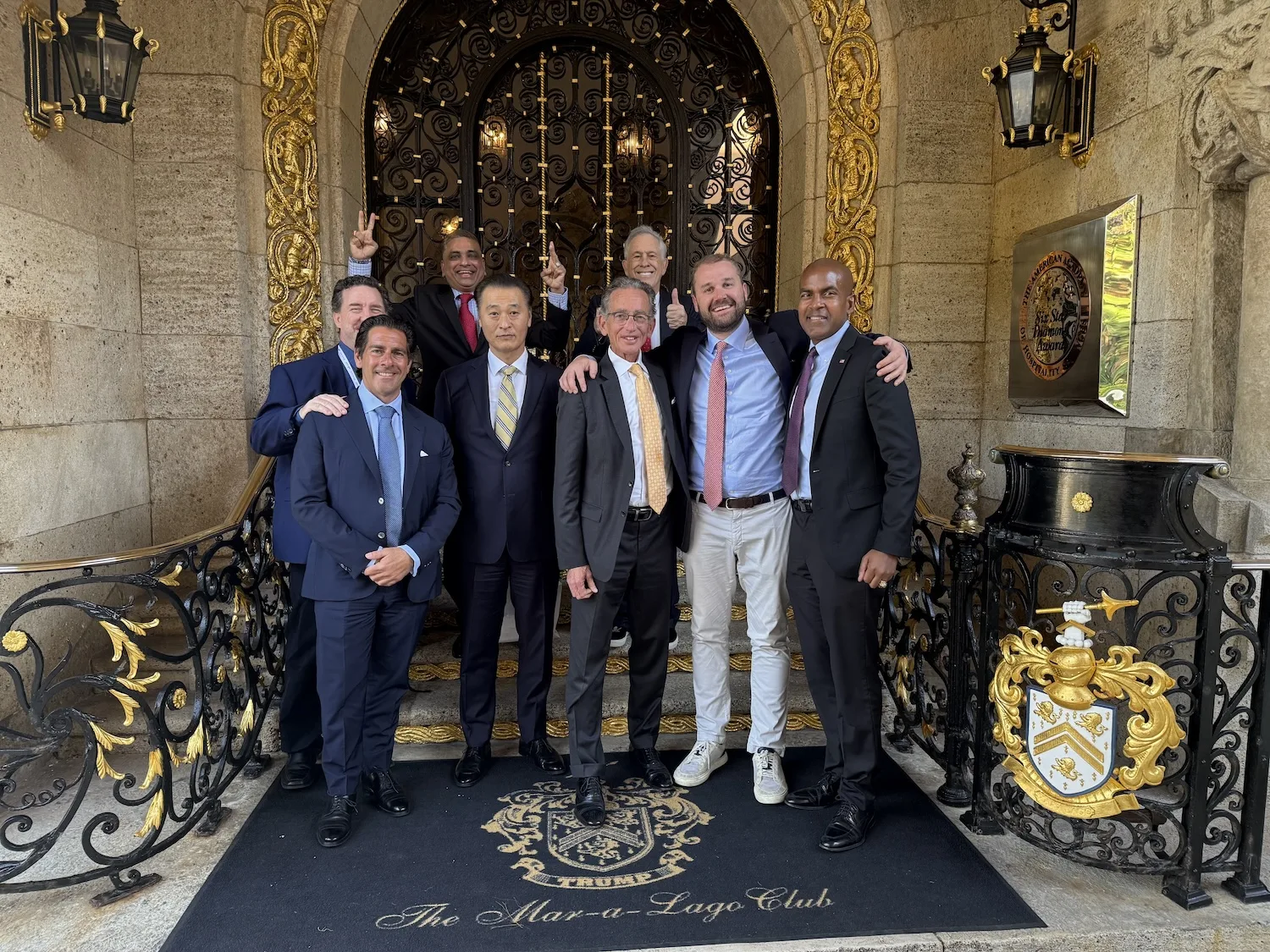
Under Wilcox’s proposed deal, Critical Mineral Recovery would have been rolled up into one company along with four South Korean concerns specializing in other aspects of the critical mineral supply chain. One of the Korean companies makes bonded magnets, a key component in electronics. Another has expertise in electric vehicle charging systems. The roll-up would have integrated Feldman’s operation into a domestic supply chain for critical minerals, a commodity whose value is only expected to grow alongside data centers and electric vehicles. In addition to a $400 million pay day, Feldman would have been named the new company’s co-CEO.
But first, Evolution had to merge with Welsbach Technology Metals Acquisition Corp., an already publicly traded SPAC. The SPAC process allows for a quicker path to a company going public compared to a traditional initial public offering, with fewer hoops to jump through. A number of high-profile companies have gone public via SPAC, Virgin Galactic and DraftKings among them. The process has also produced some duds, including WeWork and 23 and Me.
Watkins began talking about the deal to the media last November. Donald Trump, long a proponent for both onshoring supply chains of critical minerals and reducing dependency on China, had just won the presidency. In theory, the Evolution Metals business plan would have done both. Heavy hitters brought as nominees to the eventual company’s board of directors included Christopher Miller, whom Trump appointed acting secretary of defense in November 2020; Robin S. Bernstein, who was ambassador to the Dominican Republic for three years under Trump; and Andrew Knaggs, a deputy assistant secretary of defense during Trump’s first term.
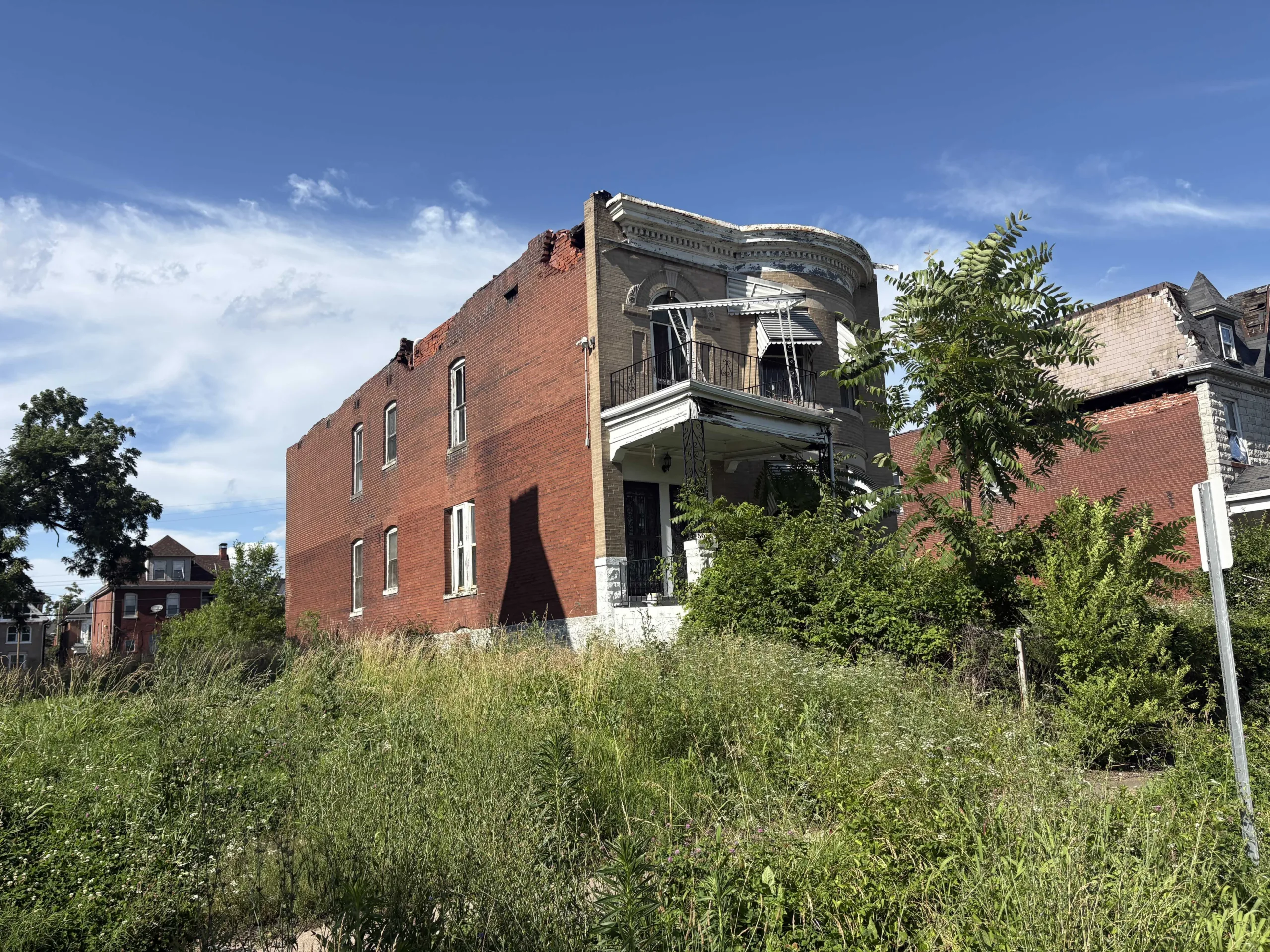
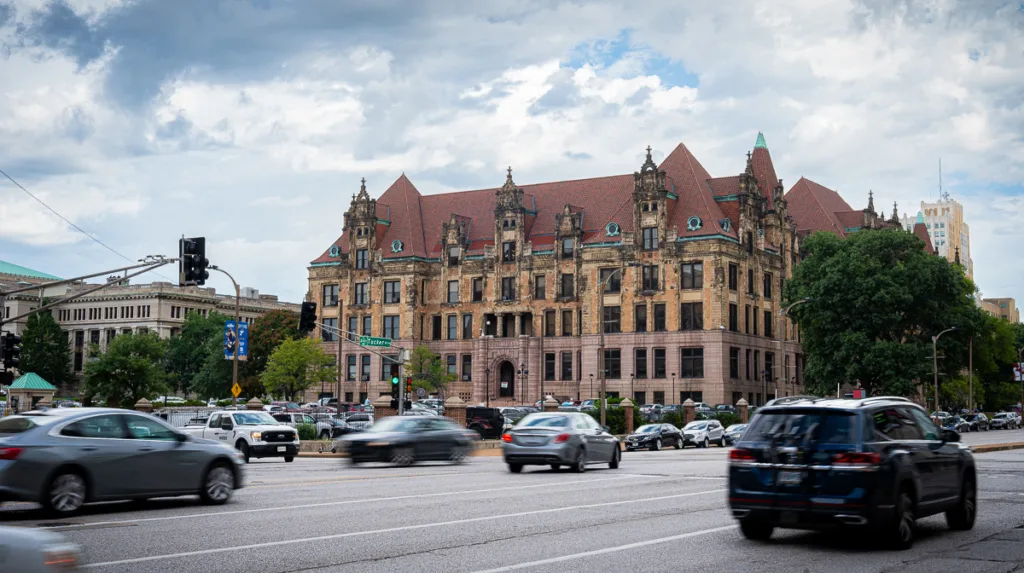
However, the company boasting a “pre-transaction equity value” of $6 billion was to be headquartered in the Fair Mercantile Building in St. Louis’ Hill neighborhood, far from Class-A office space: It’s home to law offices with just a handful of attorneys, a nonprofit or two, a pretty good restaurant, and the Riverfront Times before it went kaputt. Watkins and Feldman could regularly be seen outside the building–Watkins with a cigarette in hand–right next to the place that provides flowers and chair covers for weddings. It didn’t seem like the sort of place to be the nerve center of a multi-billion dollar enterprise.
And Watkins wasn’t the only one involved in the deal to have questions about Wilcox. Nor was he even the first. Robert Loitman’s suspicions ran about three months ahead of the attorney’s.
Loitman is a St. Louis native who went to high school with Watkins (St. Louis Country Day, if you must know). He’d had a successful career with Nestle and other companies and had started his own consulting company, based in Los Angeles. He says Watkins approached him to see if he might be interested in taking a chief financial officer position with the new company. Watkins, Loitman said, wanted allies on board.
By Loitman’s telling, the conversation between the two Country Day alums went something like this:
Loitman: I live in Los Angeles. I love Southern California. I’m not sure I want to come back to St Louis.
Watkins: Well, what if the compensation was XYZ?
Loitman: Wow, with compensation like XYZ, I would, I would move back.
Loitman was hired as Evolution Metals’ CFO in September 2024 at a salary of $700,000 a year with a one-time award of $5 million upon the successful close of the merger. He signed an agreement with Evolution in August 2024.
Loitman describes his four months with the company as unusual. He says that when it came to setting up the basic infrastructure of a company, Wilcox blocked him “every step of the way.” Loitman says that he was told not to talk to CPA firms, to auditors, to “the bank that [Wilcox] was going to run the money through.” Discussions about the particulars of employee benefits and handbooks went nowhere, Loitman says.
“How can you tell somebody, I need you to make a cake by this afternoon, but we don’t have any ingredients. You can’t go to the grocery store. You can’t touch the stove,” says Loitman. “At some point you just say, This is a joke. I don’t know what they’re doing.”
Loitman says he was fired this past January, told that “unidentified ‘bankers’” wanted him out. He is currently suing both Evolution and Wilcox in federal court in California. Loitman alleges in his complaint that after he was fired, Wilcox tried to get him to sign an “amended” employment letter, changing a key sentence. According to his lawsuit, the original read, “I want to confirm your position as CFO of EM&T pursuant to the closing” of the newly merged company. The new document Wilcox allegedly tried to get Loitman to sign changed “position” to “candidacy.”
Loitman’s lawsuit calls the reason for this change “obvious.” Loitman alleges he had been promised the position with the merged company as well as substantial compensation and had done all the work he’d been hired to do. The only thing left was for the company to merge.
But why didn’t it?
“They were talking about raising something between $5 and 10 billion for this project. That’s a lot of money. There was a lot of money that Wilcox was looking for to make this thing go,” said Loitman.
Did Wilcox ever find the money? “I happen to know the answer,” Loitman says. “I’m going to be silent on that.”
As for the status of Loitman’s lawsuit, according to the court docket, Wilcox’s motion to dismiss is currently awaiting a ruling by the District Court.
Welsbach’s filings with the SEC indicate that a deal remains in the works involving it and Evolution Metals LLC, as well as the four South Korean companies. The proposed value of the new entity sans Feldman’s Critical Mineral Recovery— called the “pre-transaction aggregate equity value”—was revised downward, but only slightly, to $5.93 billion.
In its most recent SEC filings, the company noted in a section titled “Going Concern, Liquidity and Capital Resources” that as of the end of September, the company had negative operating cash of $233 and a working capital deficit of just under $10 million. The company said it has “no revenue” and a business plan dependent on the completion of its combination plan within a proscribed period of time.
Since June, Welsbach has pushed back the deadline to complete the planned merger, first to the end of September and, more recently, until the end of December.