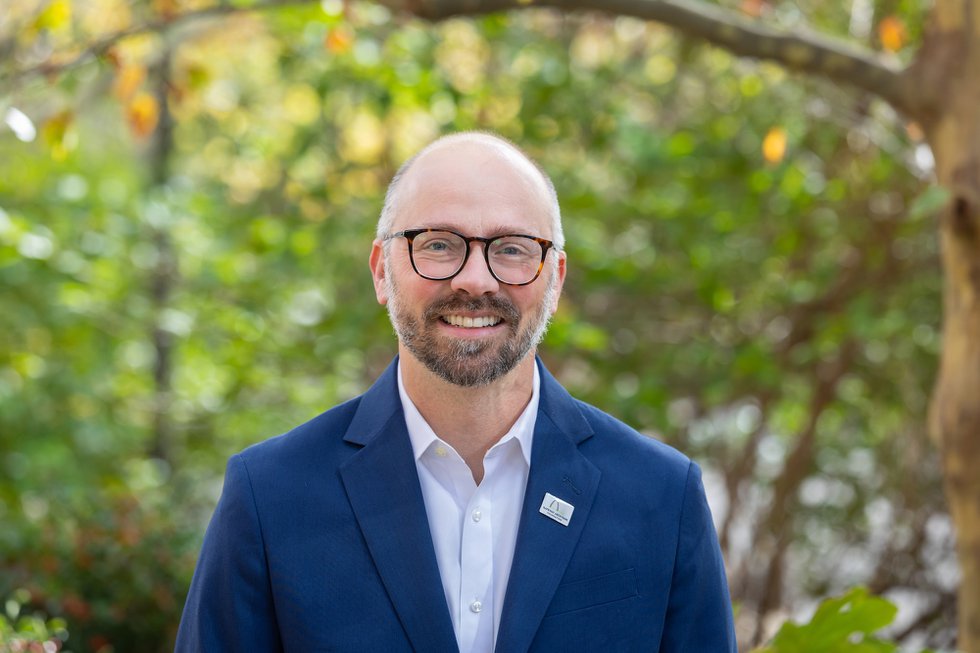
In the late 1960s, things were looking up for downtown St. Louis. When the Gateway Arch’s final piece of stainless steel was fitted into place on October 28, 1965, the hulking monument gave St. Louisans reason to gaze skyward with pride. Less than four years later, on a plot of land across the street from the Arch, the Stouffer’s Riverfront Inn opened with a glitzy, invitation-only celebration that allowed guests to experience the new hotel’s crown jewel: a revolving restaurant perched atop its 28-story tower. It was a place to see and be seen. The hotel went through several incarnations, and was later known as the Regal Riverfront, the Clarion Hotel, and, eventually, the Millennium Hotel when a London-based hospitality group purchased the 780-room facility in 1999. But after closing in 2014, the Millennium fell into disrepair—a massive monument to urban decay. Now, a collaborative effort between the Gateway Arch Park Foundation, Greater St. Louis, Inc., and the St. Louis Development Corporation will work to redevelop the property to turn it into a source of civic pride once more. The Gateway Arch Park Foundation entered into a contract to purchase the site on Wednesday, a crucial first step toward reimagining the long-neglected site. Although many specific details, including the purchase price and plans for redevelopment, have not been disclosed, the nonprofit’s executive director, Ryan McClure, says he is eager for his organization to take control of the property, hand it off to a developer, and help transform perceptions of St. Louis’ ailing downtown. “Every time I look at this site, I think about opportunity,” McClure says. “We can’t do this on our own. We have to have partners with us that make sure that the right things happen here. But we’re thrilled to be at this point.”
There are few concrete details about what will happen to the property and the existing buildings in the coming years. What do you see as the next steps?
Keep up with local business news and trends
Subscribe to the St. Louis Business newsletter to get the latest insights sent to your inbox every morning.
Getting under contract for the potential purchase of the site is a critical step, but it’s only one step. We’ve got a lot of due diligence to do on the building and on the site to inform what can happen here. I am a person that loves timelines. Unfortunately, we don’t have a set timeline on this yet. What I can promise is that all of us are working really, really hard since going under contract Wednesday night to thoughtfully take care of each of the steps in the process to eventually get to the vision and design phases.
You’ve said that you first began to imagine what this site could become three years ago. What has that three-year process looked like for Gateway Arch Park Foundation?
There’s a wonderful community of National Park conservancies that we are tightly connected to, and we’re inspired by the work that they do, whether that’s visiting the folks at Cuyahoga Valley National Park, Golden Gate National Recreation Area, and Independence National Historical Park in Philadelphia. Urban national parks are a special thing. They’re different from Yosemite. They’re different from Yellowstone. We all have different opportunities and different challenges. But we’ve been inspired by some of our partners that are taking control of properties around their parks to make transformational change.
Gateway Arch Park Foundation is not in the real estate business. You’re not a developer. What kinds of challenges are you accounting for as your work begins to overlap with these industries?
I can’t tell you how thankful we are to have partners like Greater St. Louis, Inc., which is doing this on a daily basis, and to be able to work with SLDC, which is making an incredible impact and change in our city. While we’re not real estate developers, we have people around us that are tightly partnered with us, and are very, very knowledgeable about what needs to happen here to make something really special. I feel like we have an incredible team together that’s going to support one another throughout this process.
In the report released last week that details the plan of action for this site and other high-profile vacant properties downtown, it was noted that future uses of the Millennium Hotel site should complement the Gateway Arch, but not compete with it. What does that mean to you?
We’re in a really unique position. We help care for the Gateway Arch grounds, the Gateway Arch National Park, Kiener Plaza, and the riverfront. Everything that we do is about uplifting the Arch, caring for it, and preserving it. So it’s a unique position to have influence over what happens to this site, to make sure that it’s an economic driver for the region, and also to ensure that it complements the Arch and better connects the Arch to the city. This site was developed in 1967, around the time that the Arch was completed. This was part of disconnecting the Arch from downtown.
Why is it so important to you to have downtown better connected to the Arch grounds?
When you have a better connected downtown, the possibilities are endless. When a family can walk with their kids—or with a baby in the stroller—to the riverfront or to the Arch grounds without having fear of crossing streets, for example, they feel a greater sense of pride in the city. They feel a greater sense of ownership and civic duty. We see this all over the country when we look at well-connected cities, either within the downtown grid or with their riverfronts and parks. When you have that, incredible things can happen.
You’ve said that you wish to engage the community throughout the process. What will that engagement look like?
We don’t know yet what form that will take. We know that it needs to happen. I will tell you that in the past 24 hours, it’s been incredibly heartening to see the reactions that we have seen in person and online. There is hope for this city. As a St. Louisan—and I feel like many of my fellow St. Louisans would agree with me—we have to make a change here. We have the opportunity to do that.