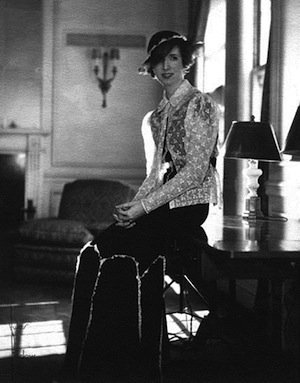
Mary Isabelle Wickenhauser grew up at 5017 Garfield in Fairground Park. Her nickname was Snooky. At Beaumont High School, it changed to Mary Wicken-trousers, the nickname of a plain and angular young woman who didn’t get asked to dances. She entered Washington University at 16, and her parents moved to Pershing in University City. Mary was their only child, and they kept their door open for her college friends; her dad even made them Manhattans.
After graduation, she worked as the university’s assistant publicity director while she scrounged her first acting roles. When a visiting director, co-founder of the Berkshire Playhouse, invited her to join the company, she defied her parents for the first time, leaving without their permission. She’d become Mary Wickes. Today, her comedy is legend; all it took were a few acerbic comments from her to transform a film. We talked with former journalist Steve Taravella about his new biography, Mary Wickes: I Know I’ve Seen That Face Before.
What’s the first time you remember seeing Mary Wickes in a play or film? It just seems as if Mary Wickes was always there. No matter what I was looking at, Mary would pop up—always as the outsider, the person who’s not really a part of things, but lets the audience know what’s going on. She was always the one winking at the audience, aware of whatever hypocrisy was going on in the scene.
What made that outsider role so natural? I’d say partly her physical appearance. Especially in that time period, when women were judged so much by their looks, women who looked like Mary had fewer options. Friends from school remember that Mary wasn’t asked to go to dances; Mary didn’t go on dates. Ultimately, that’s what caused her to build up that caustic, sarcastic, knowing, but also very lovable edge.
You paint an interesting picture of her: devoutly Episcopalian, volunteering at hospitals, yet touchy and brash. What do you like best about her, and what traits might have rubbed you the wrong way, had you met her before her death in 1995? I would have admired her loyalty, her intelligence, her talent, and her sense of humor. I think Mary in the right circumstances could be awfully good company. On the other hand, I think Mary could be holier than thou, rather harsh and severe when something surfaced she didn’t like. And those were things that made it hard for some people to spend a lot of time with her.
She and Lucille Ball were pals for life. I think they probably had an awful lot of fun together. My guess is that their conversations were not about “Oh, do you think you will get this role?” Mary didn’t focus on that with the people she really enjoyed. She liked people who were direct and didn’t have agendas. She and Lucille Ball found a lot of common ground in that.
What were her most classic performances? White Christmas? Sister Act? Yeah, I think the housekeeper in White Christmas has brought her an enduring line of fans. Every year, that’s shown, and people have great fondness for it. But her most interesting roles were not always her biggest. She was wonderful as Meryl Streep’s grandmother in Postcards from the Edge. The nurse with Bette Davis in Now, Voyager—a very small role, but what a punch in the arm for that film. I’m 50, and when I say Mary’s name, my friends say, “Oh, from Dennis the Menace!” Sr. Mary Lazarus in Sister Act brought her a whole new generation of fans.
Back in The Trouble With Angels, she was the whistle-blowing gym teacher who jumps into the pool feet first, in full habit and sneakers, to save a drowning Hayley Mills, who’s been cutting P.E. all year. It was funny learning that Wicks was the one who was terrified of water. I think the stunt guy who jumped for her was actually Richard Farnsworth, a rather well-known actor himself, but I couldn’t confirm it. A lot of people who knew of his work would have been shocked that it was him in the nun’s habit.
She was the original Mary Poppins, in a live TV show. If she’d stayed Mary Poppins, how would that iconic role have been different? It would have been very different. Mary’s version of Poppins would have been much more severe and rigid and serious. Mary’s Poppins wouldn’t have been as cheerful and lovely as Julie Andrews’. Mary’s probably wouldn’t have sung, either; she didn’t have a great singing voice.
She brought so much even to the smallest parts—was all of that scripted? She loved to bring to her performances what they call in the industry “bits of business” to flesh out her characters. So, very often, some gesture was not scripted. But she never wanted to change the words; it was always inflection or gesture. She had great respect for the writer.
What’s your best guess on her sexual orientation? I think Mary was a very repressed heterosexual woman. I understand why people thought she was lesbian. Certainly, for a time, researching this, I presumed she was lesbian. But I ultimately concluded, no, she wasn’t lesbian; she was either very repressed or asexual. I think it was Lucie Arnaz who pointed out that for some people, neither option is that appealing.
There’s something achingly sad about her belief that a series of gay male friends were really in love with her. But that, too, is a reflection of the times. Those things just weren’t discussed. You have to remember, she was born in 1910. She really is a product of a different way of looking at life.
In order to avoid starving while you finished the book, you became chief of internal communications at the United Nations World Food Program in Rome. Was it surreal, going home in Rome to write about American theater? It was really peculiar at times. I had written about half of the book in the States, but I thought, if I don’t finish this now, I’ll never finish it. So I did errands and chores on weeknights, and from Friday night until Monday morning for two years I didn’t leave the apartment.
What do you still want to know? I was told that in the ’70s, Mary was the only resident of this grand high-rise apartment complex, Century Towers. They were renovating and asked everyone to move out, and—I can just see this happening—Mary was defiant and didn’t want to leave. I’d also like to know more about some of her friends, like this fellow Bill Chase who went to Tangiers and opened an expat bar…
She worked in her later years, playing Aunt March in Little Women at 84. But it sounds like her old age was a painful time. When you’re losing your sight and suffering very painful arthritis and you’re by yourself and finding it hard to get around and your contemporaries are dying—it was very hard for her. And it was hard for her to ask for help, because she’d never perceived herself as someone who needed help.
What did Wickes most love about St. Louis? I don’t think there was anything about St. Louis that Mary Wickes didn’t love. I’ve rarely encountered anybody who felt such a deep affection for the town they grew up in. St. Louis represented affection and comfort and safety and warmth and familiarity, and it was chock full of things that interested her. She liked history, and St. Louis is rich in history. She liked culture, and there’s so much culture in St. Louis. But mostly Mary was a traditionalist. She just had great respect for where she came from.
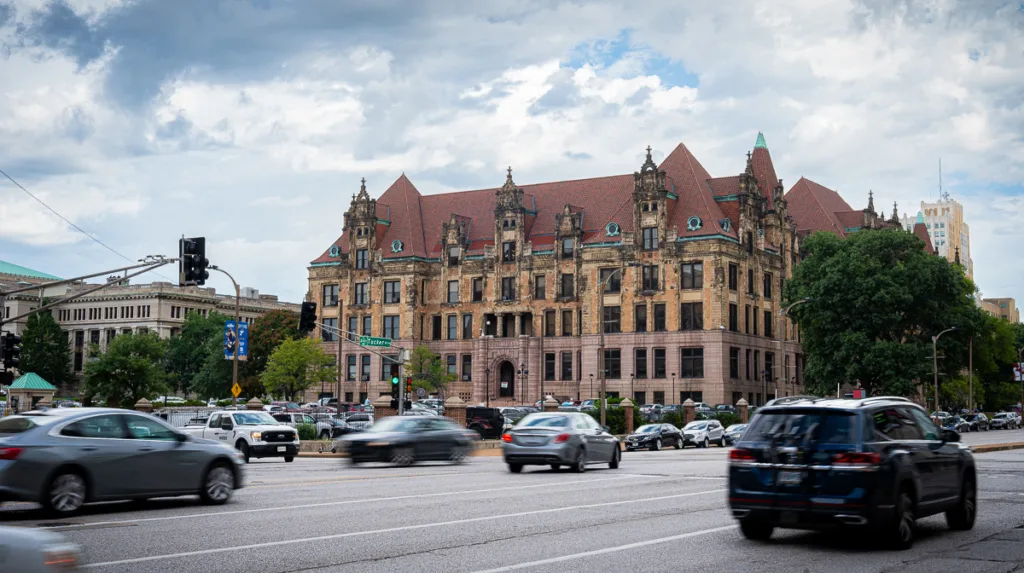
You made nine trips here to research the book—what was your take? I’ve lived in New York and L.A. and San Francisco and Washington, D.C., and I realized starting this I would have to spend quite a bit of time in St. Louis. I really wasn’t looking forward to it. But I was charmed. St. Louis is clean. It’s green. It’s easy to get around. It’s so friendly. It has such history, such architecture. The downtown train station? My God.
One more question: How did she get Cary Grant’s costume trunk? Well, there’s a St. Louis connection to that, too. There was an actor named Archie Leach doing something at the Muny in the 1930s. He got an offer from Hollywood and took off, and he left his own rather grand theatrical trunk to a friend who was a good friend of Mary’s and later gave it to her. So the trunk became Mary’s, and Archie Leach became Cary Grant. And she used that trunk. Mary took nothing for granted; she was very resourceful, and nothing went to waste. By the time she took the trunk on the road in Oklahoma, it was 50 years old.