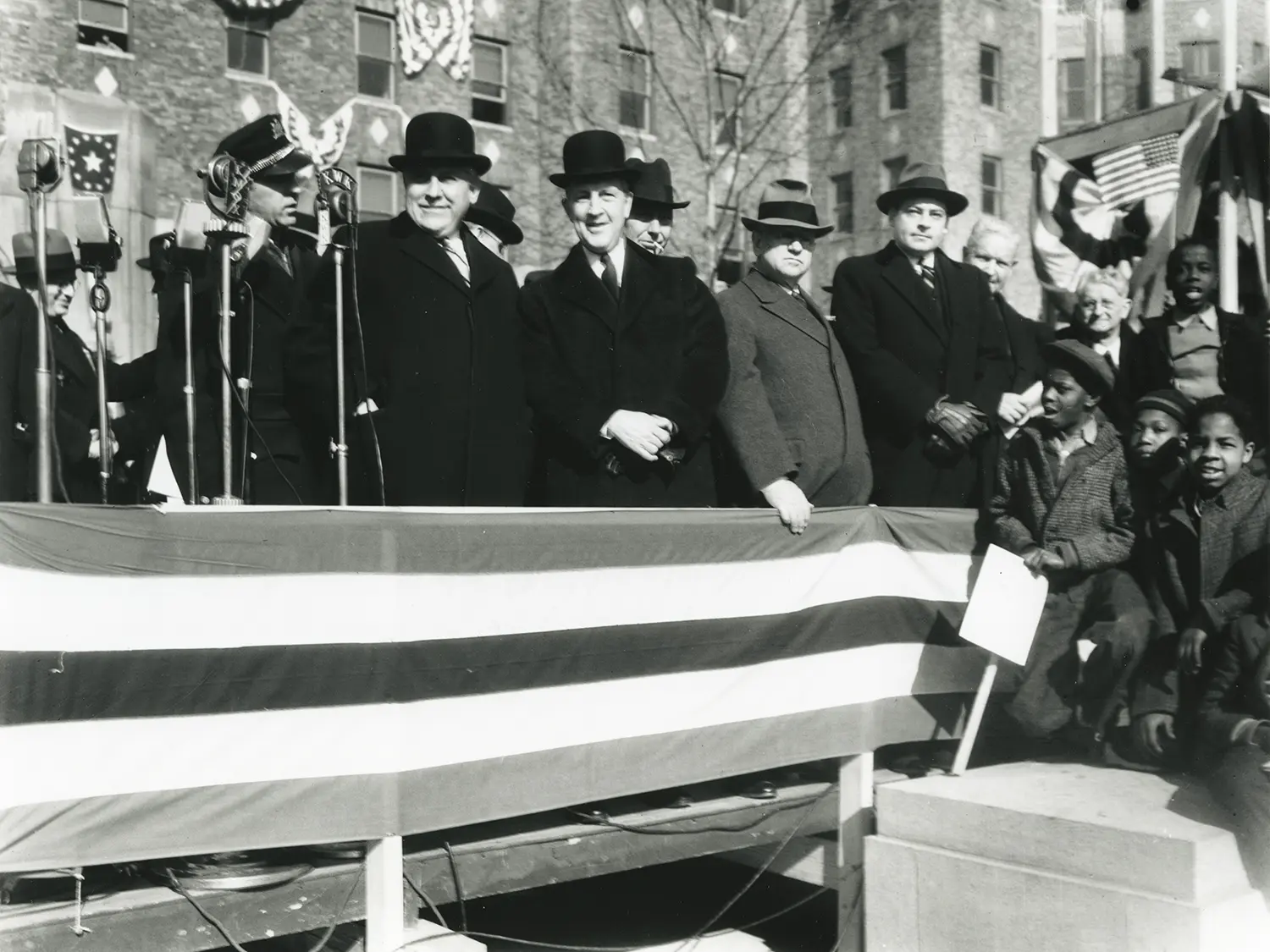
It was a cold day on February 23, 1937, when delegates gathered to celebrate the dedication of the Homer G. Phillips Hospital in the Ville neighborhood. Mayor Bernard F. Dickmann, Gov. Lloyd Stark, and U.S. Secretary of the Interior Harold Ickes stood front and center; noticeably absent were the Black leaders who had worked so hard to build the cutting-edge facility, which replaced the crumbling City Hospital No. 2. Phillips himself had died, struck by bullets while waiting for a streetcar, just over a year before construction began in October 1932. The events commemorating the opening of the $3 million hospital honoring him drew a reported 5,000 people; the parade beforehand featured 2,000 participants. A project of the Public Works Administration and a recipient of funds from the voter-approved 1923 city bond issue, the new hospital was the largest of its kind in the world, Ickes boasted. Designed by architect Albert Osburg, it was also state-of-the-art and stylish, with art deco motifs. While the hospital would eventually close and be faced with a failed usurper that would use its venerable name, the legacy of Homer G. Phillips shines on to this day.

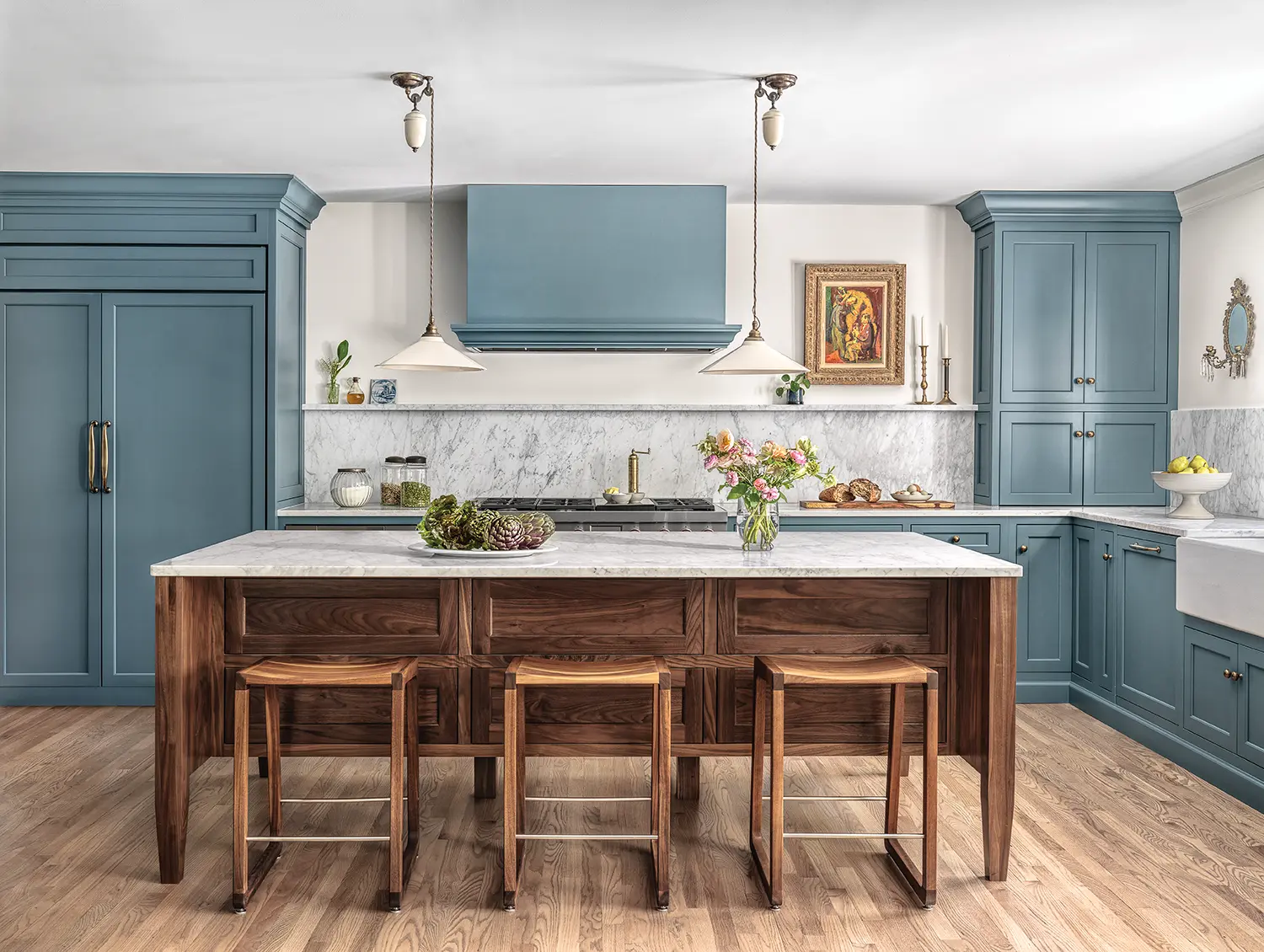
Timeless details define a new kitchen and breakfast nook in Ladue.
In this tricky renovation project, elegant features, modern conveniences, and a passion for the color blue win the day.