A s a college student in the late ’70s, Deborah Mashibini protested apartheid in front of the U.N. Then she went to South Africa. In Cape Town, she saw a production of Athol Fugard’s A Lesson From Aloes. “It insinuated, without being in your face, that white people were not doing the right thing,” she says. The audience was all white; the actors were black. “And this audience—hundreds of people—when the curtain went down, it was absolute silence…and the silence just went on, maybe two full minutes. And then the applause began, wave after wave…”
Mashibini never lost her heart for social justice. But she did change her philosophy. And she’s stuck to it: “I really do believe,” she laughs, “that art can change the world.”
She put that into practice in New York, where, as assistant director for the Coalition for the Homeless, she worked with writers and artists on the street (and put together an anthology of their work that was written up in The New York Times). After she and her husband, musician Zimbabwe Nkenya, moved to New Mexico, she helped build VSA New Mexico, part of an international network of groups addressing disability and the arts, from a two-person operation to a major state organization with a $1.7 million budget.
VSA, founded in the early 1970s, organizes programs ranging from artists in the schools to career training to advocating for accessible cultural institutions. Until recently, Missouri didn’t have a VSA affiliate—and though Mashibini consulted for VSA Hawaii and Arizona, she was not the one who initiated its formation. That was Michael Donavan of Missouri Arts Council, who hunted her down after attending a conference on arts and disability. Mashibini, after years of working in the nonprofit world, was refocusing her energy on her own creative work and getting a master’s degree in creative writing at Southern Illinois University Edwardsville (you can see her read, in fact, at the Focal Point in Maplewood on July 26), but she agreed to consult, always with the understanding that she’d be passing the torch. In 2009, VSA Missouri published the anthology Blindness Isn’t Black, featuring the work of more than 20 Missouri artists and writers with mental or physical disabilities; this April, VSA released its second anthology, Where We Can Read the Wind, which featured some of the same artists, writers, and editors—though there was one big change.
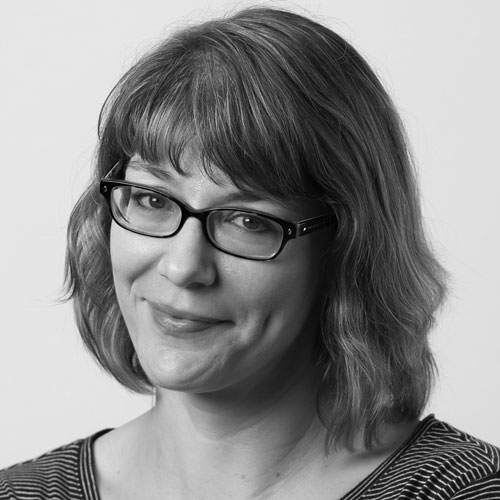
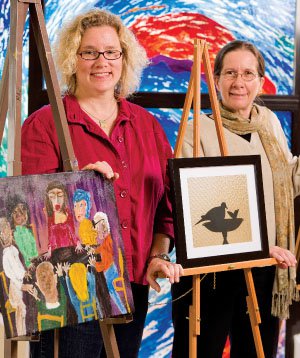
Painter Leslie Holt (whose witty solo show “Hello, Masterpiece” hung at phd Gallery a few years ago) consulted on both anthologies and is now VSA Missouri’s newest executive director. In addition to her visual-art experience, she has an extensive background working with artists with mental illness. After starting part time in November, she went full time in January and has been organizing VSA’s many branches, from its artist-in-the-schools program to the anthology to the touring exhibit “Blindness Isn’t Black,” which features the work of nine disabled artists.
The organization also just finished its second production of No Such Thing as Normal, a musical about autism. For eight weeks, VSA Missouri worked with a fourth-grade class at Marvin Elementary School in the Ritenour School District, teaching them the songs and the choreography. “It encourages discussion about disability in general,” Holt says. “And they have the whole musical experience in addition to that. It’s also pretty amazing to see 80 kids belting out a song about autism!”
She is also gearing up for new programs, including helping local cultural institutions record audio tours; produce signs and programs in Braille; and make their buildings and bathrooms accessible. And in the long-range future, she says she would love to have an accessible art bus that could tour the state, setting up in parking lots and doing art activities or performances at schools and other institutions, especially in rural areas. She says the traveling she has already done around the state made her acutely aware of the void VSA Missouri is filling.
“I think the thing that’s surprised me the most is that people will come to the show [‘Blindness Isn’t Black’] and be blown over by the quality of the art,” she says. “An organization like ours toes the line between being an arts organization and being seen as a social-service organization. We’re really not a social-service organization, but when you talk about people with disabilities, that’s the assumption people bring… This is about professional artists who just happen to have disabilities.”
But people don’t quite get that yet. “And that means we still have a lot of work to do.” That includes expanding her own perceptions. “I had not worked a lot with blind people,” Holt says. “So I was really quite surprised when I discovered that one of our artists had 5 percent vision in one eye… I’ve learned a lot, too.”
On July 24 from 3 to 5 p.m. at Artropolis (Chesterfield Mall, Level 2 by Sears), VSA Missouri will celebrate the 21st anniversary of the American with Disabilities Act. The event will include a reading and talk at Dramatic License Theater, a reception at MindWorks Gallery next to the theater, a silent art auction, and a talk by disability community William Sheldon, will speak about the ADA and the importance of access to the arts. For more information, call Leslie Holt at 888-718-0866 or visit vsamissouri.org. VSA also participated in programming around the Missouri History Museum’s exhibit “The Americans With Disabilities Act: Twenty Years Later,” which remains on view through January 8, 2012.