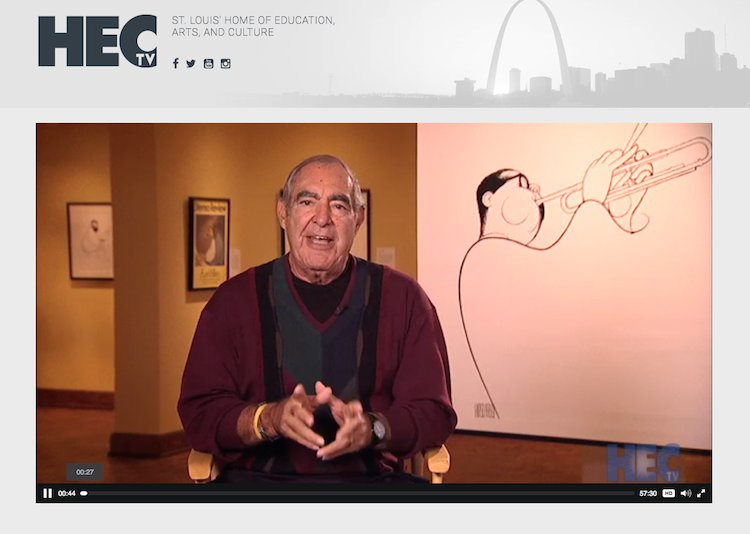
Last Friday, after defense attorney Don Wolff passed away at the age of 80, the eulogies poured in. (Here’s one at the Post, and another on St. Louis Jazz Notes. You should also check out Terry Perkins’ wonderful 2012 profile for St. Louis Public Radio.) Though his achievements in the field of law were substantial, most St. Louisans knew Wolff as the guy on WSIE, KMOX, KFUO and HEC-TV who proclaimed, “I love jazz!”
Wolff didn’t just love jazz—he knew it, up, down, backwards, and sideways. And he shared both his enthusiasm and deep knowledge with his audience. St. Louis has always been a jazz city, though sometimes we under-appreciate our homegrown artists. He reminded us of the amazing, rich talent here in St. Louis, encouraged us to go out into the city and into the clubs and listen. And if for some reason we couldn’t, he brought it straight to us. It’s thanks to his shows that we have an amazing archive of interviews and performances, one that will remain relevant to the history of jazz in St. Louis for a long time to come.
Get a guide to the region’s booming music scene
Subscribe to the St. Louis Music newsletter to discover upcoming concerts, local artists to watch, and more across an eclectic playlist of genres.
We’ve rounded up some clips that remind us not just that Wolff was a wonderful jazz ambassador, but that he was a genius at listening, curating, and presenting jazz to an audience.
Here’s Wolff talking to up-and-coming young ragtime pianist Stephanie Trick, in 2010:
In a 2013 episode of I Love Jazz, Wolff presented outtakes from a Jazz at the Bistro show with the late Willie Aikins performing with durmmer Montez Coleman:
In May of 2014, Wolff profiled St. Louis-born Jeremy Davenport (who will be in St. Louis this week for his annual Thanksgiving holiday show at Jazz at the Bistro):
And one year ago, he presented a special tribute to the music of Gaslight Square—a topic close to Wolff’s heart. That’s where he first caught the jazz bug, selling papers around the clubs there, listening to the music drift out of clubs he wasn’t old enough to enter.
Towards the end of his life, Wolff broadcasted on Internet rather than analog radio—which means his archive of interviews is readily accessible. Check those out here, and be sure to spend some time in the HEC-TV archives as well—there is a lot there worth revisiting.