Throughout the more than 100 years that Webster University has been in St. Louis, the institution has worked to open worlds that were previously closed to students. Attracting a diverse student body and helping them succeed is an ongoing core value at the university. Last fall, for instance, the university created a unique study-abroad opportunity to eliminate barriers to access.
“When I came to Webster, one of the things that drew me in was the fact that we had a campus in Ghana and that there might be an opportunity to take students abroad to study Africa,” says Emmanuel Balogun, assistant professor of International Relations at Webster University.
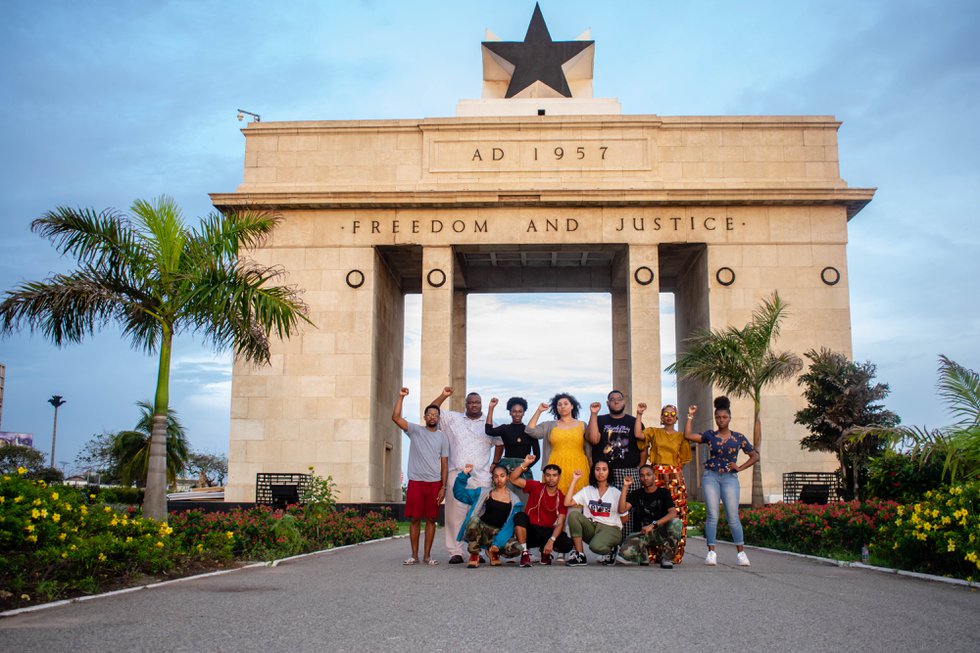
So Balogun and other educators decided to create an exclusive group experience that would deepen the connection that students of color have with the institution. The Africana Studies experiential learning course combined in-classroom learning in Webster Groves with a weeklong trip to the campus in Accra, Ghana. With the support of donor funds, the course’s nine students were able to travel abroad and gain a new perspective.
“All of the students involved were students of color, and most of them had never traveled overseas prior to this trip,” says Vincent C. Flewellen, chief diversity officer at Webster University.
Millenia Wells, a sophomore majoring in biological sciences with an emphasis in health and medicine, registered for the class. “The most impactful thing I experienced while in Ghana was visiting the Assin Manso Slave River,” says Wells. “Being able to partially relive what my ancestors experienced hurt me to my core. Overall, it filled me with raw emotions. Anger towards the white men who publicly dehumanized and murdered my people. Helpless towards my ancestors who were direct victims of these colonizing forces. But through it all, it empowered it me. A system that was designed to humiliate, destroy, and terminate our very existence actually made us stronger. Despite everything, my ancestors endured, and the current systems of oppression that black people still continue to face—we are still here, and that is very impactful for me.”
For Balogun, the trip also left a lasting impression. “The trip was a defining moment of my career as a professor,” he says. “To see the students come together like they did—to hold each other accountable while lifting each other up—and to see that we were able to provide an experience that no classroom discussion, paper, or exam would ever be able to replicate was extremely empowering.
“I noticed that the students were deeply reflective about every aspect of the trip, from the representation on billboards to learning some difficult truths about the slave trade to their interactions with their Webster Ghana counterparts,” he continues. “The students were tremendously present and attentive to their sense of place. While they were able to make some explicit connections akin to what we learned about in the class, the students were also cognizant of the reality that the connections weren’t what they imagined it would be. They dealt with things like colorism and identity, which complicated their expectations.”
Linking classroom lessons with first-hand observations created a rich educational experience for the students. “The social, economical, and political struggles and victories of Ghana that we learned about in class were informative and engaging,” says Wells. “But being able to experience these historical facets by visiting the country from which they were born left me in awe.
“I specifically noticed this when we toured the Kwame Nkrumah Mausoleum,” Well adds. “Professor Balogun taught of his achievements and sacrifices that Kwame Nkrumah made for Ghana, and seeing his impact in person was encouraging. Because I had the background information prior to visiting the motherland, I did not feel like a visitor when entering the county; I felt like I was home.”
Balogun hopes to continue offering such experiences to students in the future. “I strongly believe that this class should be embedded as a signature program for Webster,” says Balogun. “A trip like ours is definitive about issues of equity and student success. Regularly offering opportunities for students who typically might not think studying abroad is in the cards for them can help in all facets of student success. Students were more invested in the course, more attuned to the disparities they face on campus and in their communities, and more aware about how they can be advocates for change on campus and in their communities.”
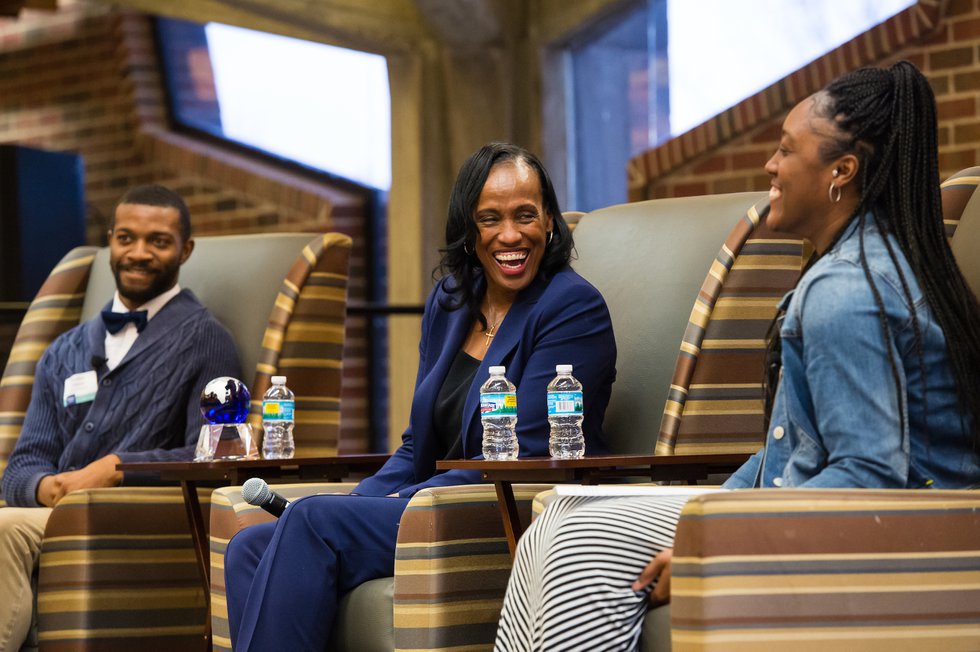
One of the ways that the students are advocating for change in their own communities is by sharing their experiences in Ghana during the 2020 Diversity & Inclusion Conference, February 24–27 on Webster University’s campus. During the conference, the students will share about their experiences with attendees and describe what they learned.
“We are talking about taking the ideas of inclusion from conversation to action,” says Flewellen. “This class is the perfect example of that. We saw a need for increased study-abroad opportunities on campus for students of color, and we worked together and created one for the students that was both interesting to them and impactful.”
In addition to the panel and documentary on the Intro to Africana studies trip to Ghana, the conference will feature a session from award-winning journalist Michele Norris, founder of The Race Project; Shelly Tochluk, author of Witnessing Whiteness; and Aisha Sultan, a nationally syndicated columnist and independent filmmaker.
“Education happens through experiences, and we feel that the students learned so much in their own experience in traveling to Ghana,” says Flewellen. “We look forward to helping educate others in what they’ve learned.”
More information about the 2020 Diversity & Inclusion Conference can be found at webster.edu/conversations.