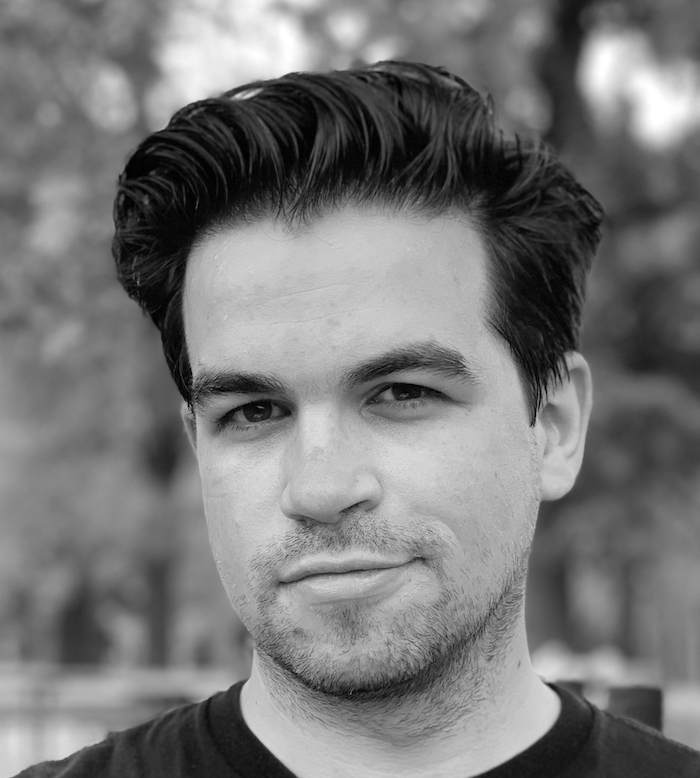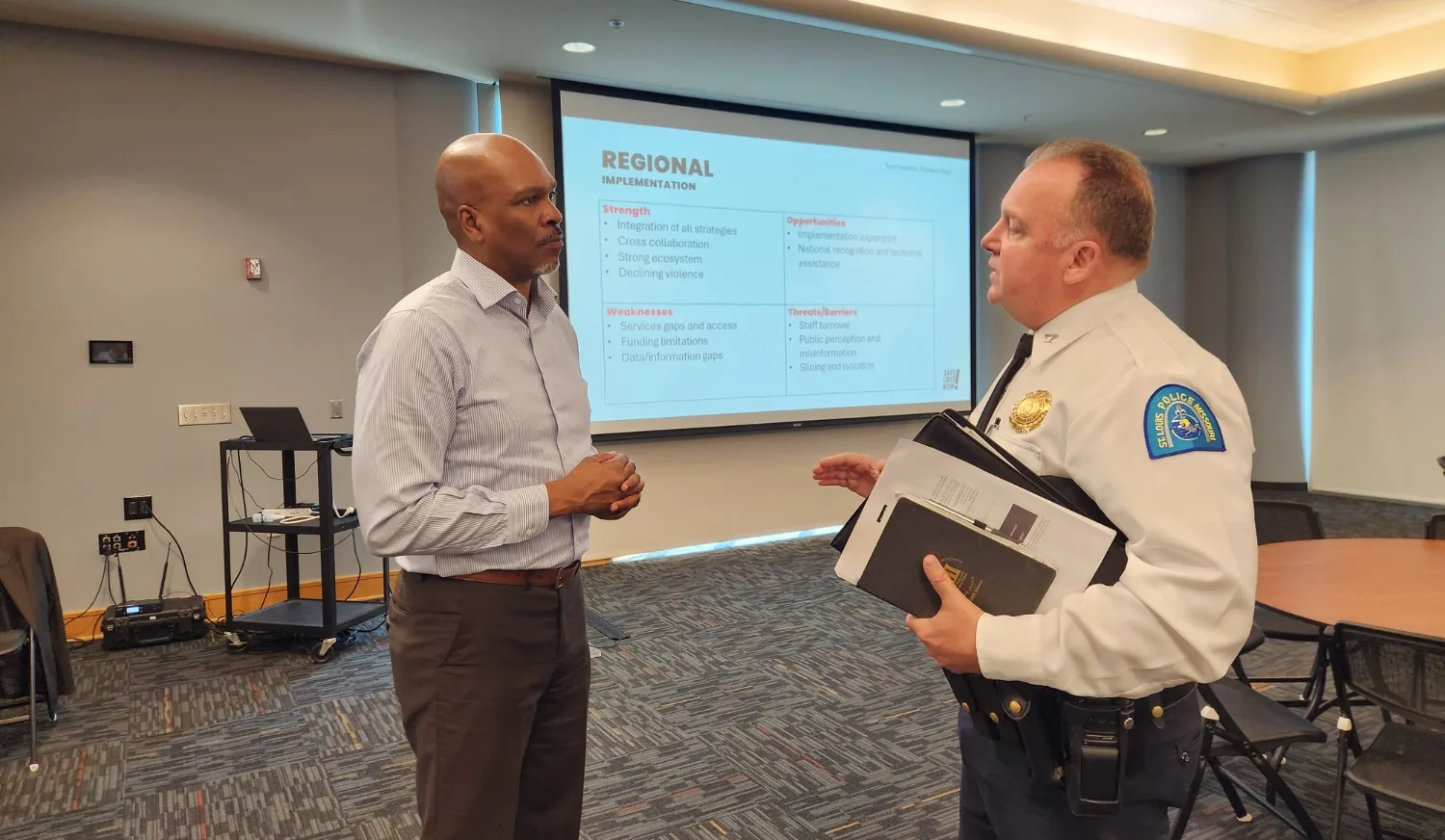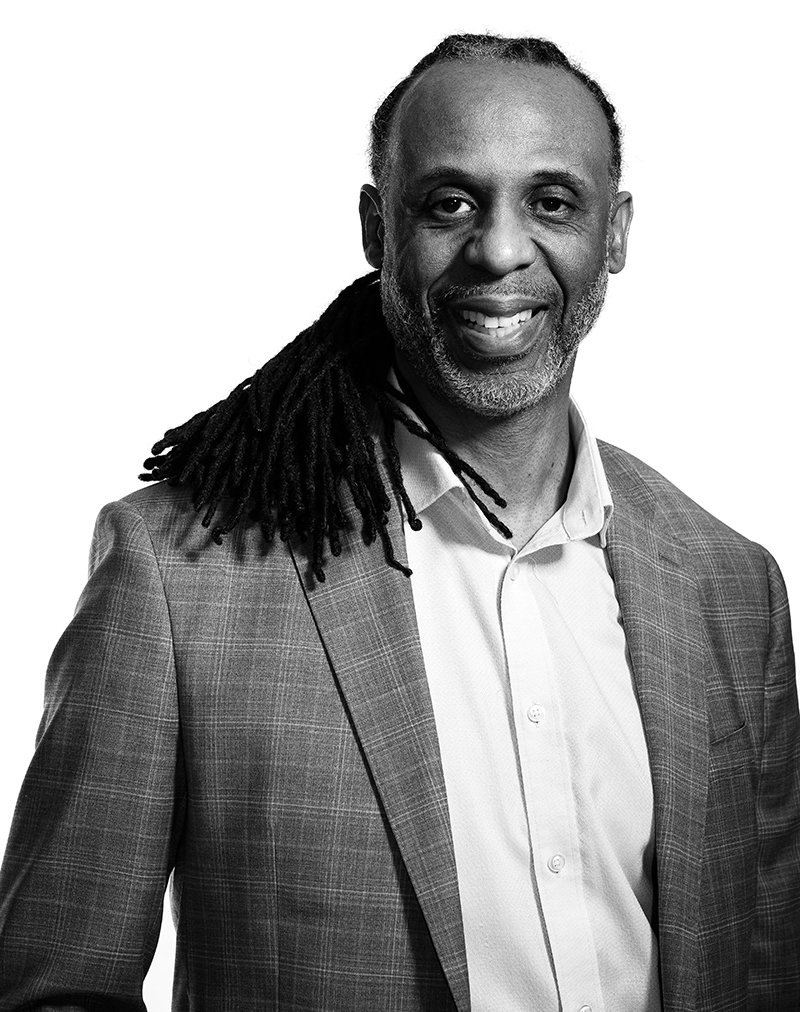
In 2018, a 20-year veteran of the New York City Police Department named Wilford Pinkney Jr. came to St. Louis. He took part in a bail reform project that facilitated the release of inmates and encouraged them to take advantage of counseling and treatment services. Since then, Pinkney has stayed in town. He has had a hand in a range of public safety initiatives in the city, with a special focus on the social aspect of policing. Pinkney is now the city’s director of the Office of Children, Youth, and Families. He’s leading a new program called Cops and Clinicians that arranges for police officers and social workers to team up when responding to disturbances.
What kinds of problems do you hope this program solves? Oftentimes, police get to a scene and there’s someone having a behavioral health episode, whether it’s mental health or related to substance use. For me, it’s important that that person have an opportunity for their needs to be met before they get arrested—or if they do get arrested, that they get the help they need afterward, because we don’t normally do enough to look at root causes. When you look at the level of crime and violence and the historical issues of institutional racism that have plagued this city, this is an important step. All of the work in my office is done through a racial equity lens. When I first wake up, I’m thinking about how I can help address issues of inequity in the city so all kids and families have opportunities to succeed.
Get a fresh take on the day’s top news
Subscribe to the St. Louis Daily newsletter for a smart, succinct guide to local news from award-winning journalists Sarah Fenske and Ryan Krull.
How does the program work? There are two pieces to it. One is the 911 call diversion. It has always been a concern of police that [officers] come in contact with individuals who call 911 and clearly need something other than a police response. Call diversion is all about transferring them to a crisis line where they can talk with someone who’s trained to engage with people going through a personal crisis. The hope is that this will decrease calls that require an emergency response or arrest in those situations.
What’s the second piece? If someone is having an episode and another person calls 911, officers go to the scene and now clinicians respond along with them. Once the police make sure the scene is safe, the clinicians can help to deescalate those situations. Not only do they de-escalate them, but they also help identify what that person needs at that time.
How much of the work is focused on ensuring that various sectors are aligned? That’s a big part of it. In January 2019, I brought together people from law enforcement, public health, social services, and behavioral health. The first thing we did was to create shared goals and values. We realized that we already have shared goals and values; a lot of it was just talking it through, because many of those sectors speak different languages… I wanted to help them realize that they’re dealing with the same people at different points in their life or different points while they’re in crisis. It was about saying, “How do we come together?”
When you consider last year’s debate over policing, do you see police work being forced to evolve in the future? Police organizations constantly have to change, because conditions constantly change. The core of all of these things is that we need to make sure we humanize the people we engage with. Then the question becomes, what is the best way to address [those people’s] behavior? I think we’re starting to realize after years of locking up people that the best course of action isn’t always that.
How has your background shaped the way you see your work? I grew up in the South Bronx in the late ’60s in areas that were ravaged by some of the same conditions that exist in St. Louis today in terms of violence and substance abuse. For me, it’s personal in that many of the people I engage with look like me. I’ve been all throughout St. Louis, especially in North St. Louis, and it reminds me of New York and my time growing up. New York turned around, and I know St. Louis can as well. I’m driven by that.