When Missouri Gov. Mike Kehoe cut $53 million earlier this summer in an attempt to balance the state’s budget, a St. Louis-based initiative was among those left reeling. The Transformative Workforce Academy, which is housed at Saint Louis University, has been quietly helping people land jobs after prison—something that research suggests helps save money.
Program director Meredith Rataj says she and her team knew the state budget was tight, and at one point they feared that lawmakers would cut their $400,000 allocation. But they were able to make the case for their project. “Legislators were really excited about what we were doing and saying, ‘No, we don’t want to lose this momentum,’” she says. “And so they made sure that the line item that supports our program was put back into the budget. And all along the way, the Department of Corrections staff has been rooting for us. They’re like, ‘We love what you’re doing.’” Rataj thought they’d made it across the finish line when the full sum was included in the legislature’s budget—only for it to fall prey to a few strokes of the governor’s pen, with no chance to make their case. They lost every last penny allocated for this fiscal year. (Representatives for Kehoe did not respond to requests for comment.)
Get a fresh take on the day’s top news
Subscribe to the St. Louis Daily newsletter for a smart, succinct guide to local news from award-winning journalists Sarah Fenske and Ryan Krull.
The cut was even more shocking because the 8-year-old program had been slowly expanding across Missouri at the request of the state Department of Corrections, working with people in Kansas City, Springfield, and Columbia, not just St. Louis. Now staffers are scrambling to find other funding sources to keep that work going.
They make a strong case that any dollars sent their way will be well-spent. The initiative, also known as SLU TWA, employs just seven people (including Rataj) but boasts that it’s placed 800 former prisoners into employment. Its participants go back to prison at a rate that’s 40 percent below the state benchmark, staffers say, which has saved taxpayers $2.2 million in reincarceration costs over the past three years alone.
Former state senator Jeff Smith became an advocate for reentry programs after spending a year in federal prison (he also now works with SLU TWA as a consultant). “One of the more penny-wise, pound-foolish ways that you can cut is to cut from reentry programs that have proven successful, because it’s so expensive to house people in prison,” he says. “There aren’t many other state appropriations where you can so directly see the back-end cost of failure.”
Rataj credits two things for the program’s success: First, they’re always working to cultivate relationships with employers, which they then draw upon to help place candidates. They’ve learned one great way to make those placements is through short video resumés that they help candidates make. It was a pandemic-era pivot intended to avoid in-person job fairs during the time of COVID, but Rataj says they’ve endured for a reason: “The employer doesn’t have to spend a whole lot of time having long conversations with somebody just to figure out, ‘Maybe this isn’t the best fit,’” she says. “And they also just come alive, right? You can look at somebody’s paper resumé, but if you look at them on a video, all of a sudden they’re a real person with real strengths and skills that they’re bringing right in front of you.”
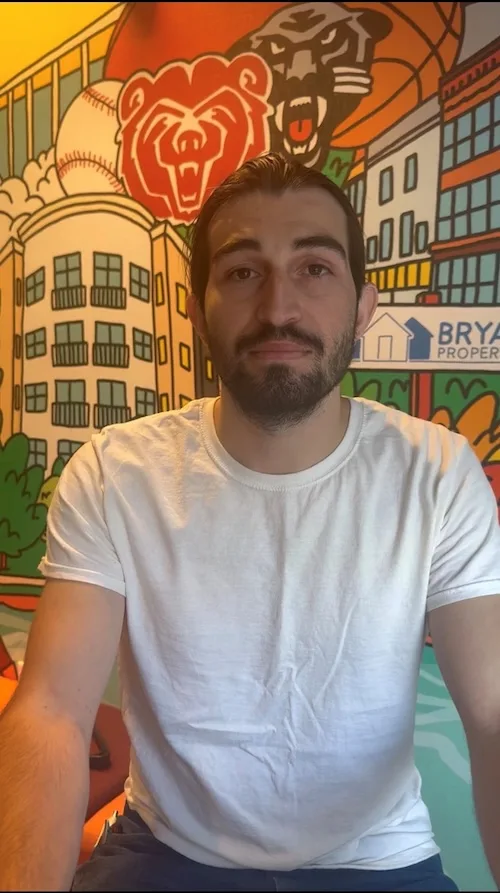
Christopher Harms is a great example of that. He spent 10 years in prison, and before his release from Farmington Correctional Center, he took a three-day class with SLU TWA. They helped him make a video resumé, and after he moved back to Springfield, SLU TWA connected him with Creative Modular Construction (and, when Harms thought he hadn’t heard back from the company, his SLU TWA contact helped teach him about modern-era spam filters).
Once Harms was hired, though, he needed no help. “Previously, before going to prison, I was in the military, and they had me trained as a machinist welder, so I already had some welding experience,” he says. “I started welding, and they were amazed that I could actually weld.” He’s now getting close to reaching the end of his 90-probationary period and is proud that the company has him training other people. He’s making $18 an hour and hopes to soon get both his welding and forklift certifications.
He credits SLU TWA for helping him get his foot in the door. Seeing the other guys in his halfway house struggle, he realizes that he was lucky to get the help. “A lot of companies, they do a background check, and ‘Oh, you have this type of felony, we do not hire you,’” he says.
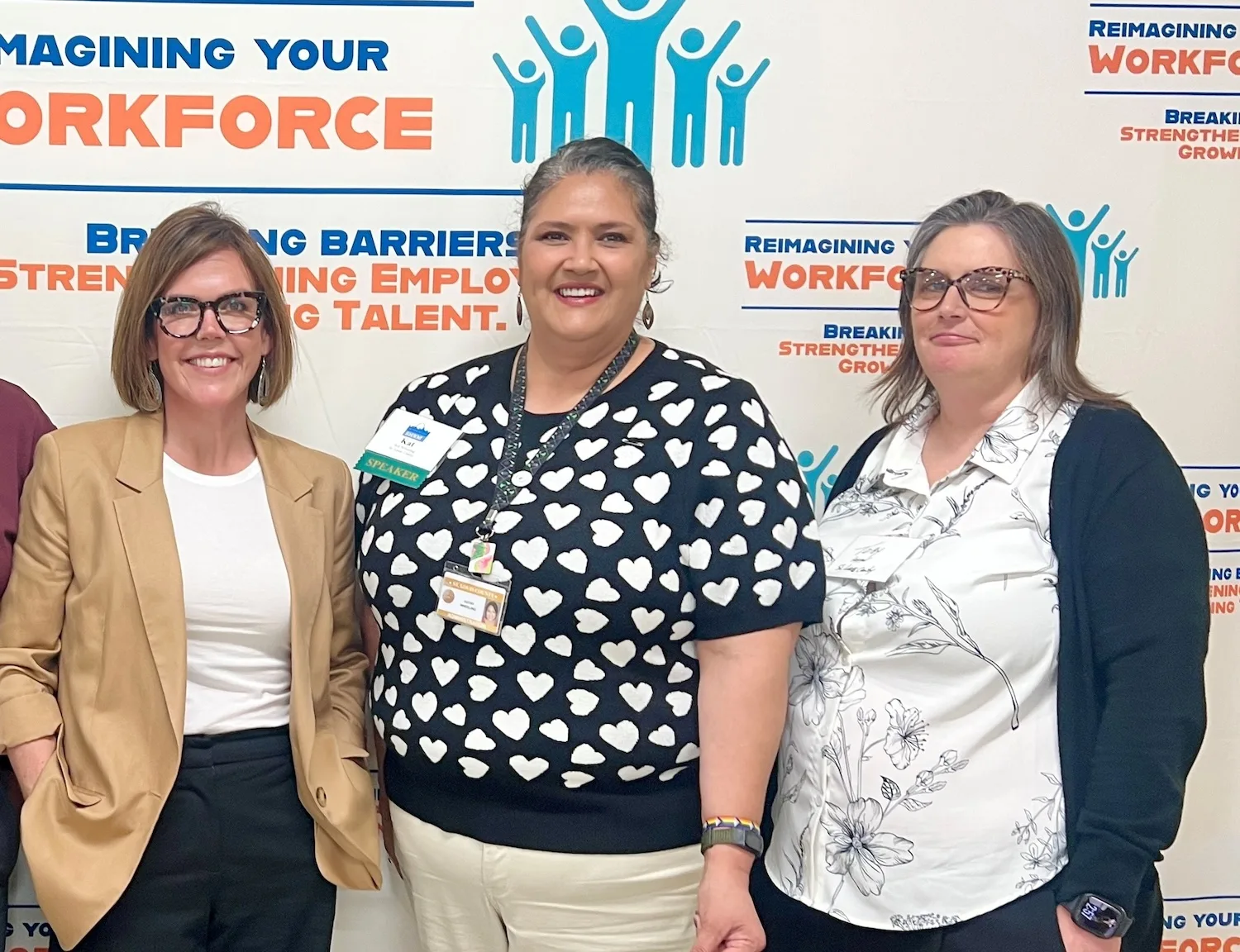
It’s not just workers who appreciate the connections; employers are happy, too. St. Louis County has been working with SLU TWA for a while now and has been pleased with the candidates they’re seeing.
“We want to widen the door for people coming in from all walks of life,” says Kat Wheeling, a human resources generalist for St. Louis County.
Her colleague Toby Hopper seconds that. Hopper has been in the county’s human resources department for 20 years now, and says it’s gotten increasingly difficult to fill some positions. “We’ve seen kind of a shift in the candidate pool over a number of years,” she says. “That makes our hiring managers a little more open to things when they have roles to fill. You look through things with the lens of, ‘OK, it’s really about who’s going to bring to the table what we need.’ We need to focus on the person and not the past.”
Hopper says the Public Works department recently hired someone coming out of prison with the help of SLU TWA—and they’re thrilled with what he’s brought to the job. “We were told we need 10 more like him because of how well it’s been working out with his willingness, his capabilities, his attention to being a great employee on their team,” she says.
But holding classes, filming video resumés, and building relationships with employers and candidates alike takes time—and that takes money. Rataj is hoping people donate to keep their program going. If they can hang on, she’s hopeful they can persuade the state to get back on board with funding next year.
Every year, approximately 11,000 people leave prison in Missouri. Rataj believes the state can’t afford not to offer them an assist.