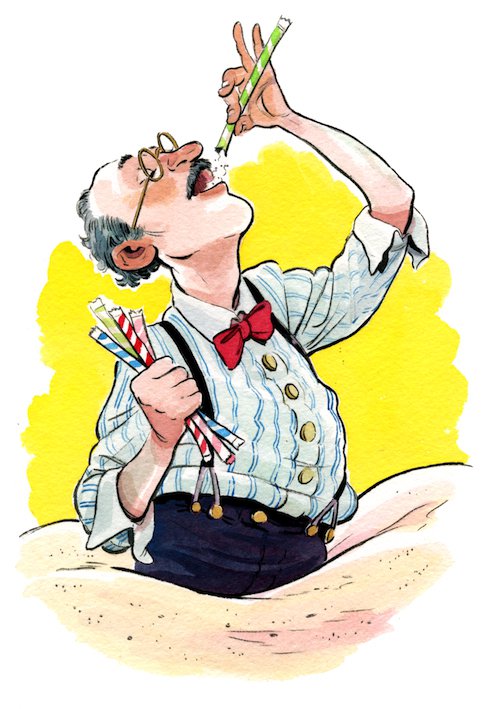
Ah, Pixy Stix. Just the thought of those paper straws full of dextrose takes this old man back to a simpler time when all of a child’s problems would melt along with the sugar dissolving on his tongue. Leave the powder there long enough, and the citric acid would burn. Inhale at the wrong moment, and a bit of tingly Pixy dust would sneak up the nose.
They were invented by accident. In the 1930s, an enterprising St. Louisan named John Fish Smith created a drink mix called Frutola. Though the recipe for Kool-Aid was hardly complicated, Smith wanted to make things even easier for Mom, so he put all of the sugar right in the pouch. Frutola didn’t take off as he intended, but Smith noticed some children eating the sweet dust directly. Rather than scrap the whole idea, he simply decided to leave the beverage business behind to become a candy man.
Get a fresh take on the day’s top news
Subscribe to the St. Louis Daily newsletter for a smart, succinct guide to local news from award-winning journalists Sarah Fenske and Ryan Krull.
By the 1950s, his Sunline candy company had paired the pouches of powder with a spoon or candy stick in Lik-M-Aid (now Fun Dip) and repackaged it in straws as Pixy Stix. The latter were sold individually for a penny or in a cellophane pack with all five flavors for a nickel. In the ’60s, Smith decided to press the same mixture into a tablet form that he dubbed SweeTarts.
Giant Pixy Stix, which came along a little later, packed roughly three tablespoons of sugar into a 21-inch plastic tube. This direct method of sugar delivery induced raging highs that kept kids up well past bedtime.
To Cybele May, the sweets queen behind Candy Blog, Pixy Stix are classic Americana. “Any candy flavor I ever come across is measured against the Pixy Stix grape,” she says. “Not that it is a great flavor—it is not fantastic, but it is iconic.”
For decades, Sunline (and later Sunmark) was a major player in the candy industry, but it eventually fell into foreign hands. Sunline was sold to the U.K.’s Rowntree Mackintosh, which was then bought out by Switzerland’s Nestlé. “A look at a recent 2012 package in my files shows Pixy Stix as now being produced in Mexico,” says candy geek Jason Liebig of Collecting Candy. “So much American candy production has moved to Mexico, it’s a damned shame.”
If the loss of American manufacturing has you down, it’s said that a straw of dextrose, dumped directly down the throat, has magical mood-lifting powers.
5
Original Pixy Stix flavors—cherry, orange, grape, lemon, and lime
25
Calories in a serving of three Stix
3
Root canals you’ll need if you don’t stop eating Giant Pixy Stix