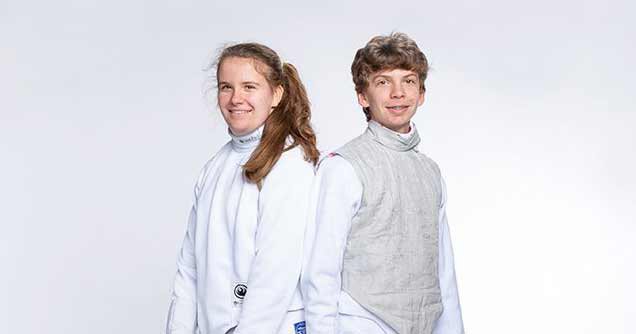
• Fencing is sort of a hidden sport—not a lot of people know about it. The only time it’s on TV is during the Olympics.
• The most challenging part about fencing is being on the strip: You have all these actions you can do, but you have to read what your opponent is doing first. You can’t go into a bout thinking, “I’ll do this, then this.”
Are you a CITY SC fan?
Subscribe to the CITY Scene newsletter to get a fan’s guide to the pro soccer scene in St. Louis.
• You have to see what they’re doing, and you have a reaction to it. Go in your memory bank and see if you need to do this move or that move.
• As you practice, you start to see different scenarios; you gain reactions to certain scenarios. Your coach is also with you on the side of the strip and reads what the other fencer is doing.
• We use different weapons [Bogdan uses a foil, Nina an épée], and our styles are so different that we don’t usually practice together. If a foil person takes on an épée person, they fence way too fast. Épée is waiting for your opponent to make a mistake and then going after that opportunity. Foil is creating a situation.
• It’s a lot of legwork. You need strong legs to be faster, more agile, and more explosive. With your arms, it isn’t about strength—it’s about quickness.
• It makes a big difference if you’re right-handed or left-handed. Lefties are more troublesome to fence against.
• We aren’t allowed to play any contact sports: no concussions and no breaking of the right arm. Left arm? That’s OK. But the right? No, never.
• There are a couple superstitions of what you shouldn’t do before a tournament. One is not cutting your hair. The other is not clipping your fingernails. You don’t want to change any variables.
• The most frustrating thing about fencing is that there is only one winner. One mistake can mean your day stops right there.
The Hamiltons will compete in the USA Fencing National Championships at America’s Center, starting June 28.