Vince Gennaro touched down at O’Hare International Airport after returning from a trip to St. Louis. He boarded a shuttle to his apartment in Chicago’s Streeterville neighborhood and found a window seat. A few moments later, he watched as a parade of tall young women boarded. One of them, Glenda Holleyman, asked if she could take the seat beside him. The pair began talking.
“Are you all some sort of sports team?” asked the then-27-year-old Gennaro. It turned out they were members of the Houston Angels, a team in the new Women’s Professional Basketball League (WBL), founded the previous year. With a 13–1 record, the Angels had only lost to the Chicago Hustle, the squad they would face the next day. Gennaro, who closely followed basketball and baseball, had never heard of the teams—or the league. Holleyman told Gennaro she would leave two tickets for him at DePaul’s arena, Alumni Hall.
Are you a CITY SC fan?
Subscribe to the CITY Scene newsletter to get a fan’s guide to the pro soccer scene in St. Louis.
The next day, Gennaro and his wife, Karen, bundled up and set out from their apartment to DePaul University. The couple was shocked to see thousands of fans filing into the arena, many of them young girls between the ages of 8 and 16. By the time they found their seats, the gym was rowdy. There was a verve in the air.
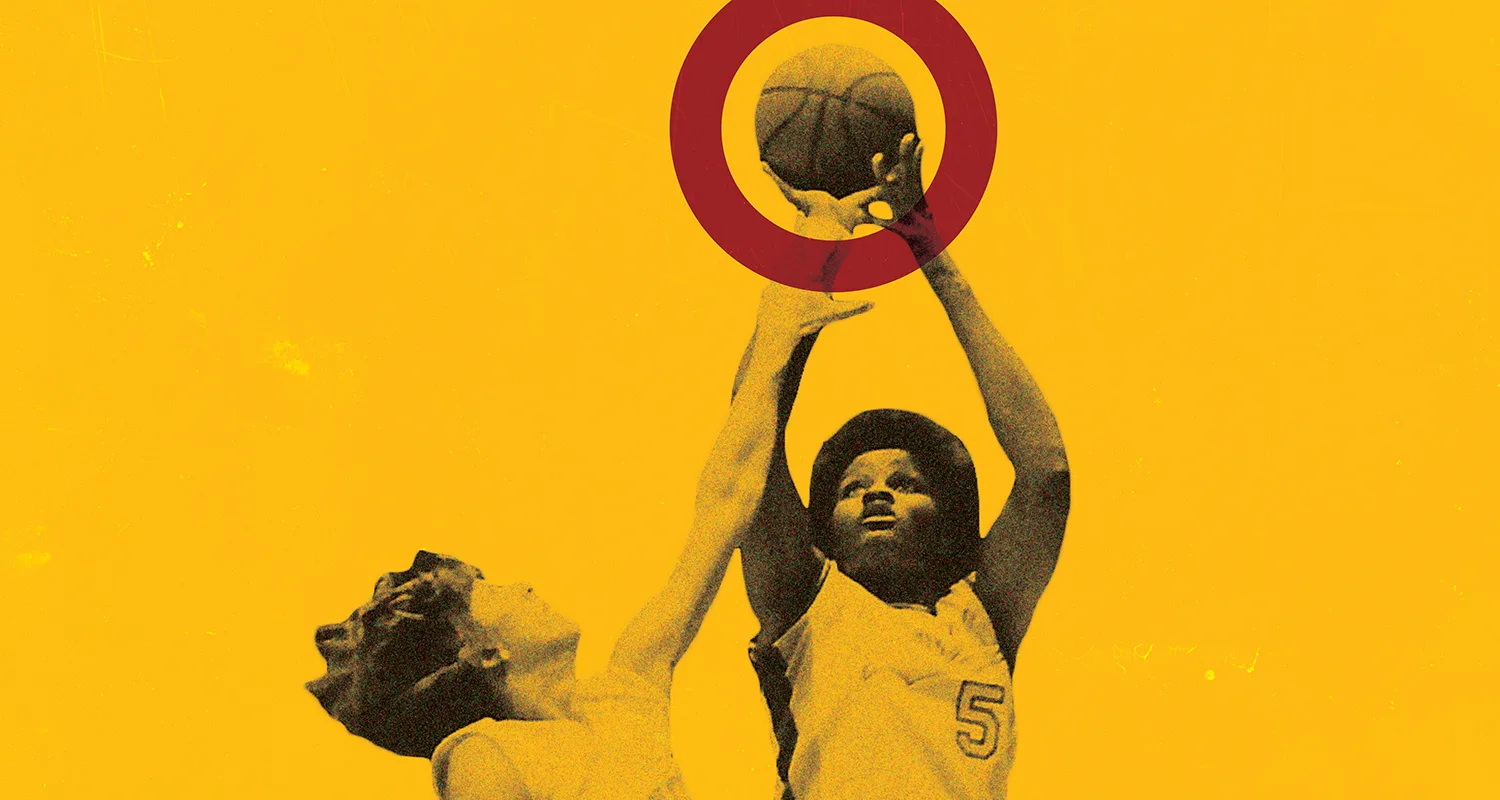
The matchup was an offensive showcase. From their seat a few rows behind the Angels bench, the Gennaros watched as Chicago’s Debra Waddy-Rossow scored 25 points and teammate Elizabeth Galloway McQuitter added 21 as the Hustle blitzed to a 120–98 victory. But while Gennaro was struck by the quality of play, what stood out most to him was what happened after the final horn sounded. The home team hung around to greet young fans, who made their way courtside for autographs and high fives.
“Every time I went to a Yankee game or any kind of a sporting event growing up, I could always dream of being one of those players one day,” Gennaro says now. “Yet if I had a sister or was a woman in the crowd, I could never really feel that back then. This was a turning point in my mind… I felt like this was an incredible opportunity to get to the ground floor of something that was inevitable and deserved.”
THE RISE
Gennaro had a vision. He had grown up an only child in New Jersey, where his mother, Angela, worked as a bank teller and real estate agent. His stepfather, Walter, ran a deli where he had worked as a boy, watching the store evolve into a vital cog in the community. After receiving his bachelor’s from Seton Hall University in nearby South Orange, New Jersey, Gennaro earned his MBA from the University of Chicago. He took a job building quantitative models for Data Resources Inc., an economic consulting firm. It appeared to be the beginning of a promising business career—but part of him yearned to follow in his parents’ footsteps by building something of his own.
Gennaro began researching markets for an expansion franchise in the WBL. He quickly narrowed his list to Boston and St. Louis. The league informed him that someone had already purchased the rights to the St. Louis market prior to the league’s first season but had not fielded a team. He contacted the owner, Harry Wald, who agreed to sell the rights for a lower cost than the league’s new franchise fee. “That sort of hit the balance toward St. Louis,” recalls Gennaro.
Favoring alliteration and wanting to convey motion, Gennaro came up with the St. Louis Streak. In keeping with the color scheme of the city’s professional football and baseball teams at the time, the Streak took red as its primary color.
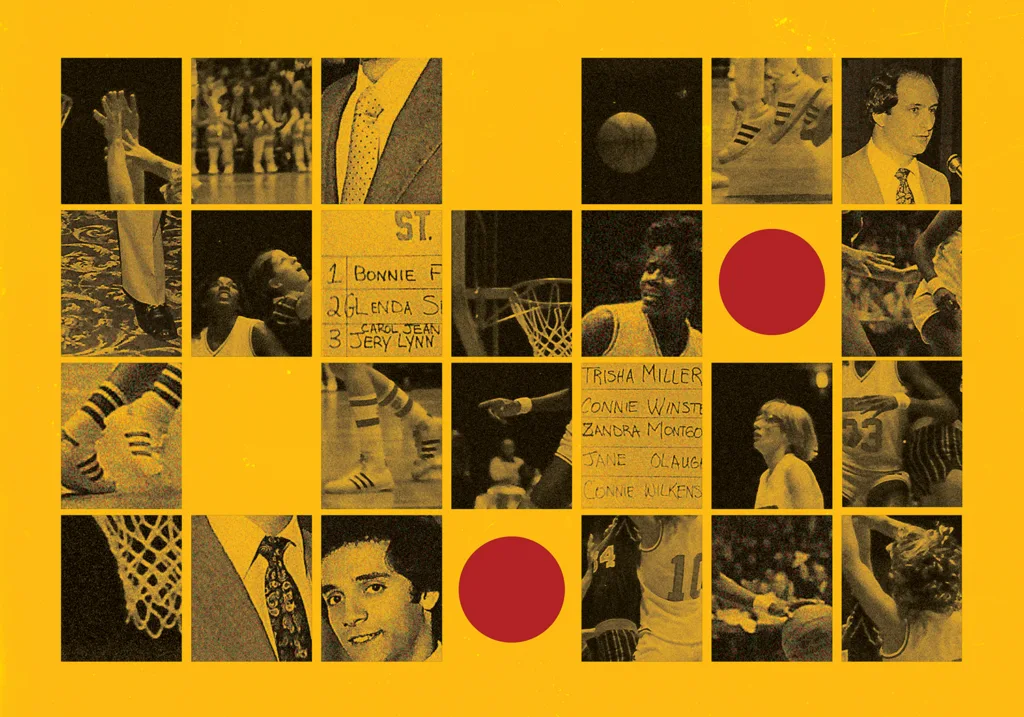
That summer, months after his first WBL game, Gennaro participated in his first draft as a team owner, president, and general manager. Afterward, he hired the team’s head coach, Larry Gillman, previously the men’s coach at East Carolina University. “Larry was a big presence,” recalls Gennaro. “Larry had an aggressiveness about him. He grew up in Mount Vernon, New York, and he was around basketball his whole life. Basketball was really the core of his life.”
The team played home games at the Kiel Auditorium, which also hosted Billikens games and previously served as the home of the St. Louis Hawks from 1955–1968. The arena’s upper section was typically partitioned off for Streak games, with just a few exceptions, such as when the Nancy Lieberman–led Dallas Diamonds came to town.
The Streak’s initial lineup was anchored by 5-foot-6 guard Liz Silcott. A relative unknown from Canada, “Liz the Whiz” took the league by storm. During a game against the Minnesota Fillies in mid-December 1979, she scored 50 points. An offensive wunderkind, she could improvise beyond the team’s game plan. She often reduced teammates to spectators. “She was headstrong, and Larry Gillman was the same way,” recalls teammate Coretta Daniels, who led the team in assists that season. “She wasn’t listening and didn’t care. But I’ve got to give her credit: The girl could shoot.”
Silcott’s unpredictability extended beyond the court. Despite playing in just 19 of the team’s 36 games, she tallied 628 total points. “She was an incredible shooter,” recalls Gennaro. “But she presented some difficult dynamics with Larry, me, and the team structure.”
In February, with the team owning a 14–10 record and Silcott leading the league with 33.1 points per game, the star guard was traded to San Francisco for a fifth-round selection in the upcoming draft and reserve guard Lisa Brewer, who had tallied just 30 points for the season to that point.
Both Silcott and St. Louis struggled without each other. The team was unable to find an adequate scoring replacement that season, and the Streak won just one of its next 12 games to finish 15–21. Silcott played only a few games for San Francisco, scoring well below the average that she posted in St. Louis, before being suspended. She did not return to professional basketball.
Daniels stayed with the team. She recalls feeling supported, both within the organization and the city itself. The team flew to away games and stayed in nice lodging, including The Queen Mary, a retired-ocean-liner-turned-hotel. She shared an apartment with teammate Ann Platte, whose green Ford Torino would carry them around St. Louis.
In its infancy, the league was still trying to find traction. Community outreach was the expectation, and the Streak’s efforts focused on local schools and East St. Louis. On a few occasions, area high school teams were invited to play before the Streak’s home games. One matchup featured a rising athlete from Lincoln High School named Jackie Joyner. “She was the most talented player on the court,” recalls Gennaro. “But of course, she was just a high school kid then.”
The goal was to build a strong fan base and inspire young girls. As the first women’s professional league in the U.S., it was a new role for the players, though the magnitude was lost in the excitement of the moment.
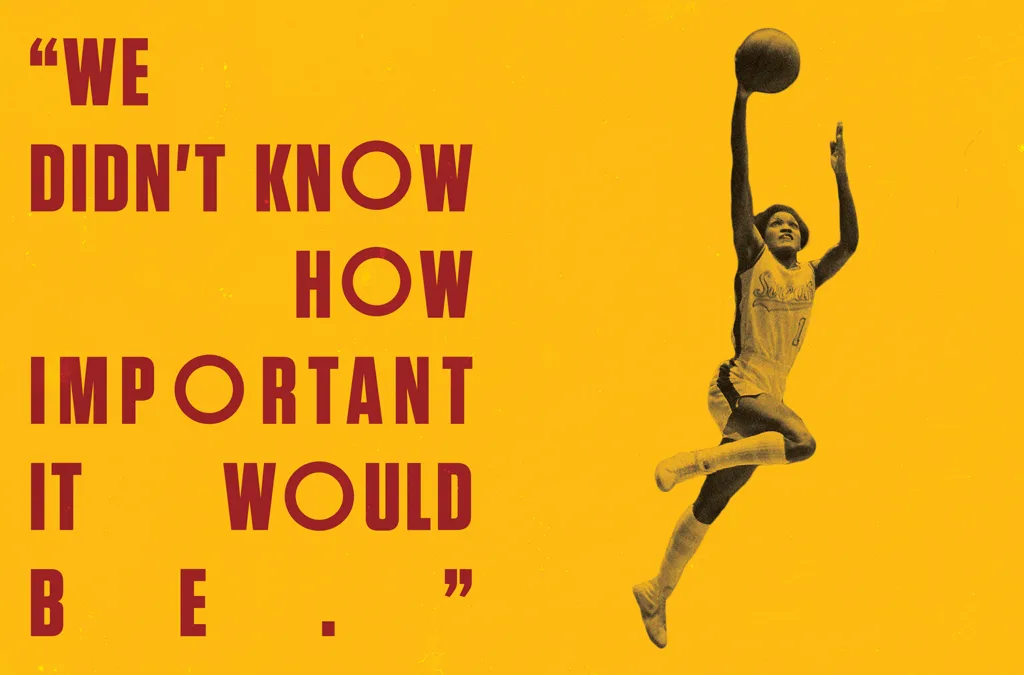
“I don’t think any of us really thought about it,” says Daniels. “Setting the foundation to pave the way for other women basketball players…was something we were doing, but we didn’t know how important it would be.”
THE FALL
Despite the Streak’s momentum, there were signs that the league was flailing. Five franchises folded prior to the 1980–1981 season, including Houston and the defending New York Stars.
The Stars’ high-scoring guard, South Carolina native Pearl Moore—who held the all-time career-scoring record in women’s college basketball—replaced Silcott as St. Louis’ go-to scoring threat. “The first year was exciting, and I was looking for the second season there,” Moore recalls of her time with the Stars. “But of course, the team folded, so that’s where St. Louis came in.”
Despite Moore joining the team, St. Louis started 1–13 and missed the playoffs for a second consecutive year.
The Streak also traded Daniels to Minnesota. In March 1981, Daniels’ new team traveled to Chicago for an away game, where coach Terry Kunze and eight Fillies players walked off the court just before tipoff and refused to play in protest of missed payments. The decision had been made after the Fillies’ corporate credit card was declined by the Holiday Inn–Lakeshore in Chicago, where the team was scheduled to stay; according to the Chicago Tribune, Kunze had to use his own card instead.
The WBL folded after the 1980–’81 season.
Gennaro believes that St. Louis was one of a few franchises that could have continued into another season. The Streak posted the league’s fourth-highest average home attendance, and Gennaro says investors were willing to lend more capital. He told them, however, that he “couldn’t in good conscience take [their] money.”
Gennaro later joined PepsiCo before becoming president of the Society for American Baseball Research (SABR) metrics and serving as a consultant for multiple Major League Baseball teams. Today, he’s also the founder and executive director of New York University’s Lab for Transformative Leadership. He maintains that St. Louis is “a terrific sports town.”
Daniels, who now lives in Detroit, reflects on her time as a pioneer for professional women’s basketball. “We were first,” she says. “You just thank God that you had that opportunity.”
Moore returned to the national spotlight in 2024, as Iowa’s Caitlin Clark approached the NCAA Division I scoring record. The moment marked a surge in the popularity of women’s basketball and brought new attention to the WBL.
“I was hoping that it would have been like it is now,” says Moore. “But of course, it takes people time to adjust. Just like every sport that came, it evolved. It took time.”