Outreach is ramping up along South Grand Boulevard after a now-retracted letter from a local taxing district instructed businesses not to give water and call 911 on unhoused people—but one local restaurant owner says the increase in attention has been met with an increase in need.
Two weeks after the letter from the South Grand Community Improvement District (CID) generated an online firestorm, service providers are in the midst of a concerted effort to help the estimated one to two dozen unhoused people living in the area.
Get a fresh take on the day’s top news
Subscribe to the St. Louis Daily newsletter for a smart, succinct guide to local news from award-winning journalists Sarah Fenske and Ryan Krull.
But Natasha Bahrami, whose family has run a restaurant in the heart of the business district for decades, says the situation has become more challenging than ever, with more instances where people need help for mental health or substance use issues. She says the perception that the district is a haven for homelessness has only exacerbated the problems businesses have been seeing.
Bahrami signed the letter, but has since repudiated it. (She serves as the president of the business district, while Rachel Witt is listed as its sole staff member and executive director.) Bahrami says she has been steadily involved in trying to get some kind of governmental response to get help for people in crisis, but has been frustrated by the response.
By the end of the week that the controversy took root, CID leadership had met with Peter and Paul Community Services, one of the largest service providers for homeless people in the region, as well as the city’s Continuum of Care (CoC), which is a broader consortium of service providers. What’s followed since has been sustained, direct outreach to try and get willing people placed in shelter beds in the area.
Peter and Paul and the CoC have increased their presence in the area, says CEO Anthony D’Agostino. “The idea is that, without dedicated resources, we’re going to try to work with some people in our team to coordinate outreach,” he says.
The letter has also prompted two alderpeople to take a harder look at such tax-supported districts as a whole. Alderwomen Daniela Velazquez and Alisha Sonnier both say they’ll use their staus as “ex-officio” non-voting members (granted to them as elected representatives) to provide more direct oversight over the CID board, which otherwise includes representatives from businesses in the district. (The South Grand CID did not respond to a request for comment.)
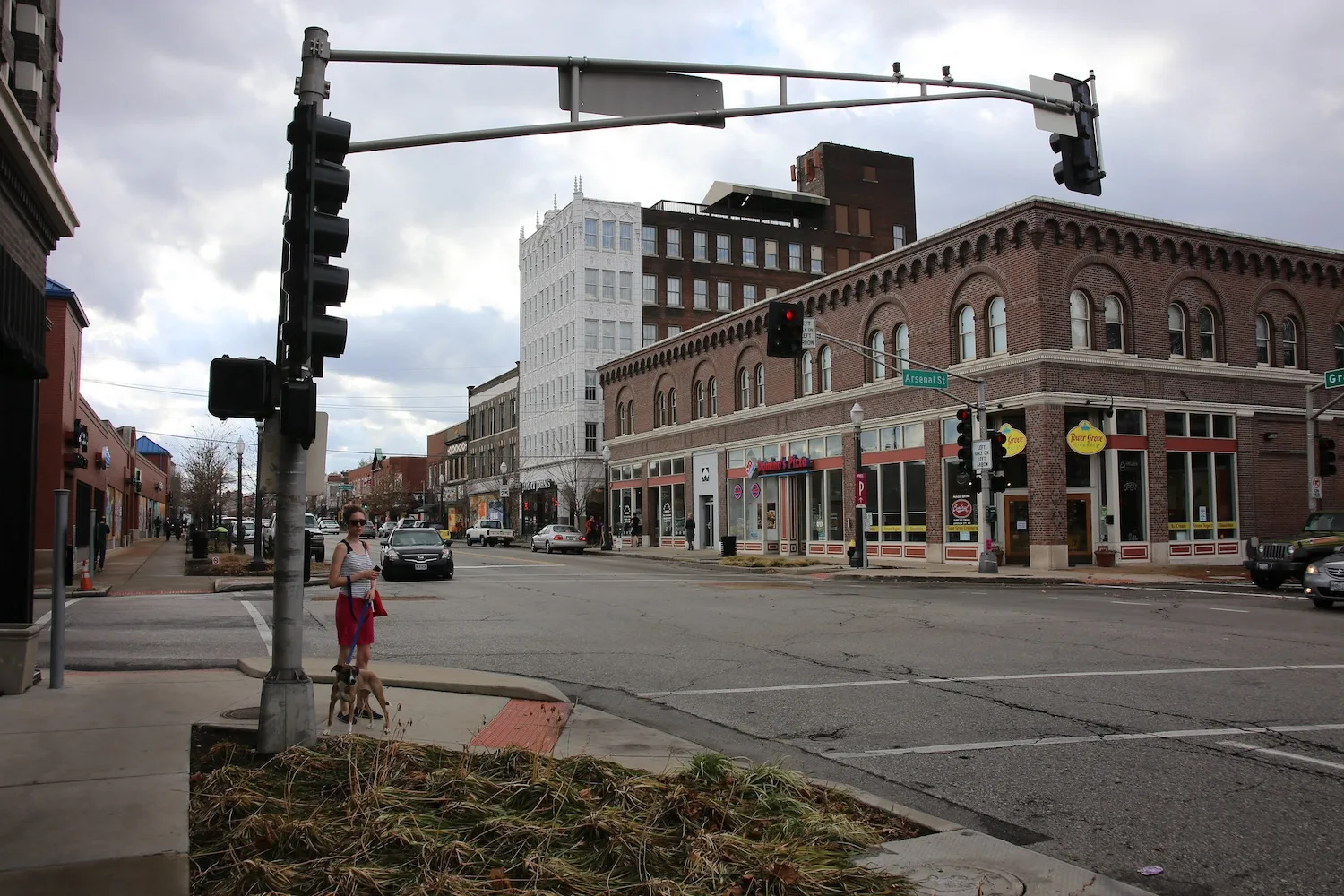
There are between one to two dozen unhoused people living along the South Grand corridor, according to service providers. One source familiar with outreach in the area says homeless people have lived on that part of South Grand, which stretches from Arsenal Street to Utah Place, for decades.
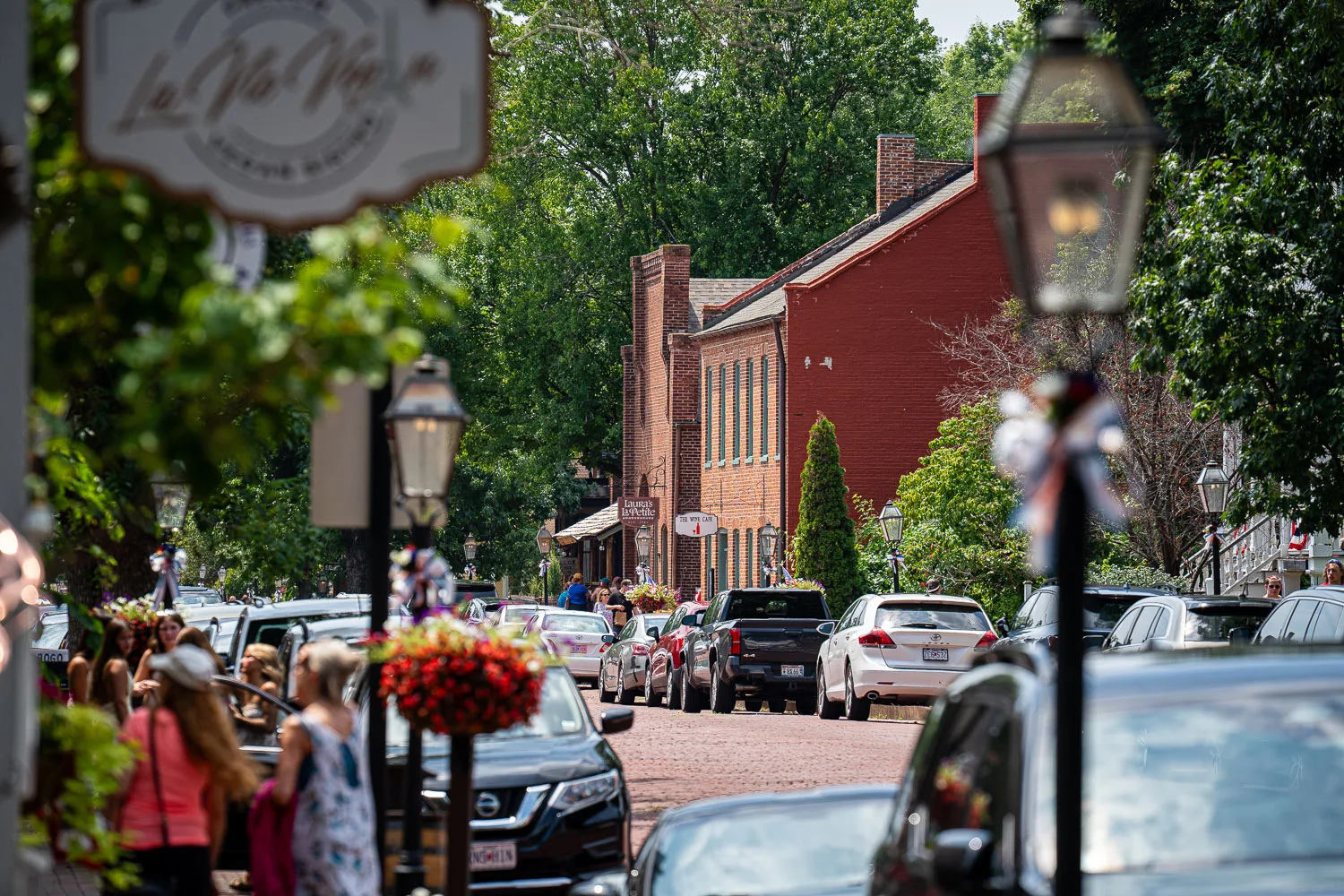
Those blocks are dense ones, with well-reviewed restaurants, a few popular bars, and two bookstores. The city’s busiest bus line travels along Grand; the business district is directly adjacent to Tower Grove Park, with the St. Louis Public Library’s Carpenter branch anchoring its southern end.
Although many people report having regular, friendly interactions with the area’s homeless residents, there have been reports of violent incidents. Advocates note that those aren’t problems that stem solely from someone’s housing status. Mental health issues and substance use disorders can be challenging for unhoused people.
“The roots of what would cause somebody to be unhoused are all really personal, all complex, and all very different,” says Velazquez. “You may have somebody who is recently unhoused and might be … working poor. You might have people who are mentally unwell.”
And, she says, some people might choose not to accept shelter, even when it’s offered: “You have the right to refuse services, which is really—I think—hard for us as society because you want to fix things, and people have rights for a reason. Sometimes it’s really hard for somebody who’s not been in that position to understand why you would refuse services.”
Sometimes people have mental health issues, she adds, sometimes they might not be ready to face their addiction. Some people might prefer to be alone, and many unhoused people and those involved in providing services are familiar with the fact that people—if they can help it—would rather not stay in a congregate shelter: one where they’re surrounded by others.
Even though people may have overlapping problems, D’Agostino says, it’s important not to conflate them. Violence, he adds, should not be something associated with someone’s housing status, but should be addressed as such. “That’s not a homeless problem, that’s just a crime problem.”
Bahrami has detailed being forced to deal with someone holding a machete, likely in some kind of distress. Employees have been threatened and accosted with requests for money, she says, while another nearby business owner was hit with a bat.
“The truth is, people on our streets are in serious need,” she wrote in a Facebook post, “drug addiction support, housing support and target care by someone who is trained to help them. Our calls for help go unanswered and deflected. We are not equipped or properly trained to provide the care they need.”
Business leaders in the area, she says, tried to raise the issue with the city for years before the CID released the letter; business owners were fed up, she says, and were looking to resolve their concerns themselves.
“I think people are trying to come together to help,” Bahrami says of the backlash and broader community. “Those that are reaching out in this way are trying to help, but the problem is now we’re experiencing triple the amount of these kinds of occurrences … and we’re still not equipped to deal with this.”
As one example, she says someone in need—who she knew from the area—came to The Gin Room on the Friday after the controversy over the letter, asking for help with a burning sensation. Bahrami took her to a discreet corner of the outdoor part of the property and offered them the hose to use to clean off. But though Bahrami advised against it, that person then took their clothes off in full view of the diners inside.
Adam Pearson, St. Louis’ director of human services, tells SLM real change can only come from dealing with the underlying issues. There needs to be more money funneled into affordable housing units and treatment for mental health and substance use. Shelters are running near-full lately, while coordinated funding is needed for those programs, he says. Additionally, shelters often only take people in the evening, and people have few places to go during the day.
Pearson adds that the city’s Behavioral Health Bureau does what it can, as well as the Office of Violence Prevention. “I think it’s a multi-pronged issue. But number one for me, long-term, is the development of more affordable housing.”
“If we said to people, ‘Do you want your own apartment?’ that changes the game,” he says of the potential to use affordable housing as a carrot for other outreach. “Now, all of a sudden, we would have a significant amount of uptake.
“We can’t outreach our way out of what’s happening on South Grand, but I think what we can do is work together to bring more resources, more affordable housing to the city, so that we can get some of these people a place to go.”
Sonnier is also looking to potentially pursue an agreement with multiple CIDs in the area to pool their resources and fund a full-time social worker to assist in the area, she says. That’s in the “early stages.”
While Sonnier acknowledges that the city needs to do more to address people’s needs, like making it easier to open shelters and getting people treatment, it’s not the only entity the buck falls on, she adds. Neither the federal nor state government are sufficiently bankrolling this type of work. “I’m also clear that the city of St. Louis can’t solve this issue alone.”
For Sonnier, the letter and the discourse surrounding it “really reaffirmed for me that I’m not alone in thinking that housing is a human right.” She adds that it’s one of the hardest issues to legislate around, and that she’d like to see continued pressure and attention on the issue when it comes time to legislate. It’s one thing to protest a letter; it’s another to advocate for policy changes to improve life for unhoused people—or welcome a shelter into your community.