Baby animal alert!
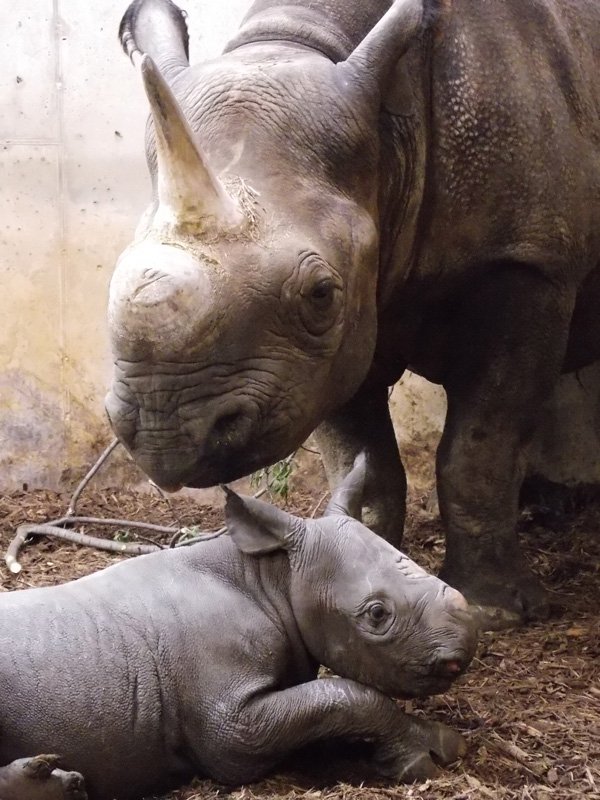
Last Wednesday, the Saint Louis Zoo welcomed Moyo, a male black rhinoceros calf. The zoo shared the adorable video above, which shows Moyo—which means “heart” in Swahili—standing up for the first time and walking alongside his mother.
Get a fresh take on the day’s top news
Subscribe to the St. Louis Daily newsletter for a smart, succinct guide to local news from award-winning journalists Sarah Fenske and Ryan Krull.
Arguably the cutest part of the video is when Moyo is introduced to a scrub brush. Spoiler alert: He loves it.
“Moyo is a typical bouncy rhino calf,” says Martha Fischer, curator of mammals/ungulates and elephants at the Saint Louis Zoo and the director of its WildCare Institute Center for Conservation in the Horn of Africa. “He runs around with seemingly boundless energy until he runs out of steam. Then he naps for a while, wakes up, nurses, and starts the cycle all over again. He is enjoying exploring his home with Mom and getting to know his caretakers. He tries to act tough at times, but in reality he never strays too far from Mom’s side.”
Moyo is the second black rhino to be born at the zoo in 26 years and the tenth in the zoo’s history. He is an offspring of Kati Rain and Ajabu, who arrived at the zoo’s River’s Edge in 2007. Moyo hasn’t made his public debut yet, but the zoo says he and his parents are bonding comfortably in a River’s Edge barn behind the scenes.
Rhino calves are born with no horns, says Fischer, but rather two horn nubs. “When the calves are 1–2 months old, the two horns begin to grow in length,” she says. “When full grown, a rhino’s large front horn can grow to be between 20–55 inches long.”
According to the Saint Louis Zoo, black rhinos are a critically endangered species, and they’ve experienced the most drastic decline out of the five surviving rhino species. This is because many are illegally poached for their horns. The Saint Louis Zoo’s black rhinos are part of an AZA (Association of Zoos & Aquariums) program that aims to manage a healthy population of the species in zoos across North America. There are currently 60 black rhinos, including Moyo, in 26 AZA institutions.
“We hope that Moyo makes everyone want to help us save black rhinos from extinction,” Fischer says.

Editor’s note: This article was updated from an earlier version.


