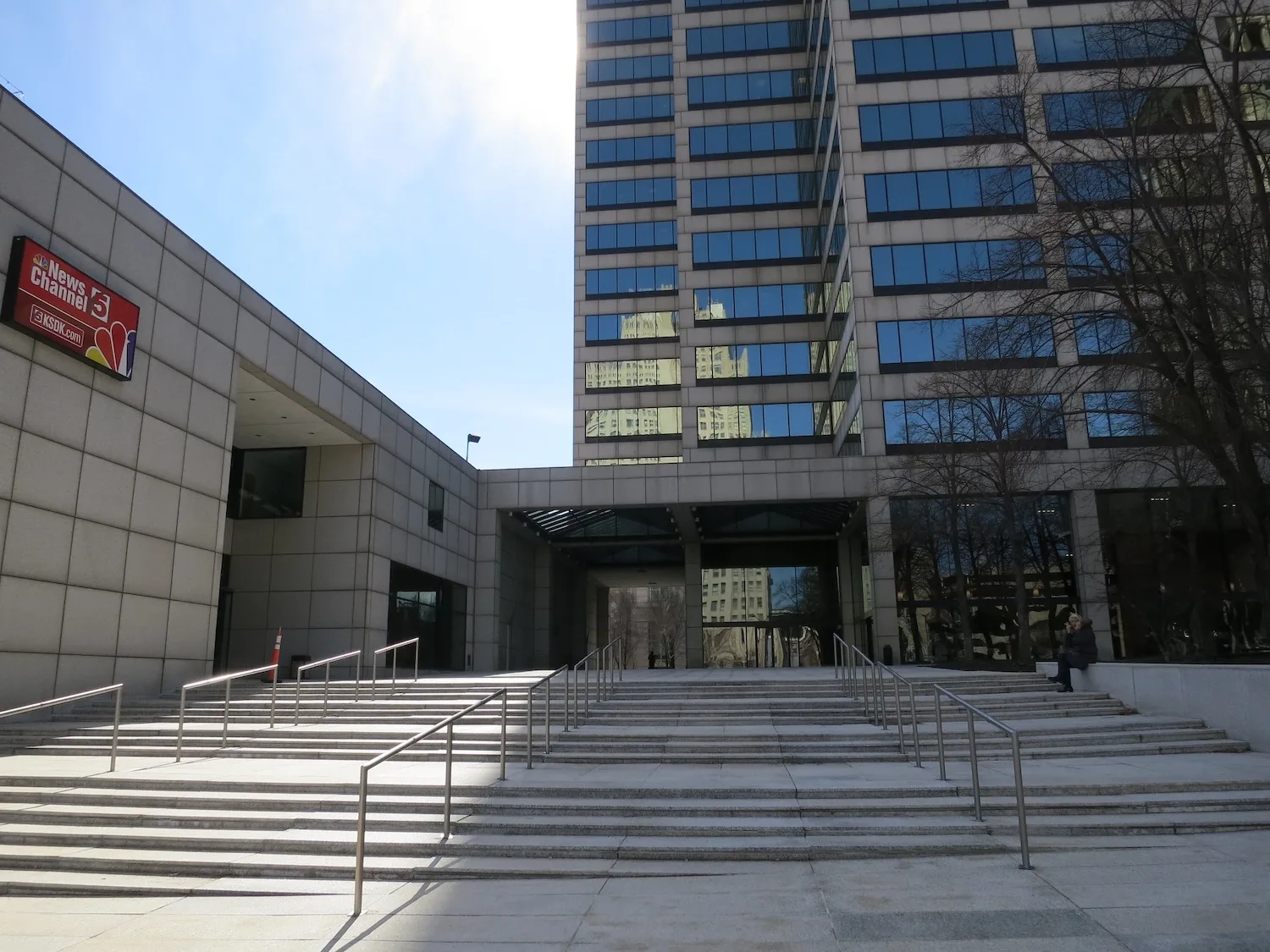
Meteorologist Anthony Slaughter made waves when he went public with long-held gripes about KSDK after the station fired him in April. He said he was glad to no longer have to say the phrase “weather impact,” the station’s latest branding, over and over again every time he told viewers whether it was going to rain.
Slaughter saw an outpouring of support from the public, both in general as a well-liked weatherman and because viewers had noticed the repetition of “weather impact” and didn’t care for it.
Get a fresh take on the day’s top news
Subscribe to the St. Louis Daily newsletter for a smart, succinct guide to local news from award-winning journalists Sarah Fenske and Ryan Krull.
But it was another one of Slaughter’s gripes about the business that’s becoming a defining aspect of local television news, not just in St. Louis but across the country. And that’s the station pivoting to a digital presence, via YouTube and its app on viewers’ phones, tablets, and smart TVs. This isn’t as easy as just streaming the same broadcast online; it also means creating digital-only content, available 24/7, to keep people watching longer. On the airwaves, KSDK cuts to national programming; on the app, viewers can keep watching the local crew.
It can get repetitive. “We’re not doing anything different. We’re just talking longer,” Slaughter said in April.
Six weeks later, Slaughter hasn’t changed his tune. “I just heard they have a Today in St. Louis Plus, which was an hour,” he says of the online-only show running on KSDK’s 5+ app after Today in St. Louis wraps. “Now, I heard they’re moving it to two hours. In Charlotte, at our Tegna station there, they do a four-hour after-the-show newscast on digital. Four hours. Seven to 11 on digital after you just did a morning show from 4 to 7 [a.m.].” And generally, stations like KSDK are doing it without any additional staff.
The struggle is real. But it also might be necessary.
It’s no secret that viewership of broadcast television has been going down for years, as more and more people cut the cord. Seven years ago, 41 percent of Americans said they preferred getting their local news via television, according to Pew. Last year, that number was 32 percent. Long gone are the days of the local NBC affiliate competing with just CBS, ABC, and Fox affiliates. They’re now vying for eyeballs with Netflix, TikTok, and Fortnite. Recent surveys indicate that 86 percent of households in the U.S. subscribe to two or more streaming platforms.
Perhaps more importantly, as advertisers spend less on legacy media and more on digital, their spending on digital advertising has been anything but diversified—with about half of that digital ad spend now going to two companies: Meta and Alphabet, the parent companies of Facebook and Google.
Says Slaughter: “You’ve got influencers who have taken off and built their own brand without a TV station. So I think TV stations are panicking now, like, ‘We’ve got to be everywhere, we’ve got to be in their face, we’ve got to be on their phone, we’ve got to be at home, we’ve got to be on their tablets. We’ve got to be everywhere we can think to be.’ That’s the game. They’re playing catchup.”
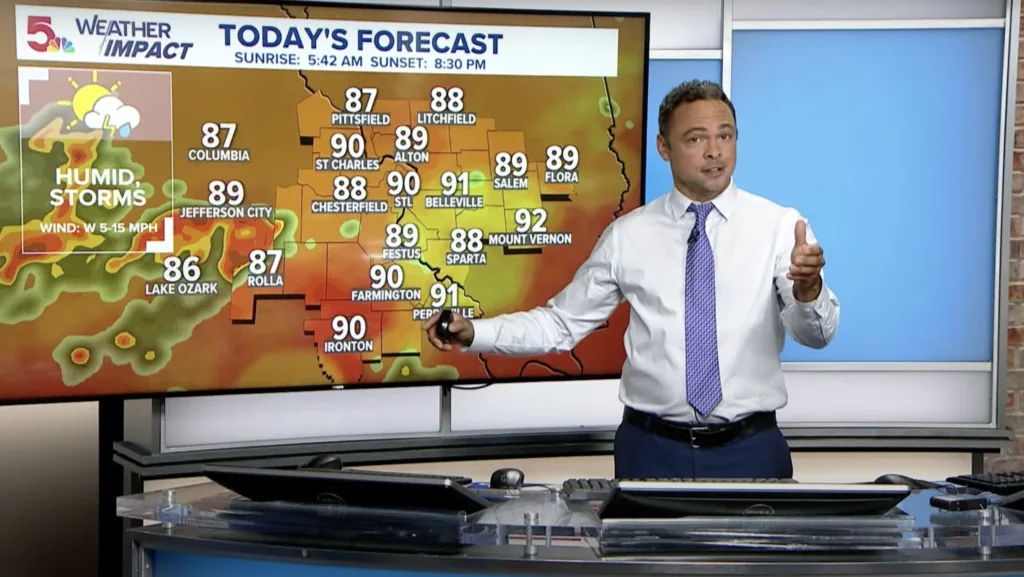
Whether local news outlets survive will depend on if they can catch up. There is hope. As the public’s trust in news has cratered in recent years, trust in local news remains relatively high, according to recent polls. The question is whether that over-the-air trust can be converted into digital loyalty. An app, which locks viewers into a single station’s offerings, provides a better shot at that than posting content on social media (or expecting them to visit a homepage).
Says Alicia Elsner, KSDK’s general manager, “Our goal is to build a sustainable future for local news, and this means delivering news and information across all platforms. We are well-positioned to succeed in streaming, and fortunate to have a talented and motivated team working hard to ensure its success.”
Where some see a hassle in creating digital-only content, others see an opportunity.
Ashleigh Brandmeyer recently left KSDK after working as a producer there for three years. When she started at the station, the app was a new-ish product, slowly being developed by the station’s parent company, Tegna.
She says it was cool to be the “guinea pig,” experimenting with new formats unbound by the constraints of linear TV. She produced The Record, a program hosted by political reporter Mark Maxwell that imported a Meet the Press-style format and tailored it to local news. The show began as streaming-only before it began airing on broadcast television as well. Brandmeyer says she’s very proud of it. (Anecdotally, it has good buzz with local elected officials.) In a sign of how tight staffing at news stations can be, it’s now on summer hiatus following Brandmeyer’s departure.
Maxwell didn’t want to comment for the story other than saying, “All I will say is that we have a lot of really great original local content—from Rene Knott’s Rene On The Block to Mike Bush’s And There You Have It to some hidden gems from the KSDK Archives—all rolling out on the streaming app right now. It’s a really great time for journalists who love local news.”
Brandmeyer says that she supported the station focusing on streaming from the get-go. She was herself consuming the news that way. “I’ve known for years that needed to be the push,” she says.
KSDK is hardly alone in making this transition. Scott Diener is the news director at KMOV, better known as FirstAlert4, and is set to retire next month. He tells SLM, “It’s paramount for us to be there as people move off from linear. Any station or news organization has to be in that space—or you’re not going to be around.”
He says that while viewership of KMOV’s news online hasn’t caught up to its broadcasts, the station has seen triple digit percentage increases in digital views in the past few years. During severe weather in particular, he says, viewers tend to stay on the app longer than they would stay tuned into the traditional TV broadcast. “It’s important for us to be there. Not just during severe weather but all the time.”
Patrick Quinn has worked in local news across the country, including most recently as an assignment manager at KSDK. He says it’s his understanding that when Tegna’s new CEO, Michael Steib, took the helm of the company in August, his message to affiliates was, “We need to win digital and we need to win it yesterday.”
“Probably the number one thing on the mind of every TV station is, how do you conquer the digital side of things? How do you conquer streaming? That’s where all the eyeballs are going,” Quinn says. Specifically, the eyeballs going to streaming are more likely to be either in the coveted core demo, 25 to 54 years-old, or about to age into it.
At KSDK, the extra demands brought on by streaming have come even as the station is seeing significant turnover. In addition to Brandmeyer and Slaughter, longtime anchor Kay Quinn announced her retirement. News Director Art Holliday is said to be mulling his exit, multiple KSDK staffers say. “The turnover has become more exaggerated in recent years because of how the industry has changed so drastically, so quickly,” says Brandmeyer.
She left one week after the May 16 tornado hit St. Louis, and the station’s coverage of the disaster reminded her why she got into business to begin with. “It was a hard week to end on,” she says.
But it also, in a very genuine way, made her more optimistic about the station’s forays into digital. She said she’d be lying if she said her friends were flipping on the 5+ app the way they would Netflix, but when something like a tornado hits—or any sort of severe weather or big breaking news—they tell her that they use it and are glad it’s there.
However, Slaughter’s complaints weren’t lost on Brandmeyer either.
“I don’t know how to frame it other than it’s a big lift,” she says. “I just hope these parent companies can figure out how to do it without burning their staff out.”