When Javonte Long pleaded guilty to one count of wire fraud, his attorney described him as “a simple man that was born and raised in a small town in the middle of Missouri.”
When Mike McClain pleaded guilty to the same charge as part of the same alleged conspiracy, his attorney wrote in court documents that he is a “not particularly sophisticated man. He is a good, hard working man. He allowed some others to manipulate him to do something that he thought was good for his church.”
Get a fresh take on the day’s top news
Subscribe to the St. Louis Daily newsletter for a smart, succinct guide to local news from award-winning journalists Sarah Fenske and Ryan Krull.
Augustine Hardine is a 55-year-old grandmother with no criminal record who pleaded guilty to a wire fraud conspiracy charge. “She acknowledges that her trust in those in authority over her was misplaced and she deeply regrets the assistance she gave in furtherance of the fraud,” her attorney wrote in court filings.
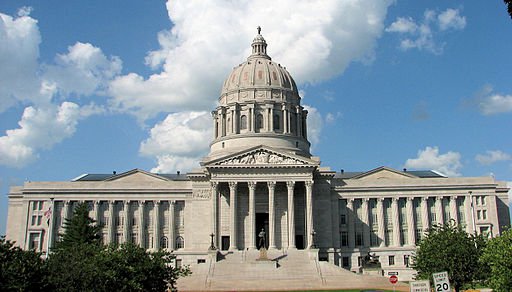
Long and McClain got probation and Hardine will be sentenced next month—all for their participation in the alleged $1.2 million pandemic loan fraud that operated out of Faith Walk Ministry in Paris, Missouri, a town of about 1,100 people 75 minutes north of Columbia.
The light sentences would seem to suggest that both prosecutors and the courts are amenable to the idea that these three—and other—parishioners at Faith Walk are both victims and criminals. Long’s attorney, Tony Muhlenkamp, wrote that his client would never have wound up on the wrong side of criminal indictment, “but for a smooth-talking charlatan that preyed upon [his] naivety.”
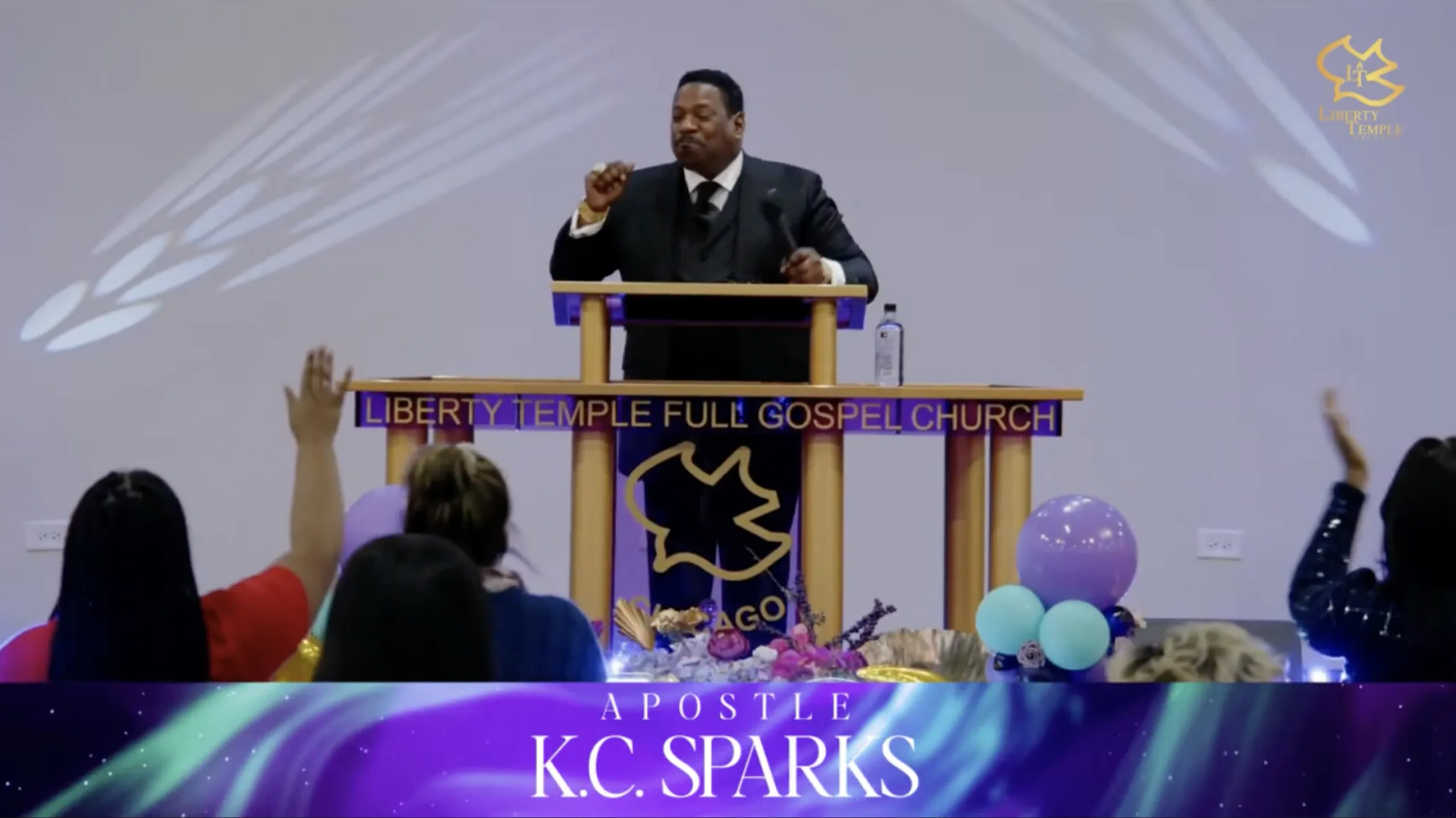
The man presumably being referred to as a smooth-talking charlatan is one of the church’s ministers, Kenneth C. Sparks III, also known as Apostle K.C. Sparks. The Mercedes-buying, Rolex-wearing preacher goes to trial this week, facing 33 counts of conspiracy, wire fraud, identity theft, and money laundering. Should he be convicted, he, unlike his flock, is likely to see prison time.
Sparks is a charismatic minister who preaches at a rapid-fire clip, peppering his speech with praise God! the way some people say um. Watch one of his sermons on YouTube for even a few minutes and a circuitous manner of preaching—a Donald Trump-style “weave,” you might say—announces itself. He doesn’t so much segue as barrel, in one case from a warning against gossip to an anecdote about an angel in Chicago thwarting a man who’d been paid $25,000 to kill Sparks to a parable of sorts about how if you feed a duck once, it’ll never leave you alone.
Around 2020, Sparks came to be a visiting minister at the church in Paris. It’s unclear how or why exactly he came to the small Missouri town, although his felony conviction from two years prior in Texas may have had something to do with it.
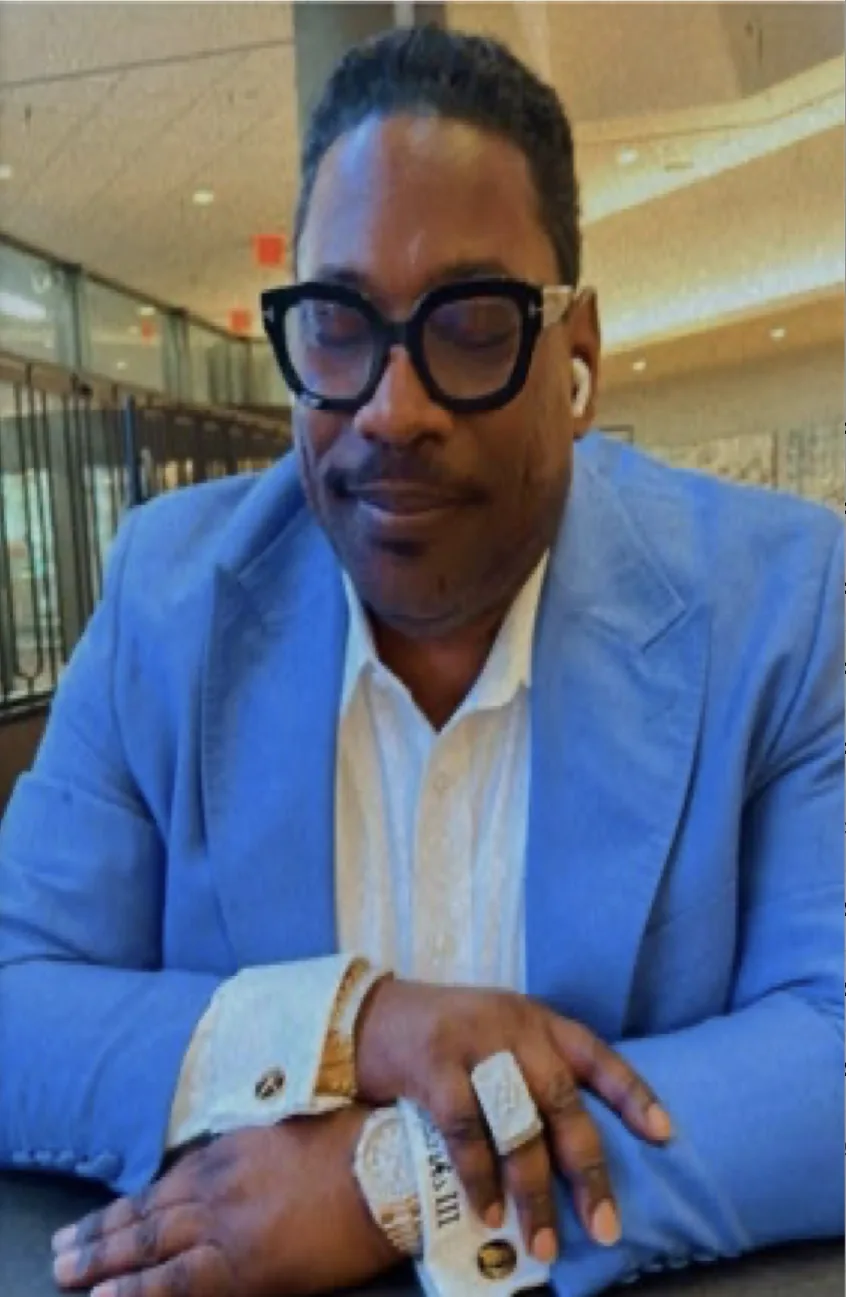
Though he was operating in a town of a little more than 1,000, he had a knack for branding. Videos of energetic services, of parishioners having hands laid on them while the word miracles flashes on all capital letters, fill his Instagram feed. He billed himself as the leader of Apostle KC Sparks Global Ministries on Facebook. In between those posts are others letting interested parties know that he’s available for booking, that you can bring the Apostle to your city. He seems to have gotten offers. Videos online show him preaching in the St. Louis area, in Chicago, and in Broward County, Florida.
Sparks put a heavy dose of financial prosperity into his gospel. “Weath is a mindset,” he told a Chicago congregation. “You’re not just going to live in the year of more than enough. You’re going to have abundance of a month. Shake your purse and say, ‘I speak abundance.’ Come on, say, ‘I speak abundance. This is the year, praise God!’” His wide-banded gold watch and fat gold ring would have shone brightly even from the pews in the back.
As Sparks was establishing roots in Paris, he was indeed raking it in.
According to an indictment filed by prosecutors, the alleged fraud actually began with a Maryland man named Jeffrey C. Oboite who taught Sparks how to submit fraudulent Paycheck Protection Program loan applications. The PPP program was set up in April 2020 to provide financial assistance to small businesses in the COVID-19 pandemic.
When prosecutors issue indictments, they generally put the person presumed to be most culpable first, and then list defendants in descending order of criminality. Prosecutors ultimately indicted 11 people for the Faith Walk Ministry fraud. Sparks is listed first, Oboite second.
In June 2020, Sparks applied for an Economic Injury Disaster Loan for his Miracle Place
International Church, “vastly” inflating the operation’s revenue. The Small Business Administration wired him $147,900 the following month.
In April 2021, Sparks received more money from a bogus PPP loan, claiming on its application that he made $98,700 a year running a consulting business that didn’t exist. He received around $20,500 in that loan.
According to the indictment, Sparks then used the trust he’d built with Faith Walk Ministry parishioners to dupe them into submitting fraudulent PPP loan applications. He also instructed the church’s minister Harold G. Long, listed third in the indictment, to vouch for him. The indictment adds that in order to obtain parishioners’ financial information, Sparks would say that he needed the information to fix their credit scores or to secure funding for the church. “Sparks often told them that he was an ‘Apostle’ of God, whose decisions and decrees could not be questioned,” the indictment says.
In many cases, court filings say, the parishioners’ PPP money was handed over to Sparks, who deposited it into the accounts of companies he controlled—companies he named Royal European Day Spa and The Miracle Place International Church.
At least some parishioners participated to some extent in the fraud, according to the indictment. Javonte Long, who is Pastor Harold’s son, for instance, signed a promissory note. He also pocketed $8,000 for himself.
The scheme also allegedly involved the Maryland man, Oboite, emailing scripts to Sparks for his parishioners to lean on when they went to banks to collect the money from their fraudulent loans.
But, as Javonte’s attorney noted in a sentencing memorandum, “Javonte did not come up with this plan. Javonte did not educate himself on the intricacies of PPP loans and SBA loans. Javonte did not even know what these things were when he was approached by an eloquent ‘businessman’ that Javonte’s own father and pastor, vouched for. It was then, and only then, that Javonte started making bad decisions.”
It is easy to imagine how a minor windfall like $8,000 could seem like a natural extension of Sparks’ ministry. A common motif of his preaching is that money will flow to those who have a mindset of wealth.
At times, Sparks was pretty on the nose. Here is an extended riff when he weaved his way to the topic of economic stimulus from a Chicago pulpit: “Trump was in office. Trump is a businessman. Praise God. When Trump was in office, the economy flowed, and people that had businesses prospered. Praise God. When the—praise God!—the coronavirus hit. Praise God. He caused resources to happen for people, and he released millions of dollars into the people’s hand because there were people not working. Praise God! He released her. Praise God! Hallelujah! Resources. Unemployment. So the people could be blessed … The Bible said, ‘Money answering all things.’ Can you say, ‘Amen?’”
Apparently, some parishioners began questioning the pastor, Long, about what exactly was going on. He assured them they could trust Sparks. When parishioners put similar questions to Long, he scolded them for challenging a “man of God” and threatened “curses from God.”
All in all, Sparks, Long, Oboite and the parishioners took $1.2 million in bogus PPP loans, plus $460,000 in bogus automobile loans that parishioners took out for cars they didn’t actually intend to buy. That scheme was allegedly hatched by Sparks and a man named Terrance A. Kwade—listed fifth in the indictment—after prosecutors say the two decided they would “try and squeeze as much [money] out of” the Paris parishioners as possible. Kwade took a 10 percent cut.
The indictment claims that Sparks used the money to, among other things, make payments to a Bentley dealership in Chicago, on designer shoes, and on other “impermissible expenses.” Court filings suggest he bought a pair of Mercedes as well, one for $133,000 and the other for $108,000.
Harold G. Long, Kwade and Obiote have pleaded guilty and will be sentenced next month. Everyone has either pleaded guilty or admitted their responsibility and entered pre-trial diversion. Everyone, that is, except Sparks.
Sparks was arrested in July 2024 in Florida. He appears to be the only person in the case arguing their innocence to a jury. That trial starts today.
The prosecutor handling the case is Assistant U.S. Attorney Derek Wiseman. This isn’t his first time prosecuting alleged fraudsters. He previously brought a conspiracy case against a Town and County physician and his wife, who funded a lavish lifestyle by selling patients a non-FDA approved version of a drug to treat arthritis.
A joint filing made by both federal prosecutors and Sparks’ defense attorney last week lays out the evidence that is likely to be presented at trial. That includes a video of Sparks purchasing a Mercedes and photos of him with Rolexes. The court filing also mentions contacts labelled in Sparks iCloud as “Sister Augustine,” “Terrence Kwade,” and “My Goddess,” as well as tax documents, bank documents, and PPP loan applications.
At a preliminary hearing last week, Sparks showed up from an out-state county jail, wearing pink and yellow jail garb. He’d grown a beard and wore a pair of black and gold glasses. He sat in a wheelchair and his attorney, Joseph Hogan, said his client was diabetic.
The first indication that Hogan may have his work cut out for him was when U.S. District Judge John Ross asked if both Wiseman and Hogan approved the document listing the evidence that is fair game to be brought up at trial.
Everyone had signed it except Sparks. “Mr. Sparks is telling me we have issues,” Hogan said to the judge.
Hogan explained to the judge that he and Sparks had discussed “ad nauseum” that just because a piece of evidence is introduced, it’s still subject to cross examination. He could be heard leaning over and explaining to Sparks something along the lines of, They’re not saying that it’s true, just that it is a text message.
After some back and forth, Sparks signed the document.
Sparks also pushed back on the notion that his status as a convicted felon can be brought up at trial. “I don’t agree,” he said. “I’m not being charged for that here.”
The indictment against Sparks, however, states that he was put on parole for a felony offense in 2017 and indicted on a different felony in 2019. PPP applications ask questions about criminal history. In the loans Sparks filled out for himself, he indicated that he hadn’t been placed on parole within the last five years and that he currently was not under indictment—neither of which, according to the government, is true.
The judge also noted that Sparks had filed numerous legal motions on his own behalf ahead of trial. He cautioned that if any of these motions are of substance, they ought to come through Hogan.
On the topic of pro se filings, Sparks has filed his own lawsuit against the County jail where he had been locked up. Among the preacher’s myriad gripes is that they don’t offer a kosher meal.