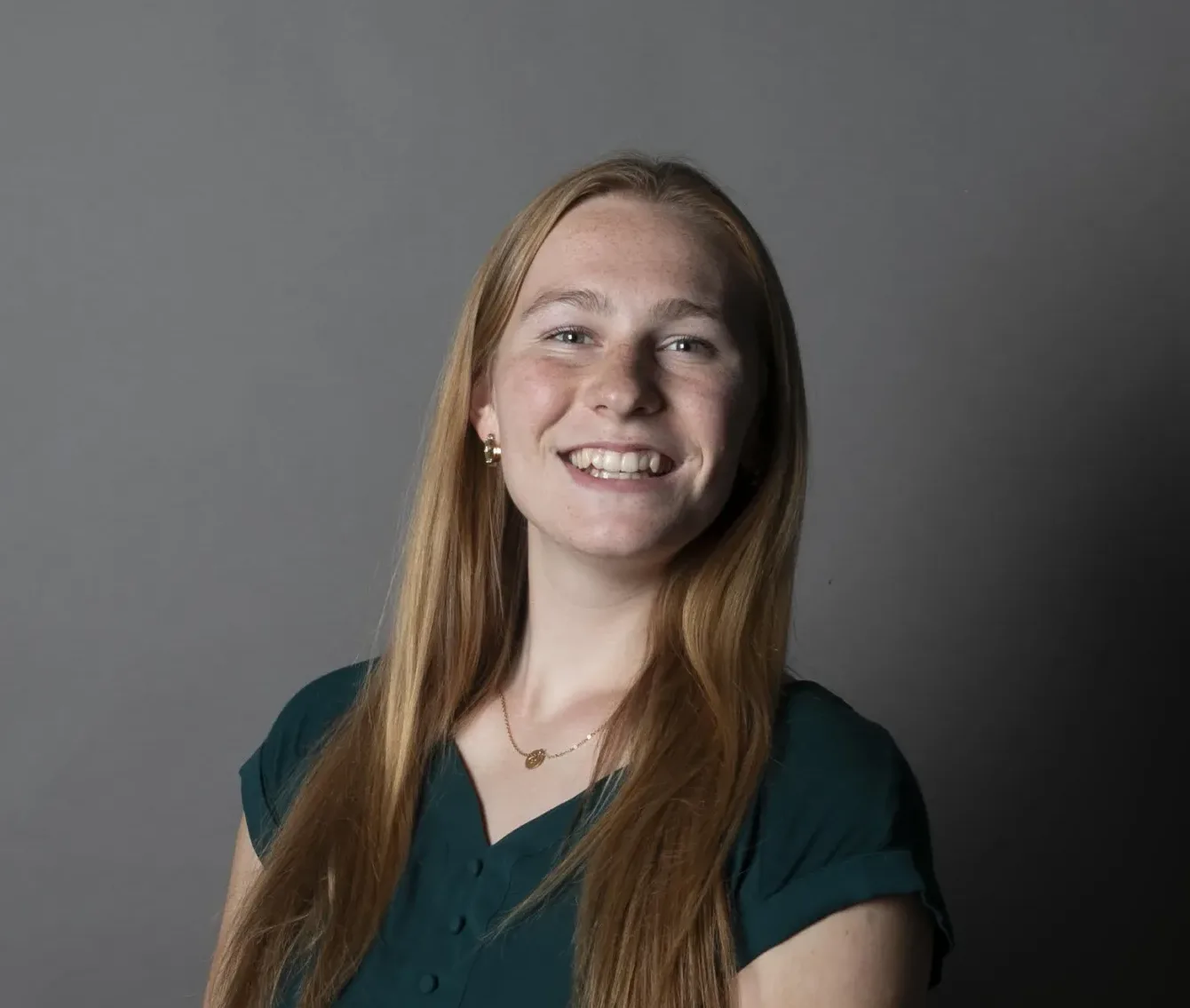
Julieta Imperiale arrived in St. Louis just one month ago to launch the St. Louis operations of her company, NanoJump Bio. Her new location, made possible by an Arch Grant, allows her to bring innovation and knowledge from her home country, Argentina, to help revolutionize the DNA analysis sector.
Imperiale isn’t alone in her entrepreneurial efforts. St. Louis has more than 11,000 immigrant entrepreneurs, according to the St. Louis Mosaic Project, ones who help grow the local economy and create jobs for immigrants and native-born alike. The Yale Budget Lab recently completed a study to measure what the effects of recent restrictions on immigration will have on business productivity in the United States. They found that even temporary restrictions on immigration can have long-lasting impacts on business formation.
Get a fresh take on the day’s top news
Subscribe to the St. Louis Daily newsletter for a smart, succinct guide to local news from award-winning journalists Sarah Fenske and Ryan Krull.
The Yale Lab found that immigrants are 80 percent more likely to start a business than a native-born Americans. And while they predict that immigration levels will return to baseline around 2029, the number of missing new firms per year would still peak in the early 2030s at between 9,000 and 16,000. That’s a decline of between 1.7 percent and 3 percent, and will continue to be affected for decades to come.
St. Louis leaders have understood for years that increased immigration is essential to growing an otherwise stagnant region. In 2012, an economic report showed that St. Louis was lagging in immigration growth in comparison to peer cities. The St. Louis Mosaic Project was formed in response and seeks to help St. Louis be a more welcoming place to immigrants.

Executive director Suzanne Sierra says the organization helps connect foreign-born residents with people and organizations to help them create businesses, find jobs, and acclimate to St. Louis. She’s seen their impact first-hand.
“St. Louis immigrant entrepreneurs create jobs, they revitalize a strip mall or a street or a neighborhood, and they also add to that dynamism of making St. Louis more of a global city,” Sierra says. “Immigrants are an economic necessity, and part of what’s going to continue to help the region grow.”
Ness Sandoval, who specializes in demography and sociology as a professor at Saint Louis University, explains that immigrants have been the main reason for recent growth in the St. Louis region. He states the immigrants coming here are highly educated and skilled workers, entrepreneurs, or students seeking higher education.
“The [Congressional Budget Office] released a report in January that showed in the U.S., more people are going to die than babies born by 2030,” Sandoval says. “One hundred percent of the growth is going to come from international migration. There are these demographic trends at the macro level that are showing just how important immigrants are going to be to the U.S. economy.”
Since 2007, the 15-county St. Louis MSA has experienced a 28 percent decline in births, one of the largest declines among major metropolitan areas in the United States,” Sandoval reports.
While the native born population declines, immigrants will help balance the scales in terms of population and economic growth, Sandoval says. “A higher percentage of immigrants are entrepreneurs, they’re starting businesses that are employing American American-born workers at a higher rate, so they’re making positive contributions.”
That’s something Imperiale exemplifies.
“We can come here bringing our knowledge,” she says. “Immigrants really want to be part of the community, to be part of the ecosystem. I think that it’s a win-win for the country because I am a specialist in different matters of science, and I’m bringing a new product that doesn’t exist so far … I’m going to contribute to the growth of the economy of the city.”
One company that works closely with the St. Louis Mosaic Project to help immigrant entrepreneurs establish their business is Cortex Innovation District.
Ben Molina, Cortex’s entrepreneurship program manager, explains that the organization helps immigrants make connections, gives lessons in business fundamentals, and offers a course in target market discovery.
“I think right now we probably are not seeing the effects of this administration, because there’s a large existing immigration population that we have worked diligently to build relationships with, through Suzanne, through the International Institute, through just being in community,” Molina says. “But there’s of course the fear that could change, and that’s especially a risk for St. Louis, who has always struggled with population loss.”
Not seeing new immigrant businesses get built in the next decade could redefine this region’s economy for the next generation, or perhaps even longer, the Yale Lab says. Molina believes losing immigrants won’t hurt just the economy of St. Louis, but also its global identity.
“I think diversity of people is important and valuable, and it’s a risk to our identity, it’s a risk to the culture that we’re nurturing here in St. Louis,” Molina says.