Terrance spends $10,000 a year on Uber and Lyft rides. It’s not that he’s constantly clubbing, or such a frequent flier that he takes near-daily rides to the airport. He’s just trying to get to work.
Terrance works as a janitor at Children’s Hospital in the Central West End, but he lives about 10 miles north in Bellefontaine Neighbors. That’s about a half-hour ride when there’s no traffic—or about $30 each way using a rideshare service.
Get a fresh take on the day’s top news
Subscribe to the St. Louis Daily newsletter for a smart, succinct guide to local news from award-winning journalists Sarah Fenske and Ryan Krull.
He feels he has no choice. After he’s paid rent, utilities, phone and wifi bills, there’s not much left to save up for a car. “Starting out, you got no choice but to Uber.”
Terrance’s situation is pretty common in St. Louis. Thousands of people have jobs that don’t pay enough to make a car affordable—but are far enough from their homes that taking public transportation isn’t practical. Especially if you’re getting off at midnight, as Terrance was when I picked him up. At that hour, MetroLink could get him to North County, but would require a four-hour layover at the North Hanley station before he could catch a bus home.
Like most cities, St. Louis has a transit system that was designed decades ago to carry people in and out of downtown. Jobs are more spread out, though. Tricky transfers between bus lines that don’t always run frequently mean many people choose to spend a quarter of their take-home pay, or more, on Uber or Lyft rides.
If you were a woman named Kristie, going off shift at 9 p.m. at the Maplewood Walmart, wouldn’t you rather spend $15 for an 11-minute ride home to Bel-Ridge than a couple of hours taking buses?
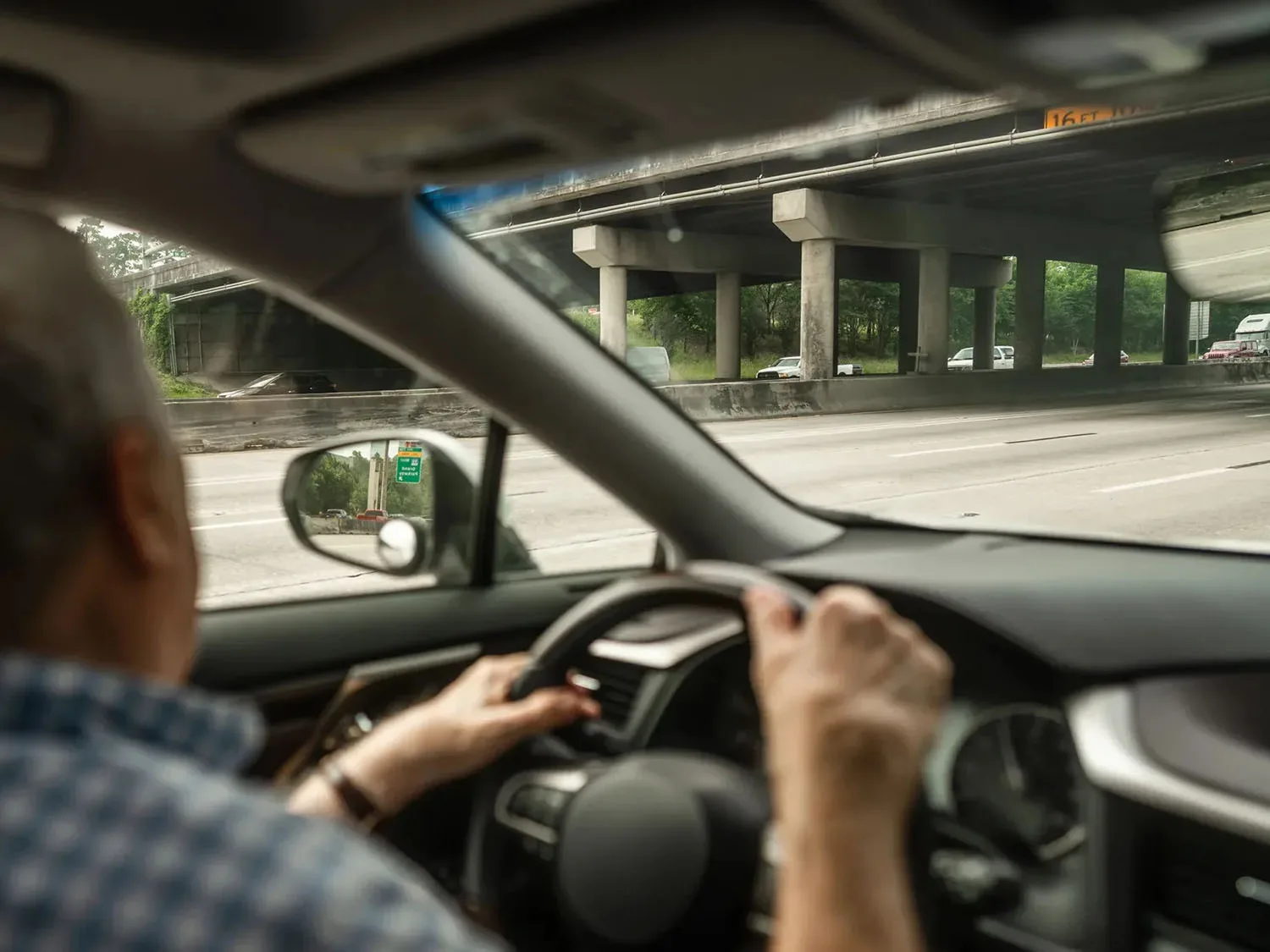
This choice was one of the first things that struck me when I started as a rideshare driver. The vast majority of my passengers—probably 80 percent—are Black. Ninety-five percent of them are going to or from work. No matter where my first ride or two might take me, I end up heading either north of Delmar Boulevard in the city, or further northwest into majority-Black suburbs such as Ferguson, Jennings, and Normandy.
In case my name doesn’t give it away, I’m white. Last fall, I quit my job as a magazine editor—I took a stand regarding free speech that I’m proud of, but it was not the smartest move financially. After my wife and I took a hard look at our budget, I signed up immediately with the major ridesharing apps. Although they conduct electronic background checks, I was out driving that same night.
The job is all about flexibility. The app notifies you constantly about “high earnings potential,” but you can skip a day or a week and get right back to it, any time of the night or day. Also, you don’t have to shave. Most of the time, I make about $25 an hour.
That’s before gas, taxes or insurance. But I’m confident I’m clearing more than many of my passengers. When I take someone three miles to work at Wendy’s—maybe passing another Wendy’s that’s closer to where they live—passengers tell me, that’s where they were hiring. Same with the kids I’ve taken 35 miles from Midtown St. Louis out to Six Flags in Eureka.
I’ve driven plenty of people to the airport or home after a Blues game. But if I drive a rich retiree from Kirkwood up to a casino, inevitably I’ll then pick up a casino employee who works in food or cleanup. If I bring home a Des Peres resident who’s had too many during happy hour, my phone will quickly ding with a rider who needs to get home to North County after working at Dierberg’s.
Some riders rely on Uber or Lyft because their truck needs repair or they’re nurses who don’t want to pay hospital parking rates. (Some passengers do check price differences between the two services, which at times can be substantial, but most remain brand loyal because frequent rides are rewarded with coupons or discounts.) More often, however, they work at retail outlets or fast food restaurants that are expensive miles from their homes. “These bills are hurting my pockets,” a passenger named Lisa told me.
I don’t know if I’m picking up demand from a community other drivers are wary about serving. But thousands of people who commute by Lyft or Uber every day clearly aren’t depending solely on me. An informal survey I’ve conducted—in other words, asking out-of-state friends to ask their drivers—suggests that rideshare services are also heavily used by low-income, minority riders in other sprawling metro areas such as Atlanta, Houston, and Oakland, California.
My wife has gotten nervous since rideshare driver Shannon O’Brien was killed by gangland crossfire on January 30 after dropping off passengers in Ferguson. I’ve had many passengers warn me “be careful” and “watch yourself” because “people are crazy out here.”
The two times in my life when men have drawn weapons on me, however, I’ve been on foot in supposedly safe, certainly white neighborhoods. What happened to Shannon O’Brien was tragic but it was also random. I figure the chances something like that will happen to me are lower than the odds I could get hurt just by being on the road more. There are a lot of red-light runners out there.
The biggest problem serving impoverished areas, I’ve sometimes painfully realized, is that gas station restrooms are often closed, whether permanently or after dark. The reason, a man with the passenger name “Bam Bam” told me, is that people go in, shoot up and pass out. Delightfully mangling the proverb, he says, “One bad apple can spoil things for one good apple.”
In some down and out neighborhoods, gas stations nonetheless serve as a hub. On his way home, Terrance asked me to stop at a gas station so he could pick up some cold medicine.
After all, he doesn’t have a car to run errands with, either. “I know my time’s gonna come when I get a car in the future, but it ain’t no rush,” Terrance says. “As long as I’m able to afford an Uber, that’s cool enough for me.”
See also: Via’s microtransit service expands to fill the gaps in St. Louis where buses don’t run