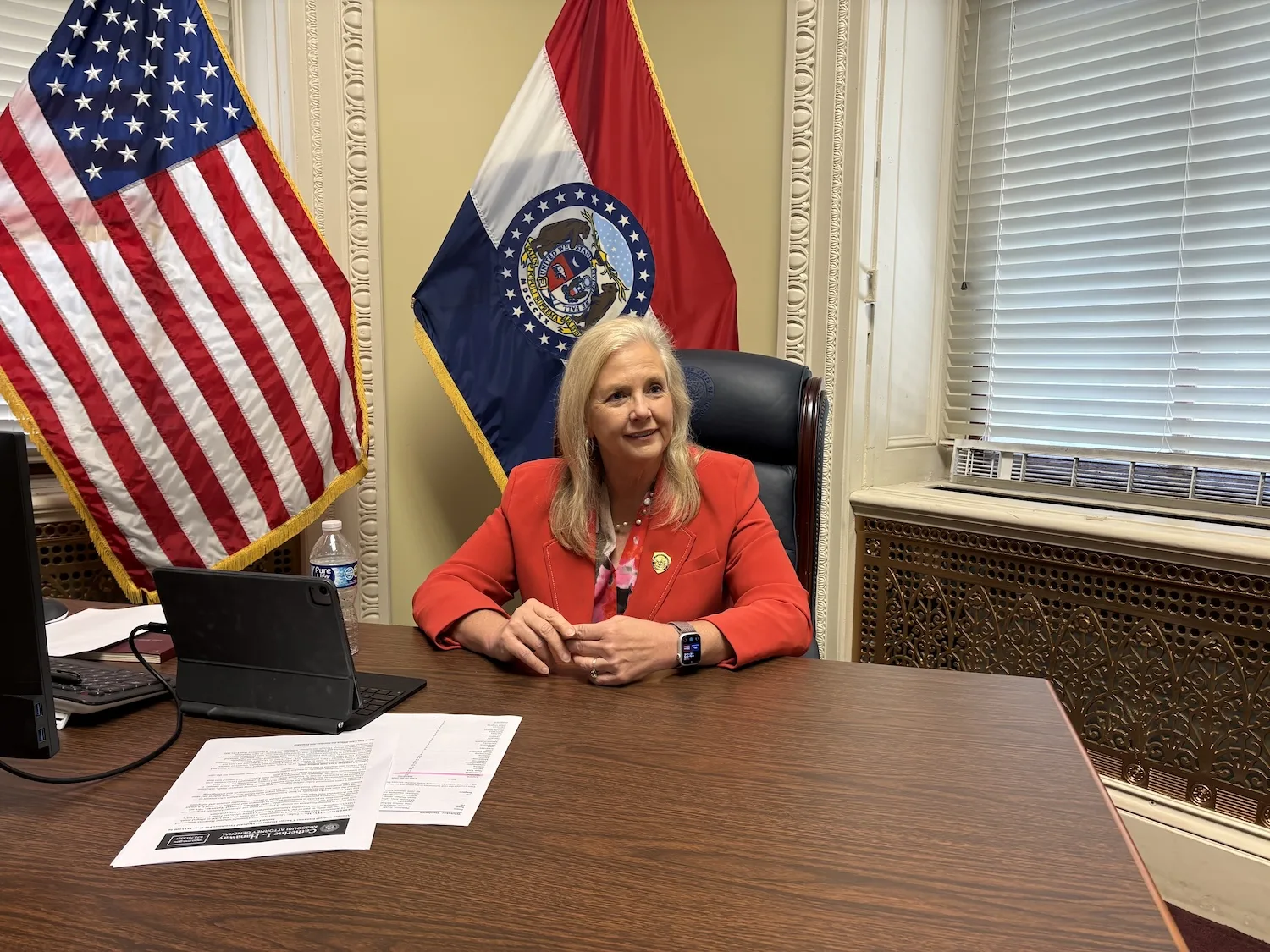
Attorney General Catherine Hanaway is coming for the things that make your sketchy neighborhood c-store so sketchy. The state’s highest law enforcement officer says illegal gambling machines, 7-0H kratom derivatives, and illegal cannabis are all in her sights this summer. She calls it “the Vice Squad,” with the vices in its crosshairs being ones that didn’t exist even a decade ago and until now have thrived in a legal gray area.
For Hanaway, it began with unlicensed gaming machines, which were found to be illegal after a lengthy civil trial brought by private companies last year. Her office moved swiftly to shut down the machines, which at their peak numbered around 25,000 in the state and were ubiquitous in gas stations and convenience stores. Now, she says, only an estimated 7,000 are operational.
Get a fresh take on the day’s top news
Subscribe to the St. Louis Daily newsletter for a smart, succinct guide to local news from award-winning journalists Sarah Fenske and Ryan Krull.
When it comes to targeting illegal gambling, she says she’s not on any sort of anti-gambling moral crusade. “When I found out it was a billion dollar industry, my real concern was that if you can make this much money in an illegal industry, basically just flaunting law enforcement, we’ll get real organized crime fighting over these pots [of revenue],” she says.
She adds, “A billion dollars in cash, untaxed, moving around—crime falls out of that…Let’s not go back to the bad old days. There was a time when there was real organized crime in St. Louis and Kansas City. Let’s get this shut down.”
Hanaway says that she’s seen real evidence that video gaming machines were leading to ancillary crimes, oftentimes with the video gaming machine manufacturers being the victims. Her office has learned of people counterfeiting and cashing in the machines’ winning tickets and reprogramming the machines to pay out increased sums. She’s even heard of a scheme in which people attach a $100 bill to a string or a stick, insert it into the machine and then yank it back out. One manufacturer was taken for $40,000 by the trick Franklins. These stories came to Hanaway by way of the video gaming machine makers themselves, who she notes—in a dynamic reminiscent of the mob—hadn’t otherwise reported them to law enforcement.
Before her office cracked down on the illegal gaming machines, Hanaway adds, they were often located in the same businesses that sold “fake marijuana” like the 7-OH kratom derivative, making them not unlike drug dealers in that they became hubs for petty crimes in their vicinity. “Some of the places where those people gather, we may be able to use public nuisance and vagrancy laws to continue to combat the problem,” she said. Shutting these shops down in places like downtown St. Louis, she says, will hopefully bring crime down in general.
“I’m still very worried about the amount of crime in downtown St. Louis, and I think you’re going to start seeing us do some things to assist,” she says, adding, “We already are.”
Another similarity between the illegal gambling devices and the “fake weed” sold at vape shops and gas stations is that the latter has also largely been able to remain in a legal gray area. These are analog drugs, ones that are chemically very similar to illegal narcotics, but with the composition changed just enough to make it a substance not explicitly outlawed.
The video gaming machine industry may already be attempting a similar ploy. A lengthy federal trial last year resulted in a judge ruling that video gaming devices made by Torch Electronics were indeed illegal gaming devices. But a lawsuit filed last week by a St. Charles bar argued that it should be able to keep its gaming devices because, even if they resemble Torch’s, they weren’t made by Torch, so the 2025 ruling doesn’t apply.
The St. Charles lawsuit was filed against Hanway, seeking to stop her from shutting down the machines in Tuners Bar and Grill. Hanaway says she’s confident her office will ultimately prevail, with the goal being to get an appellate judge to define what constitutes a game of skill. Previously, makers of the gaming devices have argued that there is no element of chance in them and are therefore based entirely on skill. Hanaway’s office says it hopes the case results in a broader state court ruling that defines illegal gambling devices by how they operate, rather than by their manufacturer or minor design differences.
“I think we’re going to be successful in making that argument,” she says. “It’s a trap for the unwary to start going down this path that small modifications can make something go from being a game of chance to a game of skill.”