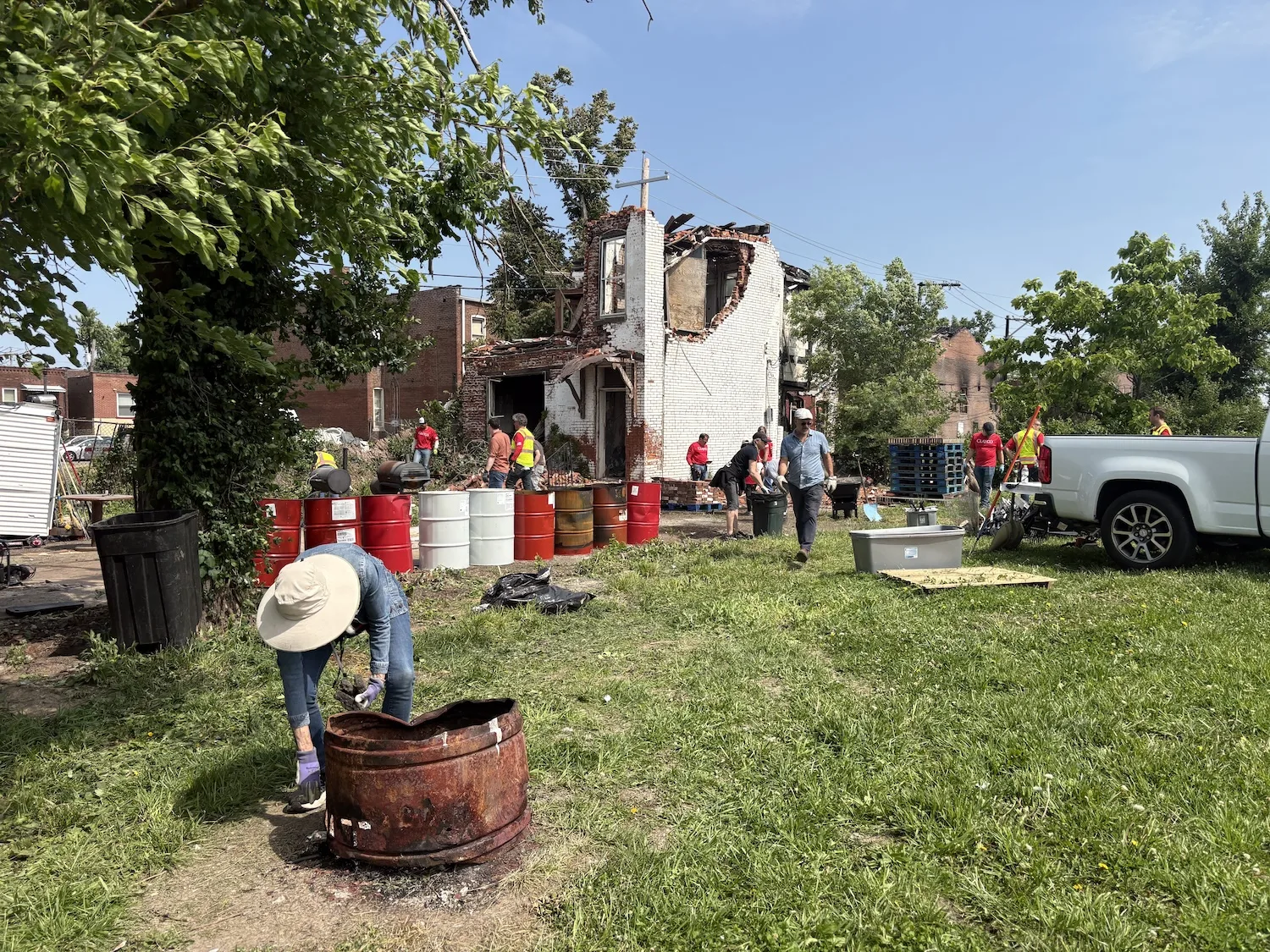
As St. Louis and other cities still reel from destructive disasters, congressional reforms could drastically simplify how long-term disaster recovery is funded in the U.S. But the federal changes likely becoming law today won’t help St. Louis. That leaves any additional recovery funds for the May 16, 2025, tornado still waiting for Congress.
After FEMA largely dropped the ball after the tornado, some St. Louisans have pushed for disaster-related U.S. Dept. of Housing and Urban Development funding, asking if locals could access what HUD describes as a “flexible” disaster relief pot. But those funds require congressional appropriation, which hasn’t happened since January 2025.
Get a fresh take on the day’s top news
Subscribe to the St. Louis Daily newsletter for a smart, succinct guide to local news from award-winning journalists Sarah Fenske and Ryan Krull.
A bill set to become law without President Donald Trump’s signature today would change the current system, making the process of accessing HUD’s post-disaster funding much more consistent—but still leaving St. Louis’ recovery in the lurch.
The funding stash, called Community Development Block Grant – Disaster Recovery funds (often abbreviated to the shorter mouthful CDBG-DR), requires regionally-specific congressional appropriations, which typically bundle multiple disasters around a larger, more destructive one like a hurricane. Congress last allocated CDBG-DR funding in January 2025, allocating $12 billion for disasters that took place in 2023 and 2024.
Changes to CDBG-DR funding would come through a provision tucked into the massive 21st Century ROAD to Housing Act, a sweeping omnibus housing reform bill with bipartisan support. Trump said previously that he wouldn’t sign the bill unless Congress enacted the voter ID-related SAVE America Act, leaving the housing bill unsigned on his desk. But—provided he doesn’t veto it—the bill will go into law today without his signature, Yahoo Finance reports.
The bill puts the disbursement of CDBG-DR funds directly under the purview of HUD, sidestepping the need to plead with Congress every time a city requires longer-term post-disaster support. The funds would go to HUD in a similar fashion to FEMA funding, where Congress annually appropriates a lump sum that the agency can administer, deplete, and then ask Congress to replenish. It would make the previously piecemeal process of CDBG-DR funding a permanent one, securing the future of the program for disasters to come.
Both U.S. senators from Missouri, Josh Hawley and Eric Schmitt, voted for the housing bill containing the CDBG-DR changes, but neither would speak to SLM directly about a path for St. Louis to get funding from it. A Schmitt spokesperson says the changes in the bill would expedite funding for future disaster recovery efforts and eliminate the need for specific appropriations, but cautions that the funding apparatus would still need to be set up and that the program needs a separate act from Congress to fund it. Hawley’s office did not respond to multiple requests for comment.
St. Louis is no stranger to this pot of money—after major flooding in 2022, the city saw more than $25 million in CDBG-DR funds. HUD says the money can help communities that lack access to capital, like many of the hardest-hit parts of St. Louis post-tornado.
“Grant funds are appropriated by Congress and allocated by HUD to rebuild disaster-impacted areas and provide crucial seed money to start the long-term recovery process,” HUD says in a website summary. “Since … assistance may fund a broad range of recovery activities, HUD can help communities and neighborhoods that otherwise might not recover due to limited resources.”
Urban Institute senior fellow Andrew Rumbach, an expert on the impact of climate change and natural disasters, says it’s somewhat of a “misnomer” that the funding pot is sometimes called “flexible.” It’s actually best understood as a vehicle to pay for documented, unmet needs—which, he says, St. Louis demonstrably has.
“St. Louis has been recovering now for … a year and a little bit more, they can document the fact that … houses have not been rebuilt yet … infrastructure has not been rebuilt yet, and there’s still a clear documented need for that to happen,” he says. “[CDBG-DR] could come in and fund those projects, because it’s an existing unmet need when the program is established for the disaster.”
The bill’s changes present a clear benefit in the future, he says: Rules will be more consistent and won’t change with every wave of appropriations once HUD sets up an administration apparatus. But, he stresses, any potential changes brought by the bill would not directly affect prior disasters, like St. Louis’.
There are some reasons the way FEMA funding works is advantageous, he says. Congress allocates a large sum for the agency to administer directly, and Congress can always add more when the cost of disasters outpaces the funding. CDBG-DR hasn’t worked that way, previously relying on specific requests to Congress. That could make the changes in the bill good ones.
“There’s a lot of political pressure when there’s a disaster to make sure that the fund is full, so it takes away this bizarre discretionary ‘sometimes we get it, sometimes we don’t,’” he explains. “You have no idea how long it’s going to be [for CDBG-DR currently], and you don’t exactly know what the program is going to be, because when they … authorize it again … they create new rules every time.”
Rumbach adds that getting funding might not be hopeless for St. Louis. Speculating, he says, it’s possible that when Congress votes to fund the CDBG-DR program under the new structure set out in the housing bill, it could potentially pay for previous disasters the bill doesn’t cover, too.
Cami Thomas, a filmmaker and tornado recovery advocate who’s been instrumental in starting a discussion around CDBG-DR funding in recent months, tells SLM that her focus is less about how changes come, and more about making sure they happen fast.
“St. Louis needs long-term housing funds,” she says. “It’s as simple as that. It doesn’t matter how Congress and our public officials get it done, but it needs to be done proactively. I want to know what our delegations’ plans are.
“This bill is a good step for the future but we need a solution for St. Louis’ current state. Those steps need to be communicated in real time to the public, who have been waiting on answers for a year, if our officials want to start the process of regaining the public’s trust in them. Anything other than action is simply fodder.”
Why It Matters: CDBG-DR funding has provided additional millions of dollars in federal funding for disaster-stricken areas, including $110 million for the 2011 Joplin tornado. Since Donald Trump’s second term, however, no CDBG-DR allocations have come out of Congress. Giving the program a more consistent source of funding could help make up for the paralysis at FEMA that has left cities standing alone after disasters—a situation for which St. Louis has become the poster child.
As for FEMA, the man abruptly fired last year as its acting director, Cameron Hamilton, is returning, which is seen by some as a sign of a potential softening of Trump’s adversarial stance to that agency. Hamilton, however, is still not liked by some, who cite his lack of emergency management experience.
What’s next: Absent a presidential veto, the bill authorizing the changes to CDBG-DR funding goes into law today. However, changes won’t come right away. HUD still needs to set up a new administrative apparatus for disaster funds and Congress still needs to allocate funding for it. The big question for St. Louis then becomes whether it can find a way to be retroactively included in whatever programs—and funds—are to come.