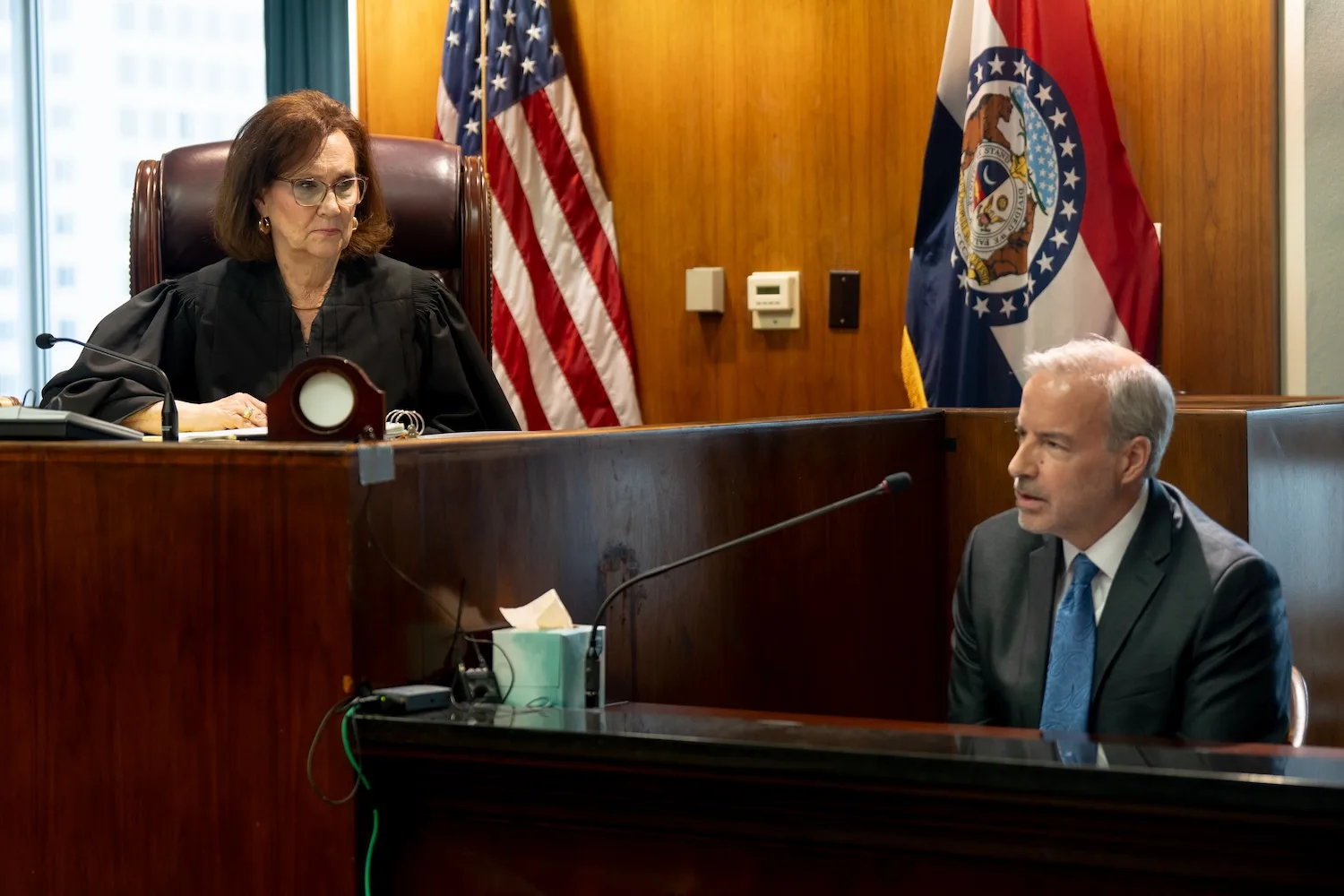
Whether or not the City of St. Louis has to allocate $67 million to the police in the next six weeks may come down to the meaning of the word “revenue.”
That’s because St. Louis is required by state law to spend 22 percent of its general revenue on policing for fiscal year 2026, which ends June 30. A lawsuit filed earlier this month by the state-appointed Board of Police Commissioners is asking Judge Joan Moriarty to order the city to include Rams settlement funds and reserve funds in that general revenue. The city allocated $189 million to the SLMPD for this fiscal year. The Police Board’s lawsuit argues that number should have been closer to $257 million. If Moriarty rules in the board’s favor, the city could have to allocate the difference to the police in the next six weeks.
Get a fresh take on the day’s top news
Subscribe to the St. Louis Daily newsletter for a smart, succinct guide to local news from award-winning journalists Sarah Fenske and Ryan Krull.
The first hearing in the board’s lawsuit was Tuesday afternoon. Chris Graville, the attorney for the Police Board, called the matter “a very simple case.” He cited a Missouri Supreme Court ruling that defined general revenue as “all current income of the city, however derived, which is subject to appropriation for general public uses.”
But Assistant City Counselor Andrew Wheaton argued that the Rams money and the reserves are not considered revenue under either Missouri law nor “generally accepted accounting principles.” He noted that the state supreme court ruling cited by Graville came down in 1955, predating modern accounting practices.
City Budget Director Paul Payne gave lengthy and highly technical testimony. He said that the Rams money was considered revenue the year it was received, but it is not considered revenue in subsequent years. “It’s only revenue once,” he said.
Graville asked Payne if there was any law he could point to that would back him up on that assertion. Payne conceded he didn’t know of any, but that classifying revenue in such a way was “common practice.”
“I’m not sure how else it works,” he said.
About the reserves, Payne said that if the city spent 25 percent of its reserves on the police, within two years those reserves would be below the amount of reserves recommended by the Government Finance Officers Association. “You would far deplete those funds than they accumulate,” Payne said.
In addition to the question of what constitutes revenue, Wheaton also offered a secondary argument against the validity of the board’s lawsuit, which is technically an application for mandamus. Wheaton said that he believes it fails in a fundamental way because mandamus actions must show that there has been a “prior specific demand and a refusal.” Wheaton said there was no request “at all” by the Police Board or the St. Louis Metropolitan Police Department for that $67 million. He also noted that this request for the fiscal year 2026 was coming about six weeks before that fiscal year ends.
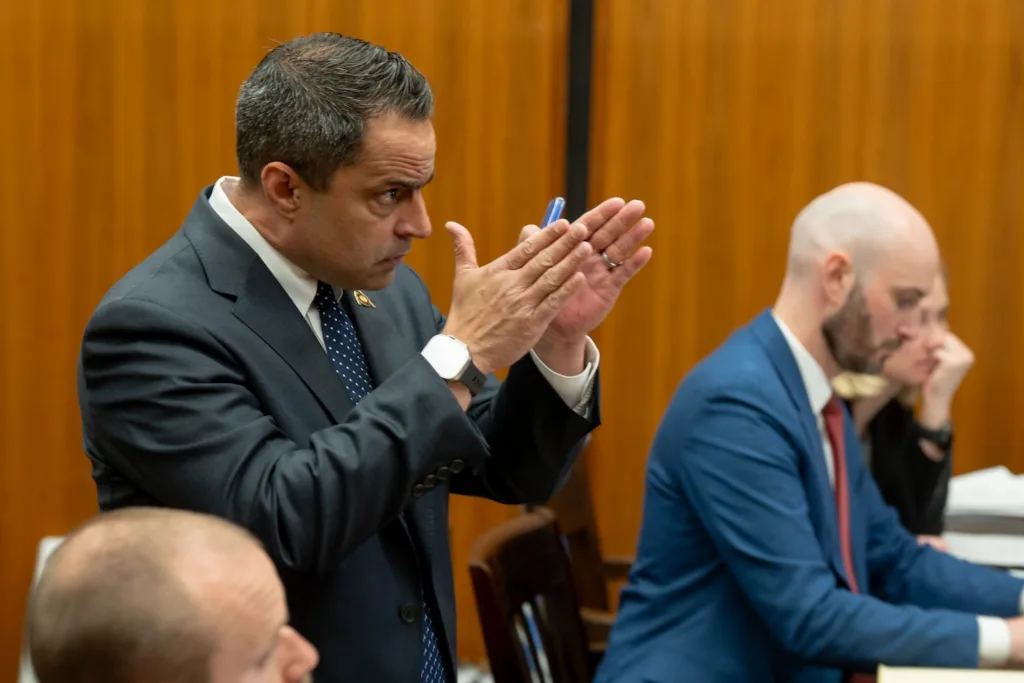
Graville pushed back against that, saying that efforts to spend additional money have been blocked by the city’s Board of Estimate and Apportionment, a body that includes the mayor, comptroller and the president of the Board of Aldermen which approves all city expenditures.
Payne said that it was his understanding that those expenditures were blocked because the Police Board was trying to transfer money that had been encumbered in previous fiscal years.
The city called as an expert witness Peter Karutz, a certified public accountant and forensic accountant, who testified that the industry’s understanding of revenue was the same as Payne’s. “The term revenue relates to a period of time,” specially the period of time when it is “incurred or earned.” He said that it was his opinion that the reserves and the Rams money were not revenue for fiscal year 2026.
Graville objected to Karutz’s testimony about the specifics of accounting, saying that it was essentially irrelevant to how state law views revenue.
Moriarty will rule on the matter in the coming weeks, presumably before June 30. If the city were to lose the case, they could forestall payment while the matter is on appeal. However, given how close it is to the end of the fiscal year, legal experts say the appeal would move quickly.
It’s worthy noting that last week Moriarty recently ruled against the SLMPD, finding that the department wrongfully withheld records from the Post-Dispatch. The newspaper did not ask Moriarty to award them any money; however, she ordered the police to pay the paper $5,000 for its “purposeful” Sunshine law violation.
Despite the in-the-weeds nature of the arguments, splitting the hairs over the meaning of specific accounting terms, the hearing was not without its moments of levity. Moriarty at one point said that they would “do night court” if needed to get through the witnesses in one day.
At another point, Graville mixed up the numbering of exhibits in the case. “Numbers aren’t my thing,” he quipped. “As everybody here knows.”
Attorney and St. Louis University Law School professor Brendan Roediger was in court observing the hearing yesterday. “At least for today, it didn’t seem like Operation Defund St. Louis is likely to succeed,” he said. “But going after the City’s reserves shows a level of greed I doubt even the governor predicted.”