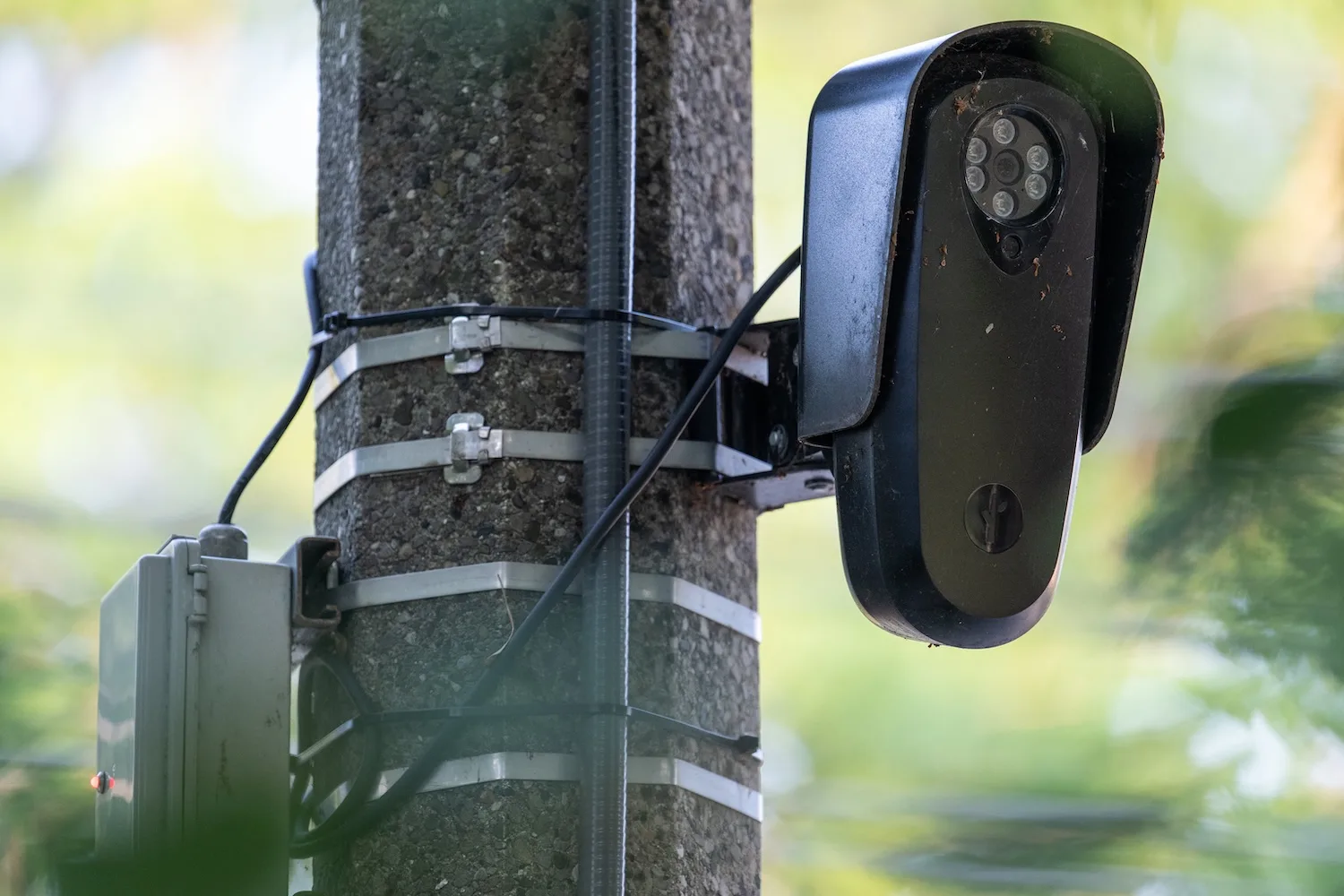
License plate readers in Clayton can help find stolen vehicles and track cars connected to crimes. They can also keep officers in other Missouri municipalities plugged into whether a vehicle may or may not have passed through the city’s boundaries. More than 200 law enforcement departments in the state have access to data from Clayton’s network of Flock cameras.
Should they?
Get a fresh take on the day’s top news
Subscribe to the St. Louis Daily newsletter for a smart, succinct guide to local news from award-winning journalists Sarah Fenske and Ryan Krull.
Leaders in Clayton are now considering whether they might narrow access to that data, and whether departments well beyond the city limits should have to request information instead of simply searching the system for themselves.
Those were among the concerns to emerge from Tuesday’s City Council meeting, where Clayton Chief of Police Mark Smith outlined several steps his department has already taken to address worries and criticism about government surveillance and the potential misuse of data. Smith says Clayton has shortened its data retention period from 30 days to seven, restricted which members of its department can search the records, and blocked certain types of searches by outside agencies. The changes, Smith said, are intended to reduce the possibility of misuse, even though Clayton has yet to identify any unauthorized use of the system by its officers.
Clayton’s tweaks come as Missouri has moved to establish statewide safeguards for automated license plate readers. An executive order signed last week by Governor Mike Kehoe calls for most plate and vehicle data to be deleted within 30 days, restricts its use to criminal justice and lifesaving purposes, and establishes accountability measures for misuse.
“We haven’t found any abuse,” Smith said of his department. “We just want to make sure there’s no misuse of it at all.”
But even with the steps taken by Clayton Police, questions remain about outside access and whether too much data is available to those outside city lines, including agencies that may not have as strict safeguards. During a recent 30-day period, authorized Clayton officers searched the system 19 times. By comparison, during a separate 28-day period, other Missouri police departments ran approximately 42,000 searches through a network that included Clayton’s cameras. Those outside searches weren’t necessarily aimed at Clayton, and they don’t reveal how often they produced a match in the city. But the jarring total of queries raises questions about how closely the city can monitor—or restrict— the use of its Flock-generated data by other departments.
“I think cooperation in pursuit of criminal investigation is incredibly important and we have a huge preference toward regionalism here and cooperating to help victims of crimes,” Ward I Councilmember Becky Patel said. “However, I don’t think that in order to be a cooperative neighbor we have to open up our data to other people to search.”
Smith, though, cautioned that Clayton benefits from the same access it gives other departments. He pointed to an investigation involving a man suspected of stalking women in Shaw Park. An automated license plate reader in Ellisville helped local police locate the suspect, Smith said.
“If we reduce our sharing with agencies in our general proximity in St. Louis County, we run the risk of losing those opportunities to apprehend people,” Smith said.
For now, the City Council asked Smith to develop a proposal for potential further restrictions on outside access, including accounting for which agencies Clayton actively works with and how any changes might affect investigations. Smith is expected to return before the council next month.
“I do feel a sense of urgency,” Ward I Councilmember Betsy Meyland-Smith said. “There are signs on all the Flock poles in our neighborhood alerting folks to the fact that they’re being surveilled. The community is becoming even more aware of it.”