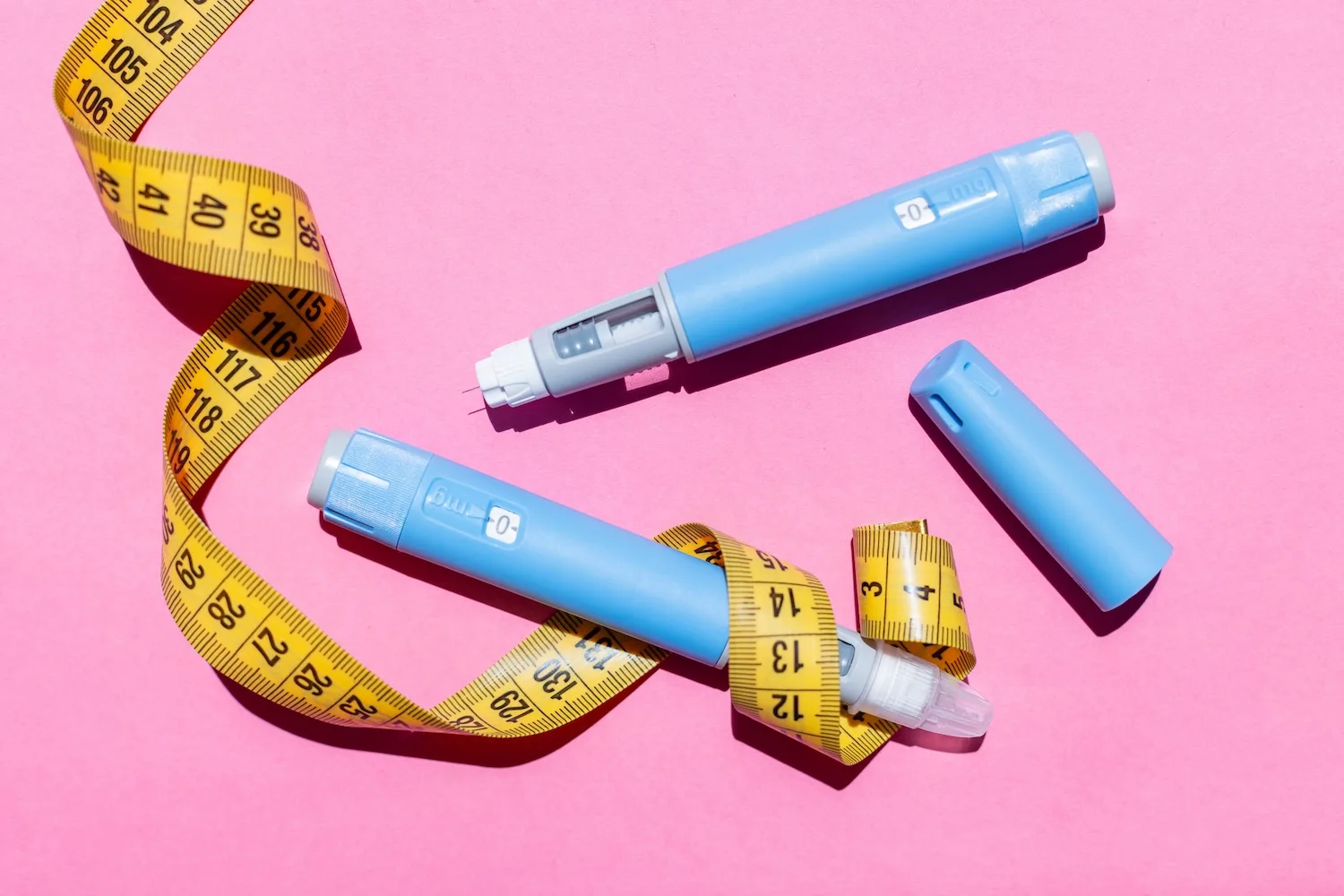
Casey Crider and Jason Huston were moving some serious weight.
Weight-loss drugs, specifically.
Get a fresh take on the day’s top news
Subscribe to the St. Louis Daily newsletter for a smart, succinct guide to local news from award-winning journalists Sarah Fenske and Ryan Krull.
Now federal authorities have seized homes and other properties in southwest Missouri belonging to the two men. Prosecutors allege Crider and Huston purchased the properties with the millions they earned selling Chinese-sourced weight-loss chemicals such as semaglutide and tirzepatide—better known under brand names like Ozempic and Zepbound.
Asset forfeiture is controversial at times, though not uncommon. It is, however, rare for people to have their assets seized while standing accused of selling drugs meant to curb appetites.
According to a seizure notice filed in federal court last Wednesday, Crider and Huston generated roughly $15 million in sales over just two and a half years—most of which they spent under one form of surveillance or another. Neither man is a licensed pharmacist.
They sold the drugs through their website, Blome Research, with the return address for the company’s shipments being Huston’s home. The website appears to have since been deactivated.
The seeds of the scheme’s undoing appear to have been planted in September 2024, when Crider messaged a pharmacist on Facebook offering to sell tirzepatide, so long as the pharmacist was “not the FDA.”
Screenshots of that conversation were forwarded to the Missouri Board of Pharmacy, which regulates pharmacies across the state. An undercover board employee emailed Blome Research to ask where the peptides came from.
“[I]t all comes made and done from the factory,” a Blome representative replied. “[I]t’s in China. I just know they come here and we 3rd party test them at a lab in CA and the lab sends us a report for purity and it is 100% pure.” A month later, the undercover investigator ordered several vials of the drugs along with a mixing agent.
The pharmacy board then sent the men a cease-and-desist letter, noting that neither Huston nor Crider was a licensed pharmacist.
They neither ceased nor desisted.
Federal authorities began monitoring the company’s shipments, ultimately counting nearly 32,000 parcels sent over the course of almost two years. Agents executed search warrants on some of the packages and found what court filings describe as “misbranded pharmaceuticals,” as well as retatrutide, a weight-loss drug that has not been approved by the FDA.
Collecting still more evidence, an undercover federal agent called Crider in November 2025, claiming he was looking to lose weight and hoping Crider might have some suggestions. Crider replied that he was “not supposed to give this information because we’re not pharmacists or doctors.” Nonetheless, Crider then went on to instruct the undercover agent on how to inject himself with the drug and what dosage to use. He added that he had lost 100 pounds in 11 months using retatrutide.
Court filings do not identify the agency employing the undercover agent, though it was likely the U.S. Postal Inspection Service, judging by the agents who later arrived at the men’s homes to seize their assets.
At least one additional undercover purchase was conducted earlier this year. According to court records, Huston told that agent that Blome Research could arrange a “porch pickup” for customers willing to drive to Seneca, Missouri, and avoid shipping fees.
Then, last week, the feds made their move.
The four seized properties are located near the towns of Carl Junction and Seneca in southwest Missouri. A local NBC affiliate was on the scene as federal agents, including members of the U.S. Postal Inspection Service, executed the seizures. Cameras captured authorities towing away numerous vehicles, including an SUV, a Cybertruck, and a high-end autocycle.
The two men do not yet appear to have been formally charged.
While asset seizures involving alleged weight-loss drug traffickers remain unusual, that could change as demand soars for GLP-1 medications, even as insurance companies are hesitant to foot the bill. Cash-strapped users in turn seem increasingly poised to turn to gray-market alternatives. By way of example: A month’s supply of tirzepatide typically sells for between $150 and $450 through legitimate online pharmacies. Blome Research was selling its Chinese-sourced version for $80.