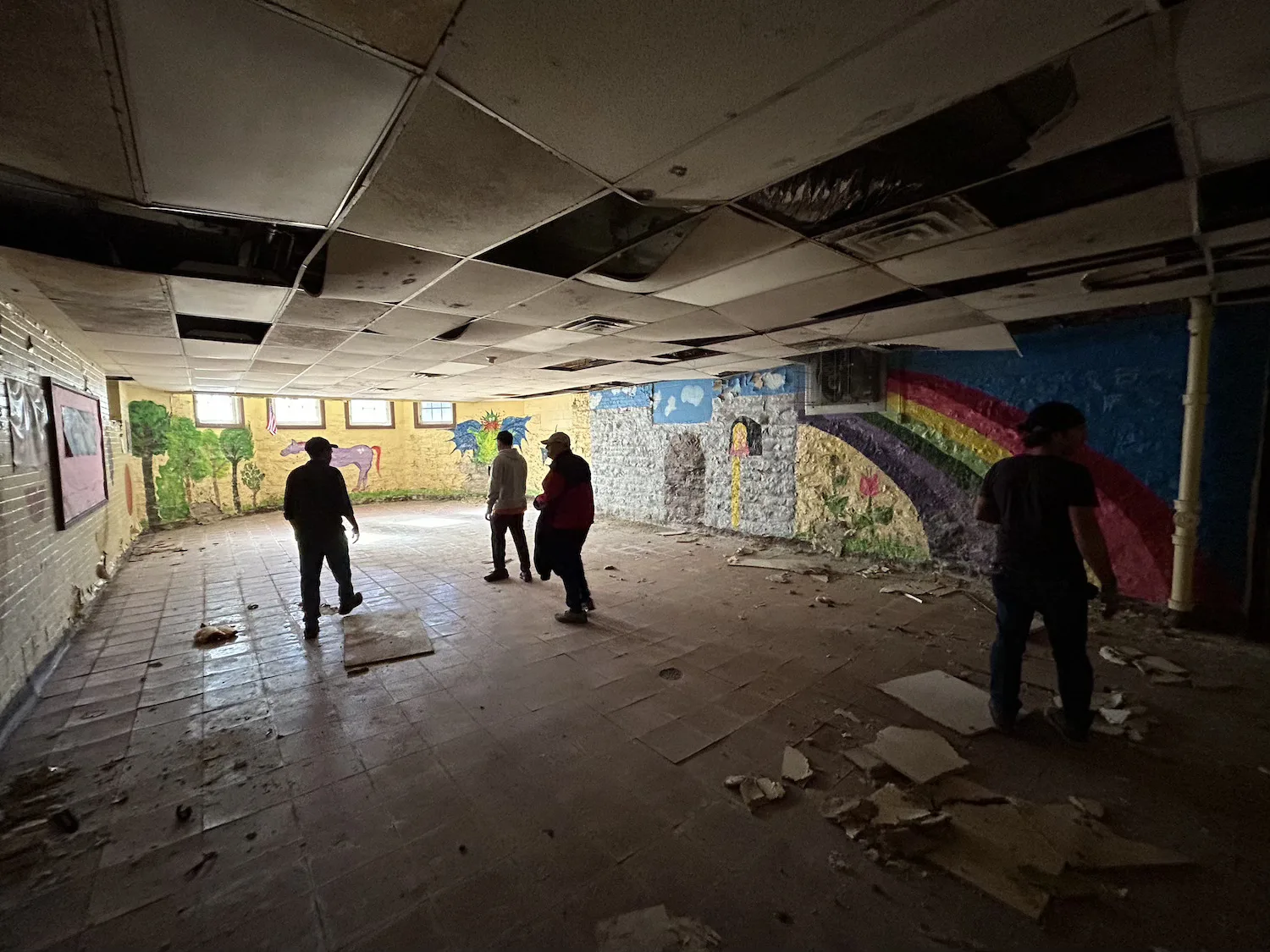
Developer Benjamin Anderson says he’s been given until June 9 to come up with a plan to save Euclid School—three years after he first made an offer to buy it but got “ghosted” by the district and what may be one last shot to head off its plans to demolish it.
The St. Louis Public School district had announced in February that it would demolish Euclid and several other schools, with the school board then scheduled to vote on a demolition contract on May 26. But before that could happen, Anderson went public, detailing his concerted efforts to purchase the building and rehabilitate it in an interview last week with the Post-Dispatch. Alderwoman Shameem Clark Hubbard then fired off an email to the school, retracting her previous support for the school’s demolition.
Get a fresh take on the day’s top news
Subscribe to the St. Louis Daily newsletter for a smart, succinct guide to local news from award-winning journalists Sarah Fenske and Ryan Krull.
“I also want to publicly state that I believe in the good-faith efforts, will, and substantial capacity that Mr. Anderson shared with me,” Clark Hubbard wrote in a letter to the district superintendent.
Anderson says he’s seizing the day. He’s dreamt of rehabbing the school ever since moving to the Fountain Park neighborhood in 2018. “I hope it is still possible,” he says.
Anderson moved to St. Louis from Colorado eight years ago and says the school immediately caught his eye. He’d purchased a $10,000 home in Fountain Park, where the 130-year-old building had sat vacant for more than a decade.
And Anderson—the son of a developer who’d done extensive work in southwest Missouri—thought he saw potential. Within two weeks of buying his home, he’d reached out to a real estate agent working for the St. Louis Public Schools to get a walk-through.
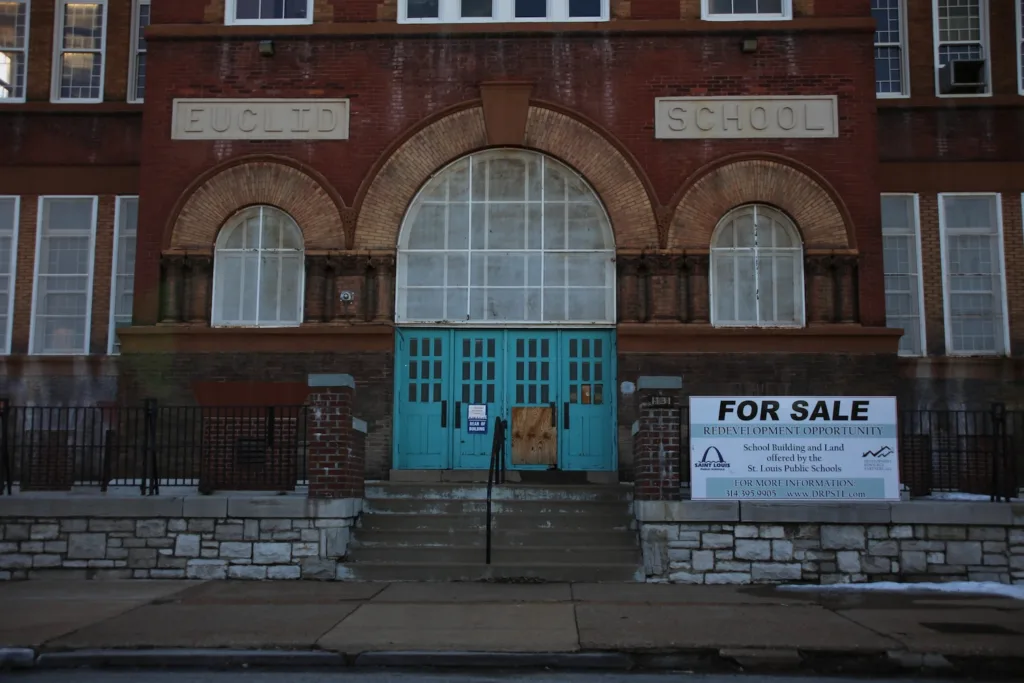
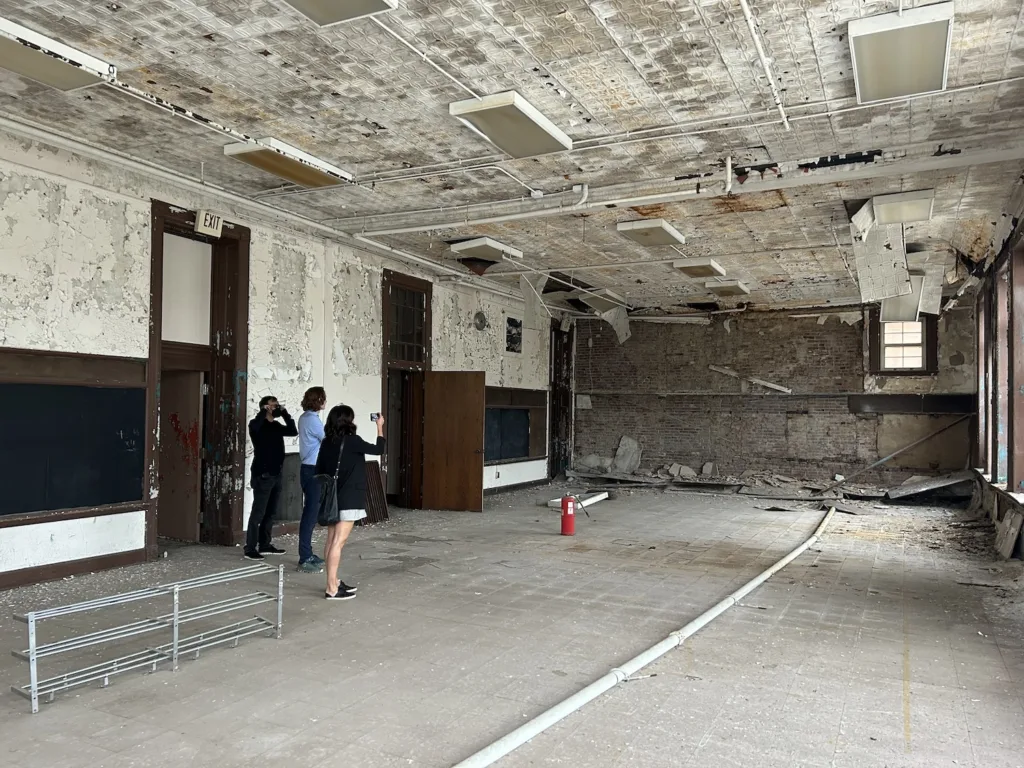
Anderson, who works with father at a firm called Anderson Organization, would walk though many times in the years to come. He’d bring architects and investors. Even as he worked to transform his residence, making good on his initial $10,000 investment, he dreamed of turning the abandoned school into apartments. In October 2023 he put in an offer for $200,000.
There was just one problem. He couldn’t get SLPS to respond. His option expired when SLPS failed to surface. Despite his best efforts and those of the realtor the district had hired to help it divest of its excess property, the district just didn’t seem interested, as its real estate agent confirms. They never said no. They just didn’t reply.
Then, this past February, Anderson learned that the district planned to demolish the school. Figuring he had nothing to lose, he put in a much lower offer—this time just $1. The district planned to spend $1.8 million on the demolition; why not save that money and let him make a go of it instead? Again, he heard nothing.
To Clark Hubbard, that’s frustrating. She is not only a St. Louis Public School parent, but an alumnus of Euclid School. She believes the school’s dilapidated state left it uniquely vulnerable to the May 16 tornado that ripped through her ward—and can’t help but mourn what could have been if the district had only been responsive to Anderson years earlier.
“Why was he taken through what he was taken through back then, when we could have been in a building that, if not open, close to being open, by the May 16 tornado?” she asks. “And then it wouldn’t have been damaged this way.”
District officials did not respond to an email seeking comment on Friday.
Anderson says members of the St. Louis Public School board’s real estate committee met with him behind closed doors on May 28 before giving him the June 9 deadline to provide proof of financing and a project plan. That’s likely to be a scramble—after all the years of not getting anywhere, he doesn’t have financing locked in. He’s hoping the money he has in the bank and letters from lenders he’s worked with in the past will be enough.
He’s definitely not giving up. “I wouldn’t be jumping through these hoops if I didn’t think that this was a possibility,” he says.
He adds, “Something that they asked me in the committee meeting was, ‘What do you perceive the hardest part about bringing this building back to be? Is it going to be the roof, the stabilization, whatever? I said, ‘If you were to ask me, or any other member of my development team, the hardest part about doing this project is acquiring the building.’”


