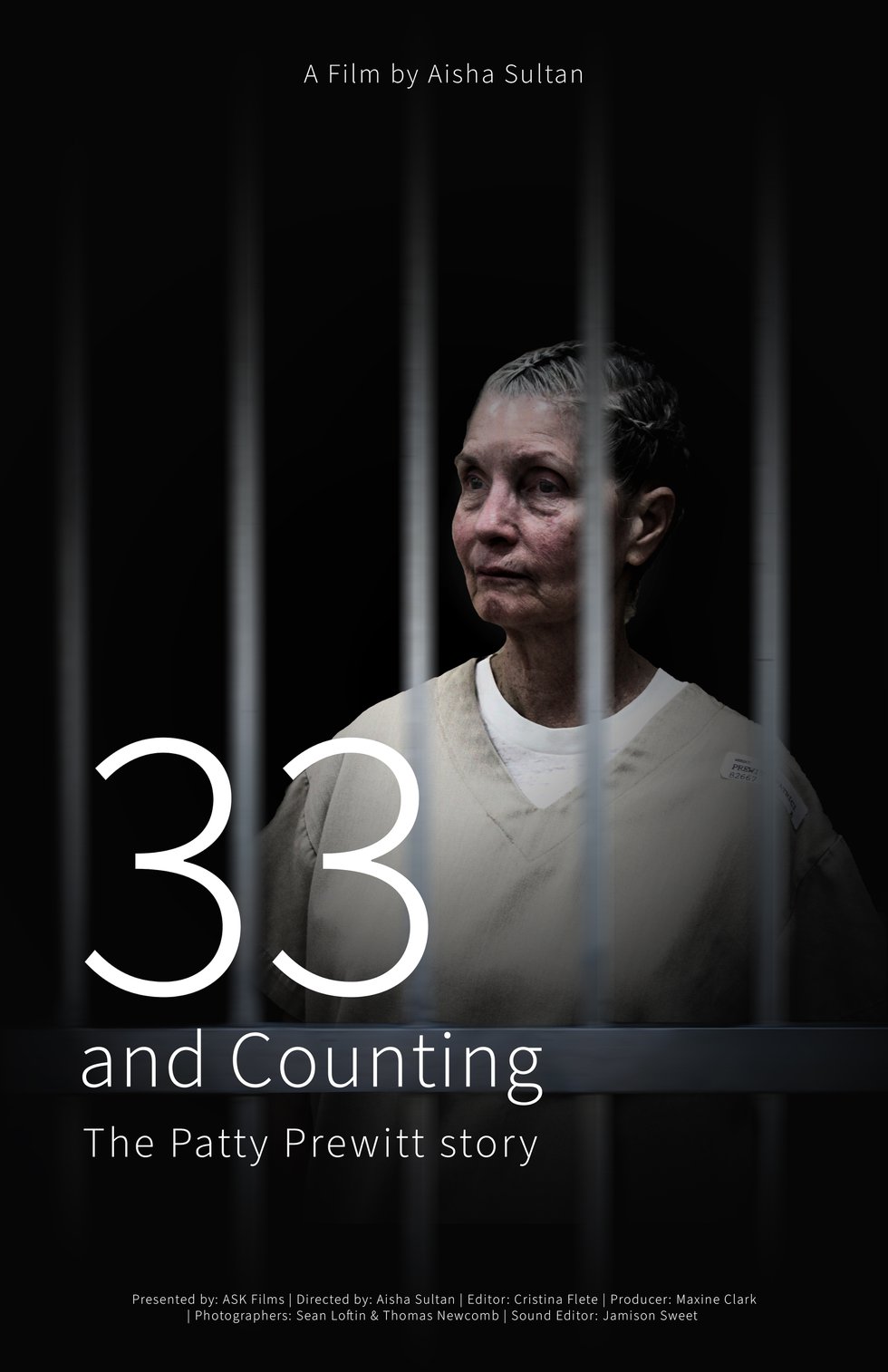
If you believe Patty Prewitt’s account, the worst things that can happen to a person have happened to her. That’s how Aisha Sultan, a columnist for the St. Louis Post-Dispatch and documentary filmmaker, describes the subject in her latest, 33 and Counting.
Prewitt, a mother of five and grandmother, was convicted of the 1984 murder of her husband, Bill Prewitt, in rural Holden, Missouri. She is now, at age 70, the oldest incarcerated woman in Missouri, 33 years into serving a life sentence at Women’s Eastern Reception, Diagnostic, and Correctional Center in Vandalia. She won’t be eligible for parole until 2036, when she will be 86 years old. And while correctional facilities across the river in Illinois release mothers to prevent the spread of COVID-19 in vulnerable prison populations, Prewitt and Sultan are hoping that Governor Mike Parson will act on her clemency petition, submitted in 2010, soon.
Get a fresh take on the day’s top news
Subscribe to the St. Louis Daily newsletter for a smart, succinct guide to local news from award-winning journalists Sarah Fenske and Ryan Krull.
“If there was ever a time for the governor to act, it would be now,” Sultan says.
In 33 and Counting, Sultan retraces the murder of Bill, who owned the local lumberyard in Holden, Prewitt Lumber. On a stormy Friday night, the Prewitts went out to dinner with friends. Patty says Bill went up to check on the kids and then off to bed. She followed and woke when an intruder shot a sleeping Bill in the head with a rifle and then raped her. Police say it was Patty who shot Bill, but there were no witnesses or DNA tests, and a forensic expert who was called to testify in the case was eventually discredited in others.
Throughout the film, people close to the case describe how Patty, who had affairs outside her marriage, was punished, essentially, for adultery with a life sentence. Peppered in are accounts of Patty’s former inmates, detailing how she helped and encouraged them during their sentences, how she was the mother they didn’t have. Prewitt has earned multiple diplomas while in prison and is involved in Prison Performing Arts, among other groups.
And then there’s Patty’s oldest child, Jane Watkins, who is desperately trying to free her mother. She went to prison when Jane was 16.
“If you believe her account,” Sultan says, “her husband was murdered. She was raped. She was charged with his murder and now is serving a life sentence for a crime she didn’t commit. And yet, she has the most positive attitude of probably any human I’ve ever met. She’s so warm and focused on trying to help other people. I just couldn’t understand how is she holding on to hope? That was the mystery that tugged at me even more than the mystery of did she or didn’t she kill her husband.”
St. Louis Magazine interviewed Sultan about the rising rate of female incarceration, how imprisoning mothers affects the family unit, and more. You can watch 33 and Counting in full below.
Where is Patty today in terms of what’s happening in prisons with COVID-19?
Part of the reason I decided to release the film right now is because she’s [part of] such a vulnerable, at-risk population. She’s 70 years old. She’s getting over bronchitis right now. She’s on blood pressure medicine. She’s already talked to her family about, “If I get this virus and die, that’s what was meant to happen, but just know that I’m free now.” I don’t want her to die in prison. It doesn’t serve the purpose of the state, and it doesn’t serve a cause of justice for this woman to die in prison. Even if you believe that she killed her husband, 33 years and the way she spent that time…it’s enough.
Two of the more sobering statistics in the documentary are that women have become the fastest-growing segment of the incarcerated population, and also that 231,000 women and girls are incarcerated across the country. More than 80 percent of them are mothers. What is that doing to families across the country, and how is that shown in Patty’s story?
I wanted to humanize someone who’s in prison on a life sentence for the audience because a lot of us don’t know somebody serving a life sentence for murder. I wanted people to see her as a human being, and to see what it does to a family of five children, left behind. They lost their father and then their mother goes away for life. Those children are human beings. Those children are victims of the crime. And then, to see what that struggle was like, not just for her kids but then for her grandkids. There is generational trauma in that family.
I also wanted people to feel what it’s like when we decide to lock up mothers in America. This is very, very bad public policy, because of the ripple effect. Mothers tend to be primary caregivers for children. You’re destroying generations of families. Part of the reason why there’s been this massive increase of women in prison over the past 10 years is because of our failed war on drugs. What we do to women who are drug addicts is that we lock them up in prison and put their families in extreme crisis, rather than try to get them treatment. I want people to think about the scale of this. Yes, this is one story, but it’s also the story of 200,000-plus women.
Did you see any of those other stories when making 33 and Counting?
One of Patty’s roommates had been in and out of prison on drug charges, and there was a period of time where her daughter was also in the same prison at the same time also on drug charges. One would come in, and one would get out, and then sometimes they would overlap. It illustrated to me, the hopeless, terrible, cruel cycle of how we treat people who come from communities that are under-resourced.
What would it be like for Patty and her family if she were released?
Judy Henderson is the woman [I spoke with for the documentary] who had been pardoned for her role in a 1982 murder. She told me that it was really hard for her to adjust to life on the outside. When you’ve been locked up for more than 30 years, the whole world is different. You go in a young person, and you come out an older person. And so I think for her, she said there were some times she wondered if she was even better off out here, rather than back in there. Now obviously she has adjusted and she’s doing a lot of important things outside of prison, but I think Patty and her family will go through a pretty significant adjustment period, because Patty has to learn how to live in a world that she hasn’t been a part of.
I think for her daughter, there would be just an enormous sense of relief, that something she’s worked so hard at for so long has finally paid off.
What do you most want to accomplish with the documentary?
My greatest hope is that a million people in Missouri or across the country watch it and send the governor either an email or call, saying: “I don’t think Patty Prewitt belongs in prison anymore. You should grant her clemency.” And the governor realizes that he has the political support to make that decision and chooses to act on her clemency petition. And then also, that it raises some questions from people about, is it really the best policy for our country to lock up people who have drug convictions, is it the best policy for us to lock up mothers with young children at home. And if not, what are other things we can do to help rehabilitate people.
And on some level, I want people to feel something. I want them to watch this, and to be exposed to a world that perhaps they haven’t seen before, and to feel something about it.
You can watch 33 and Counting below: