Learn more about Vandeventer Place in our interview with Julius Hunter on the ‘House of Lou’ podcast.
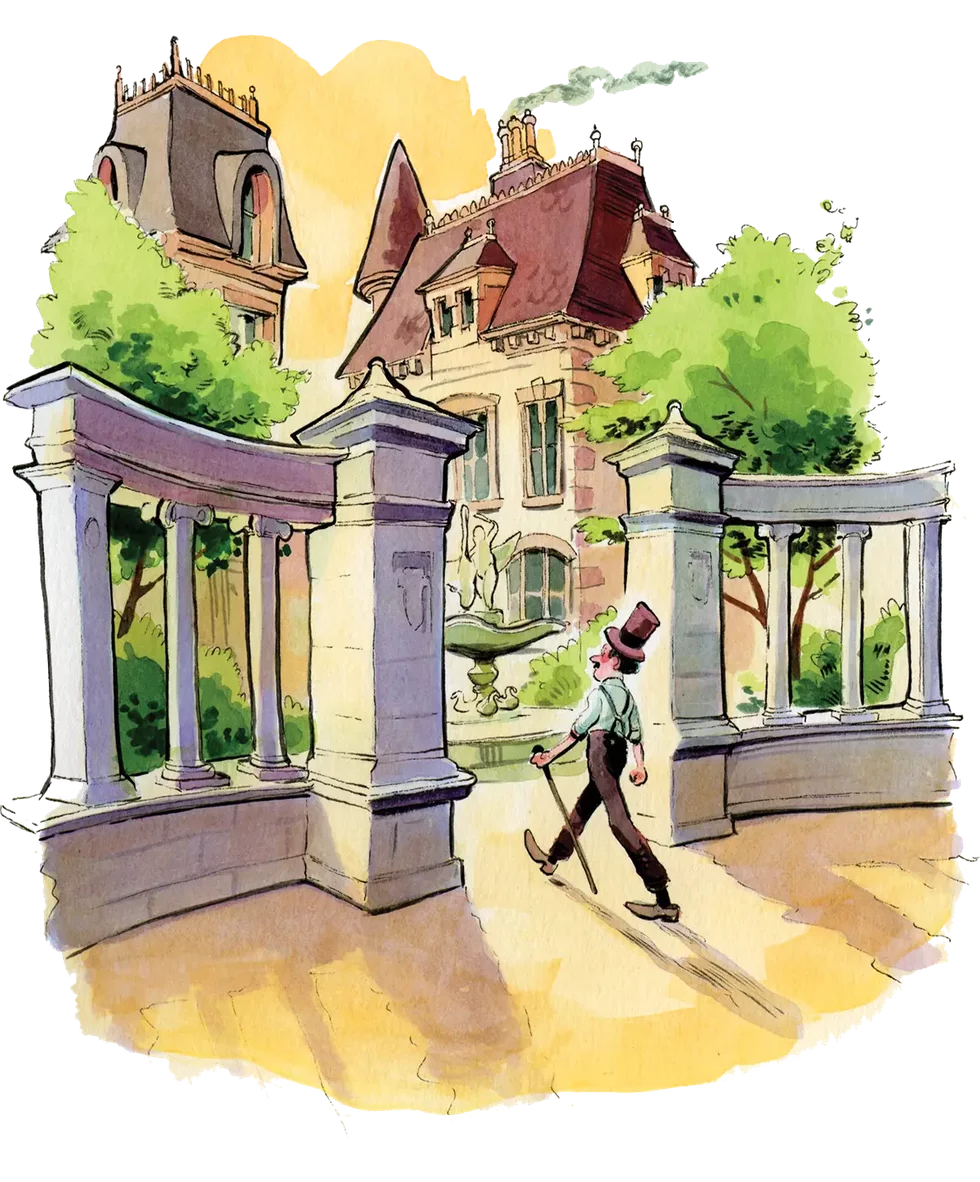
The now-vanished Vandeventer Place is a faint echo from history—and a reminder to preservationists that no amount of elegance is, by itself, a shield against the wrecking ball.
On June 4, 1870, when the plat map for what would become the grandest private street in the city was filed in the Recorder of Deeds office, the mood was optimistic. Located west of the old Civil War fortifications at Grand and Washington boulevards—the boundary of the growing metropolis—the private street designed by surveyor Julius Pitzman heralded a new chapter for the city.
Much like Pitzman’s earlier Benton Place in Lafayette Square, Vandeventer Place followed a rigid rectilinear plan, with rows of lots flanking a grass median. Houses were constructed of brick or stone; many were built of the former but had a front façade made of the latter. Legend has it that the mansion at No. 40, owned by Franklin Clay Pierce, even featured a tunnel that crossed under Bell Place to a servants’ quarters and carriage house (though this might be confusing the Pierce mansion with the nearby Samuel Cupples House).
Some of the most famous figures in St. Louis called Vandeventer Place home. Edward Mallinckrodt lived in a stately manse at No. 26. John Lionberger lived at No. 27, a Romanesque Revival house designed by Boston architect Henry Hobson Richardson. Hiram Shaw Liggett, of the famous tobacco family, called #32 home before his untimely death. David R. Francis, mayor of St. Louis, lived in a three-story Second Empire home, complete with a turret and bevy of ornamental millwork. David Davis Walker, who provided the “W” middle initial for two American presidents—both named George Bush—lived at No. 53.
Conventional wisdom regarding the fall of Vandeventer Place is that the rise of Grand Center as a theater and streetcar hub forced out residents. Then, in 1947, the Veterans Administration bought and demolished the fading mansions east of Spring Avenue, erecting the John Cochran Hospital in their place; the Juvenile Justice Center later gobbled up the western half, in 1950. Only the Grand Boulevard gates, designed by Louis Mullgardt, survived and now sit in front of the Jewel Box in Forest Park.
The millionaires of Vandeventer Place could have preserved their way of life in Grand Center. Instead, they moved west, to private streets within a short carriage ride of the World’s Fair. David Francis built a new mansion in the Central West End, as did the Mallinckrodts. Vandeventer Place was passé, and the wealthy could afford to no longer care.
THE UNIVERSITY CLUB
A few blocks south of Vandeventer Place was another elite institution, the University Club, which called Grand Boulevard home from 1918 to 1974. Founded in 1872, membership required what at the time was an elusive accomplishment for most people: graduating from a university. The first class of members hailed from august institutions including almost the entire Ivy League. Thomas Allen, who owned much of Soulard, was the first president. John Lionberger, resident of #27 Vandeventer Place, was a member at one point. The University Club closed in 2007, but its building in Grand Center, designed by the famed architects Eames and Young, survives.