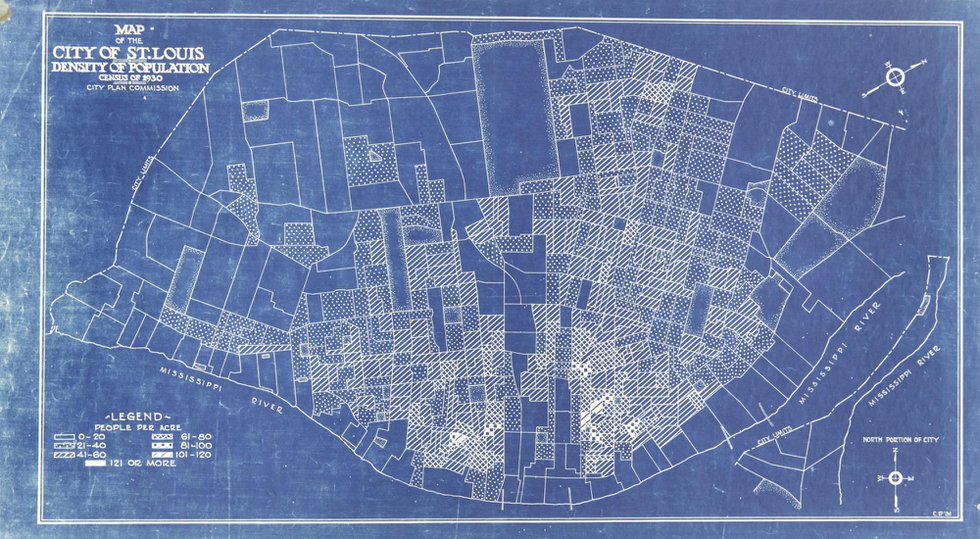
As part of my series of critical years in the history of St. Louis, I thought I would next focus on the year 1930. The federal census in this year revealed a new development between the city and the county. For the first time ever, the county gained more population than the city: 110,856 new residents in the county for a total of 211,593, versus 49,063 new citizens for a total of 821,960 in the city. Also, for the first time since the 1880 census, the City of St. Louis had not gained approximately 100,000 new residents in the last 10 years, which it had done for the previous four censuses. St. Louis County, its competitor to the west despite the well-known explosion of population after World War II, was already up to 211,593, essentially doubling in population in only 10 years since 1920. The incredible growth of the county in the 1920s is a story for another time.
But let us focus on the City of St. Louis, and what was clearly a sign a foreshadowing of trouble to come. The solutions already implemented were also not working. The excuse of the small square mileage of St. Louis is not valid, either, as large tracts of Southwest City were not even built yet in 1930. In fact, there were still 17 farms in the city limits in that year. So there are other reasons, I argue, for why 1930 is such a critical year in St. Louis history, and what we can learn from the mistakes civic leaders made in trying to address the concerns of the slowing population growth and loss of competitiveness to the suburbs.
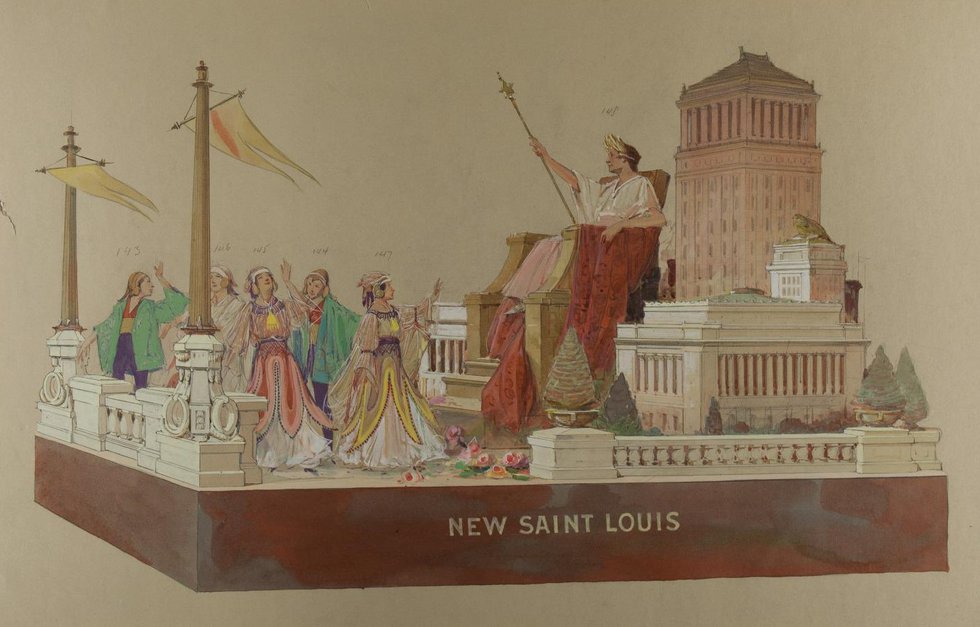
Perhaps in classic St. Louis tradition, business interests, led by the Chamber of Commerce, questioned the validity of the census bureau’s numbers, claiming government officials missed counting all the City’s residents. Amazingly, the injustice, according to the Post-Dispatch article from the time, was over only a couple hundred “missing” people. It was part of a larger campaign to save face after civic leaders had predicted the population of the city would reach at least 868,000 residents in 1930, in keeping with historical trends. Readers might remember back in 2011 when city officials also claimed the census bureau failed to count tens of thousands of residents, again accusing the federal government of mismanagement. And again, the Post-Dispatch reported that city leaders eventually gave up and admitted the census was largely accurate. History seems to repeat itself around census publication time in St. Louis.
What the census also revealed is that St. Louis had failed to confront the challenges facing the oldest parts of the city, which in 1930 encompassed 15 contiguous wards. These older wards, which lay east of Grand Boulevard and mostly near the Mississippi River, were losing population. The only reason the City was gaining population overall was because of new construction in the northwest and southwest portions of the city, offsetting losses in neighborhoods with housing stock that was over 50 years old. This may sound familiar to anyone following the story of aging apartment buildings in St. Louis County; many of those now-condemned and struggling complexes are also reaching that doomsday age of half a century. The problem is this: St. Louis City was not fixing the problems in older wards to stabilize population east of Grand; they were relying on new construction west of Kingshighway for population growth. Eventually, after World War II, that model ran out of physical space. The solution before World War II would have been to provide incentives for landowners to upgrade their properties, making them desirable and tax-generating properties for another 50 years. In other words, what many historic tax credit and other programs do today to revitalize neighborhoods such as Soulard.
Instead, we begin to see the first stirrings of modern day zoning, which has begun to receive more attention in the news lately. We see horrible ideas such as the clear-cutting of the Kosciusko neighborhood, which I wrote about recently, for a much anticipated urban industrial park, which has largely never materialized. We have a wasteland of a North Riverfront, cut off by Interstate 70 (yet another story for another day), with again little population and lots of abandoned property generating little economic activity outside of historic industrial occupants such as Mallinckrodt. We also have the infamous Harland Bartholomew plan, which I wrote about for the first installment in this series, which would have demolished most of what is now productive areas such as Lafayette Square and other South City neighborhoods.
In other words, we see reactionary choices by city leaders, not active choices by city leaders. As the just recently voter-approved bond issue that funded the widening of major arteries and the construction of a civic space downtown showed, the people of St. Louis were willing to raise taxes for the purposes of creative solutions (too bad those didn’t help). If leaders had not re-litigated the 1930 census figures and had instead properly received the results as a warning that St. Louis County was rapidly becoming a major competitor to the City, they could have then made more creative solutions to St. Louis’s problems. Upgrade aging infrastructure and neighborhoods and not annihilate them as would happen in the coming decades of urban renewal. Build real industrial competitiveness, and not just haphazard, poorly clearly empty blocks along the river. Address systemic problems over the long term, instead of going with quick cosmetic fixes.