

The automobile revolutionized travel in America in the early 20th century. Paved roads between major cities, once largely nonexistent due to the primacy of the railroads in the 19th century, began to sprout up, providing a reliable route for motorists. St. Louis of course was a critical stop on Route 66, which linked Chicago to Los Angeles. Increasingly, the idea of taking a vacation by driving across America became more popular among the general public, including African Americans.
While many African Americans could not afford to purchase a family car, those families that could took advantage of the freedom the automobile provided. Owning a car meant skipping over degrading treatment on mass transit or the railroad. However, driving a car also produced its own challenges: segregation laws and bigotry followed African Americans into the automobile age. Driving through some areas could prove to be outright dangerous, and many a night African American motorists would be forced to stay the night in their cars, either because they could not find a motel that would serve them or to avoid hostile locals.
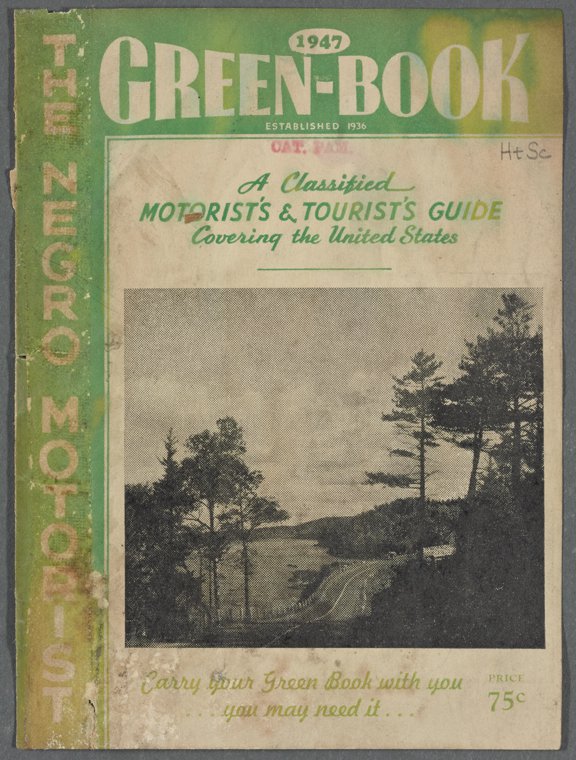
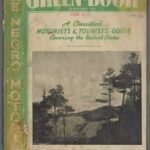
The Negro Motorist Green Book, published by Victor Green, a mailman living in New York City, became the solution to the difficulties African Americans found trying locate friendly businesses on the road. Beginning with a New York travel guide, Green then expanded to cover cities and smaller towns in later editions, publishing them each year until new federal civil rights legislation against discrimination ostensibly precluded their need. Interest in these largely forgotten Green Books revived in the last couple of years, as collections such as the New York Public Library have begun to offer complete digital versions online.
St. Louis, itself one of the largest cities in the country at the time, as well as a renowned center of African-American culture, features prominently in the Green Book. For this article, the year 1947 was chosen; it represents a moment in time right after the groundbreaking Lewis Place court decision, and sits only a couple of years before widespread urban renewal annihilated many of the neighborhood institutions mentioned in the guides; thus, 1947 sits right at a critical moment between old and new patterns of African-American residential and commercial siting in St. Louis. There are no businesses listed south of Market Street.
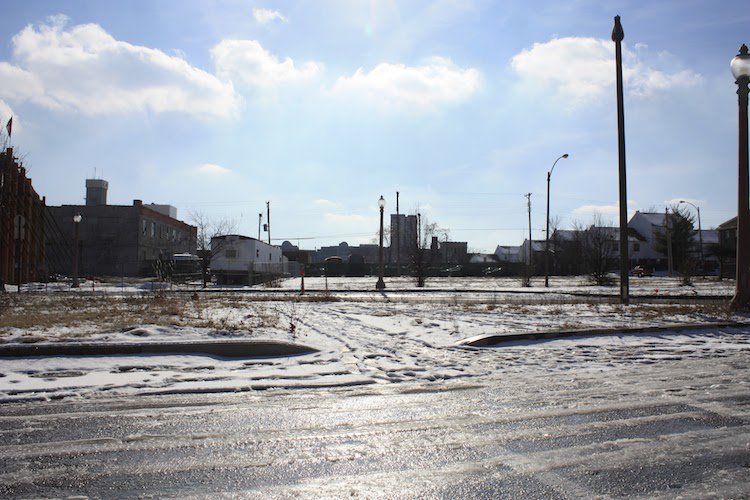
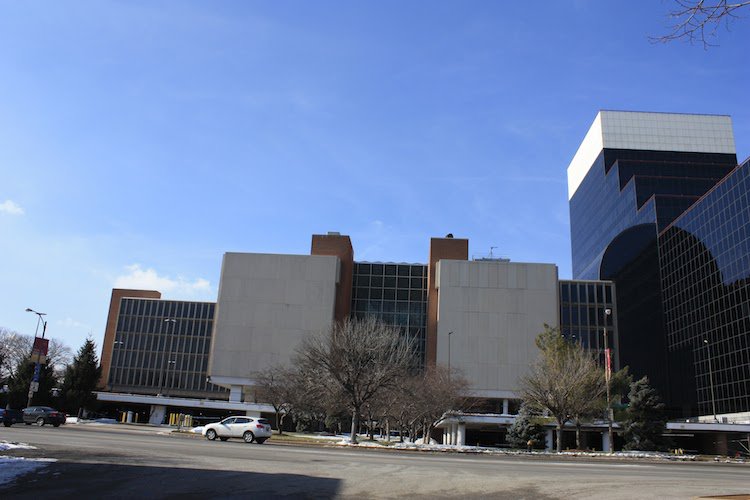
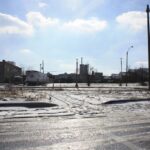
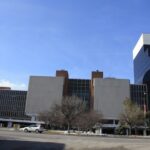
The author set out to see what remnants of African-American life survive from 1947. Searching through the addresses, a sad reality quickly becomes apparent: most of the buildings, not to mention the businesses themselves, are long gone, victims of urban renewal or abandonment. For example, the flourishing Chestnut Valley, part of the larger Mill Creek African-American community, was completely annihilated by urban renewal. Focused around Jefferson and Chestnut (which was renamed Lawton Avenue in this area), this was the hotel district in the city for African Americans. For example, the Calumet Hotel, at 618 N. Jefferson took over the old Washington University Hospital building. None of it or its competitors survives. Interestingly, the Green Book lists very few other businesses, such as restaurants or bars, around these hotels.
For entertainment, hotel guests probably headed over to Midtown, where there was once a large cluster of businesses around Vandeventer and Finney. All of the remnants of that neighborhood have been demolished. Of course, this area, just a stone’s throw from the lavish Vandeventer Place, was no longer a wealthy enclave, but a dense, and largely impoverished area by the 1940s. Likewise, over at the corner of what was once Easton and Franklin Avenues (now both renamed as Dr. Martin Luther King Drive, though a small portion of Franklin survives), the businesses that once flourished in the 1940s are now completely gone. Just a short walk away from the hotels on Jefferson, this area must have once thrived with traffic from both residents and travelers.
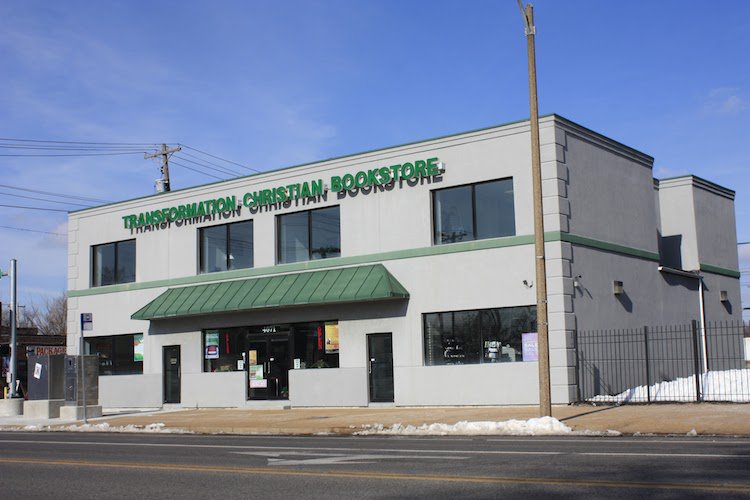
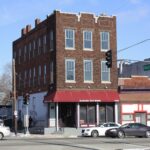
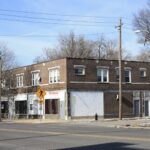
Continuing the search around the city, particularly out by the Ville, the historically African-American neighborhood northwest of Grand Center, the author found more buildings standing, though the businesses listed in 1947 are gone. For example, Lindsey’s was a restaurant at 3805 Page, while nearby, at 4071 Page was the Play House, listed as a tavern. Both buildings still stand, while interestingly the former bar’s building, built in 1928, is now the Transformation Christian Bookstore.
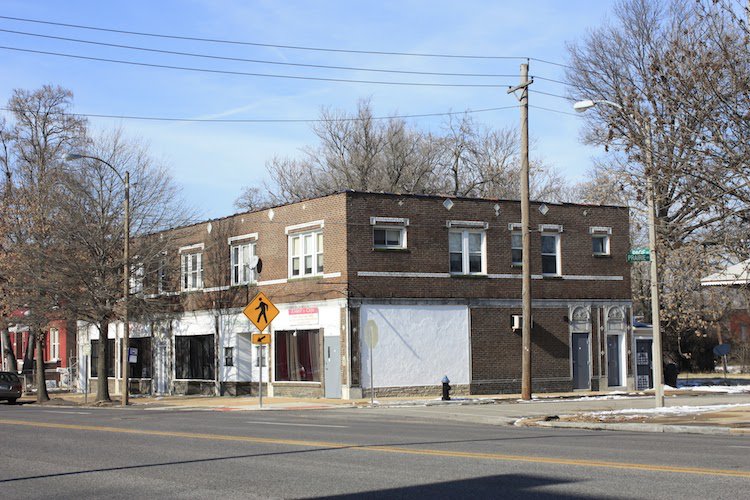
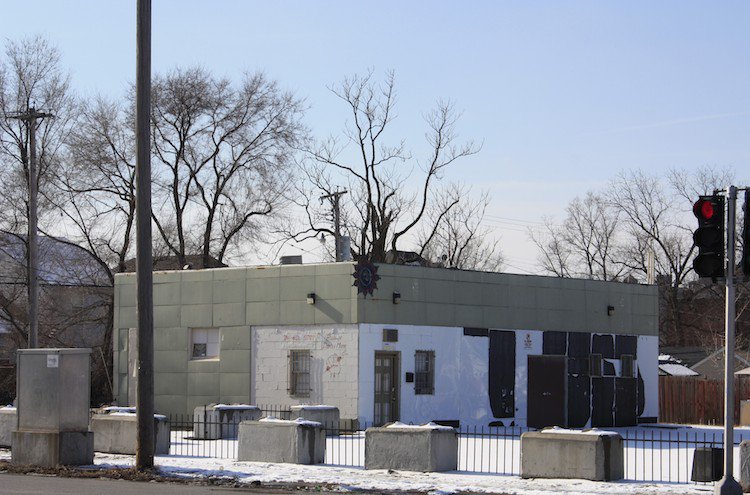
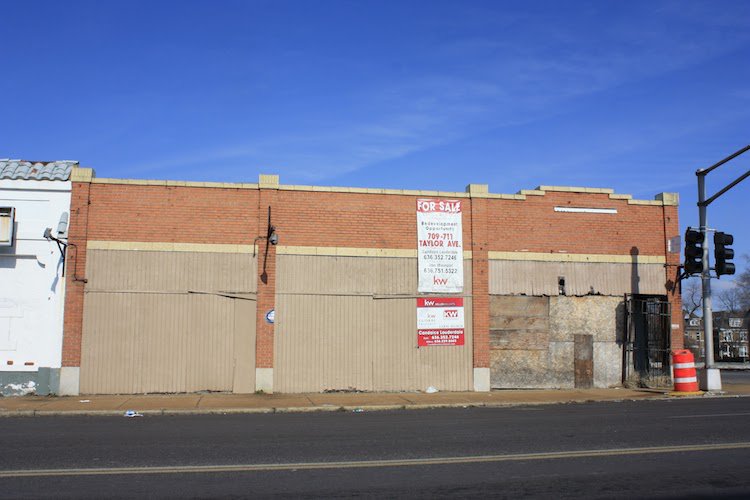
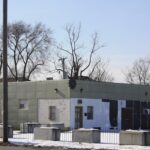
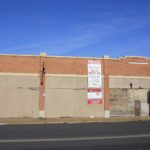
South a couple of blocks on Delmar were two businesses that were critical to a traveler. At 4102 Delmar at Sarah was Mac’s Service Station, which could provide critical automobile repairs for African Americans far from home. Nearby, at 4501 Delmar, Jackson’s provided tailoring services, ironically at the corner of Taylor. Again, both of these buildings still stand, but are vacant. North, into the Ville, the former Pendleton Avenue, now Annie Malone Drive through the historic neighborhood, also possessed a cluster of businesses that appear in the Green Book. Interestingly, Malone’s Poro College (she had already moved to Chicago at this point) was listed as a hotel.
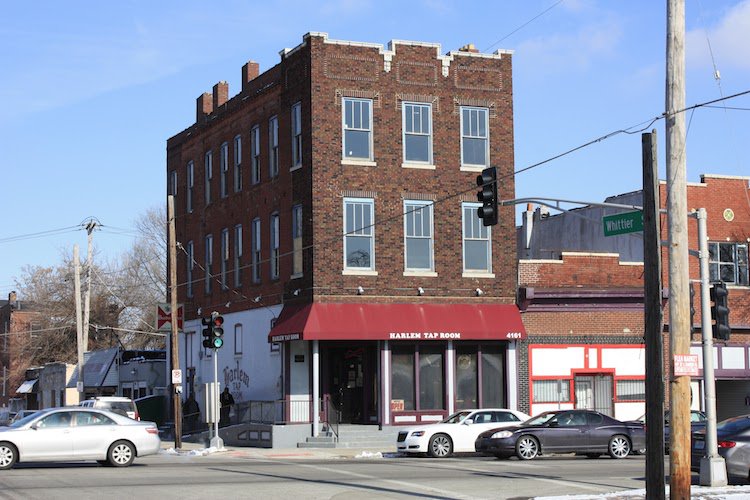
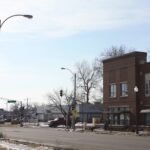
The search for actual surviving businesses looked increasingly unlikely to bear fruit. Finally, however, the Harlem Tap House at 4161 Dr. Martin Luther King Drive at Whittier came into view. Interestingly, the Green Book originally lists the Harlem as a liquor store, but it is clearly a bar now. Word on the street is that the original owners, who had opened the business in 1946, recently sold to a new owner in the last year. But there is something comforting in seeing that just a little bit of the past is hanging on.
Do you have memories of any of the businesses mentioned in this article? If so, the author would like to hear your stories.
Chris Naffziger writes about architecture at St. Louis Patina. Contact him via email at [email protected].