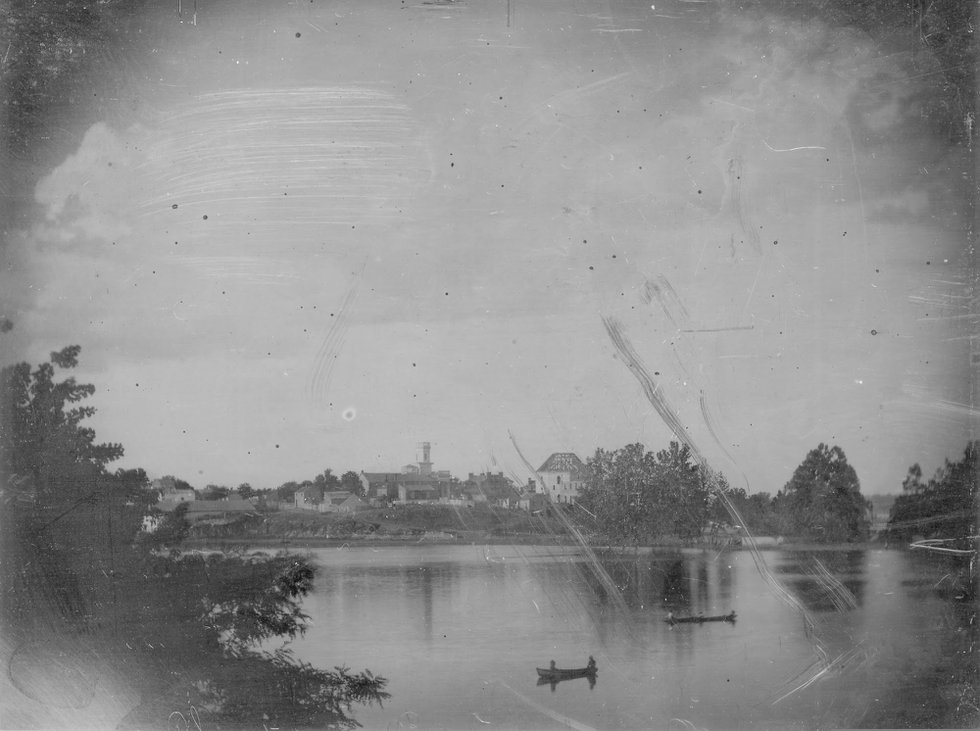
Mill Creek is not just the name of the famous African American neighborhood destroyed by urban renewal in the mid-20th century. It was also an actual creek originally named La Petite Rivière with mills along it, dating back to the founding of St. Louis. The first mill was built by Joseph Taillon in either 1765 or 1766, damming up the creek and creating a pond. Later, when Auguste Chouteau built his own mill, the pond took his name, filling out the broad area south of what is now Clark Street. But the great cholera epidemic spelled the end of Chouteau’s Pond after 1849, right at the dawn of the railroad in St. Louis.
The flat land that spread out west from the Mississippi River proved to be the perfect place for the railyards St. Louis needed as the city expanded to the west. Looking at topographical maps, the paths of the railyards curve and swell in size to match the bends and hills of the Mill Creek Valley. There were once dozens of warehouses, depots, and roundhouses that served the railroads along Mill Creek, and most of them are now gone. But what are perhaps the greatest engineering works that marked the path of Mill Creek Valley in the late 19th and 20th centuries were the bridges that once carried traffic over the busy railroad tracks. They are now gone, but photographs and original construction blueprints, many never published, give an idea of what these bridges looked like.
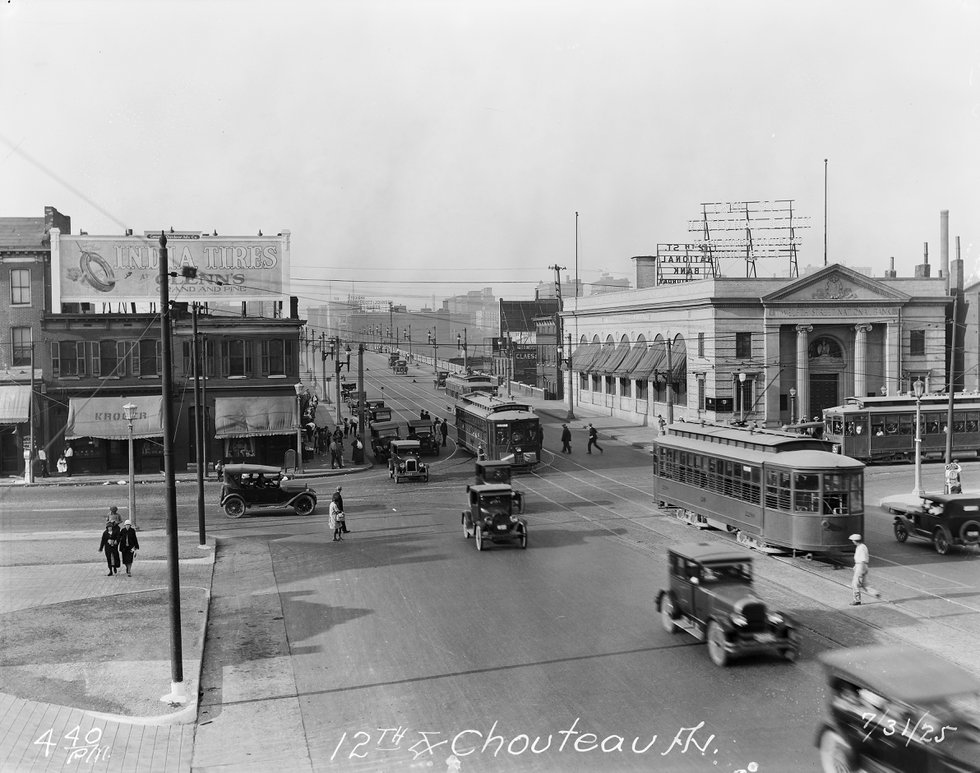
Already in 1876, Compton and Dry’s Pictorial St. Louis shows bridges at 12th and 14th streets over the tangle of train tracks that at that time terminated around 7th Street. By that year, two tracks were now entering the tunnel that connected to the recently completed Eads Bridge. Long before the construction of Union Station west of 18th Street, the Union Depot at 12th Street served a substantial portion of the passenger traffic in St. Louis. Smaller train stations served other railroad companies throughout downtown; passengers would have transferred between the different terminals to make connections. A photograph shows a partial view of what the new 12th Street Bridge looked like in 1880, replacing the bridge that appeared in Pictorial St. Louis in 1876. A new Tucker Boulevard viaduct was completed over the Mill Creek railroad tracks in 1980, five months ahead of schedule, replacing yet another bridge built in the early 20th century.
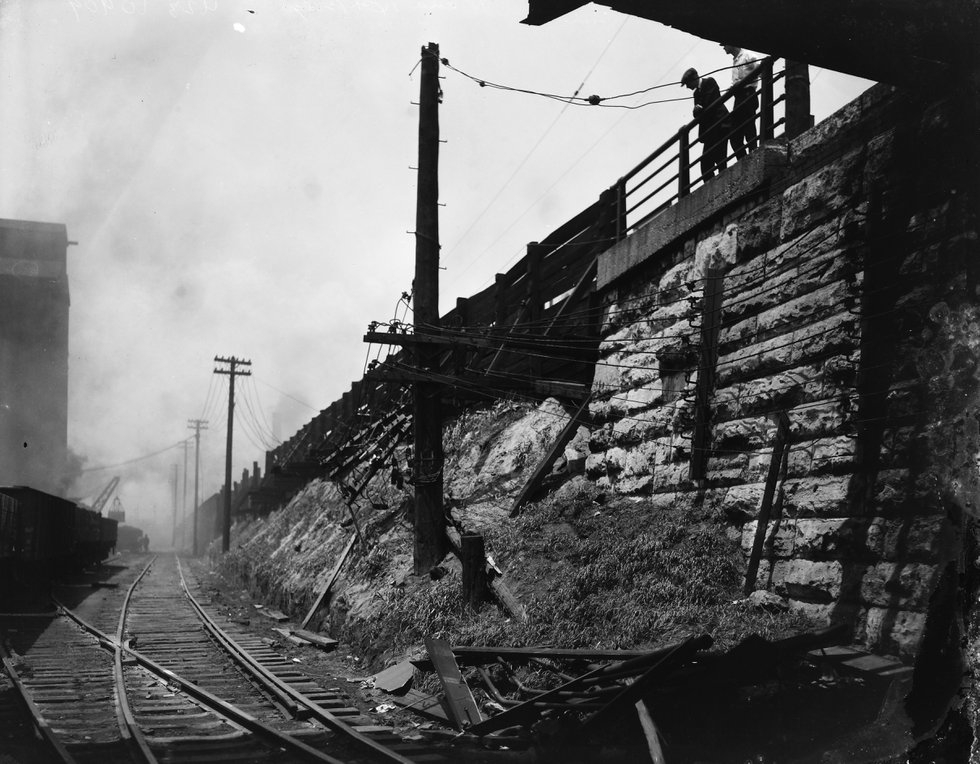
The 14th Street Bridge was the other bridge that appeared in Pictorial St. Louis in 1876. By 1916, the St. Louis Star and Times “Board of Aldermen Journal” reported on plans discussed to replace 14th Street viaduct at the April 20 meeting. Over 60 years later, in 1981, a St. Louis Post-Dispatch interview with Norbert A. Groppe, chief engineer of the Board of Public Service, discussed the state of the 14th Street Bridge and other aging spans over Mill Creek. Groppe noted that it was a particular St. Louis quirk that many residents call the bridges “viaducts,” though in 2020 the usage seems to be dying out. Technically, viaducts cross land, and bridges cross water, he added. The 14th Street Bridge had been closed in 1980 due to deterioration. The new bridge had an interesting superlative: When excavating for the new piers, workers had to go down 80 feet to reach bedrock.
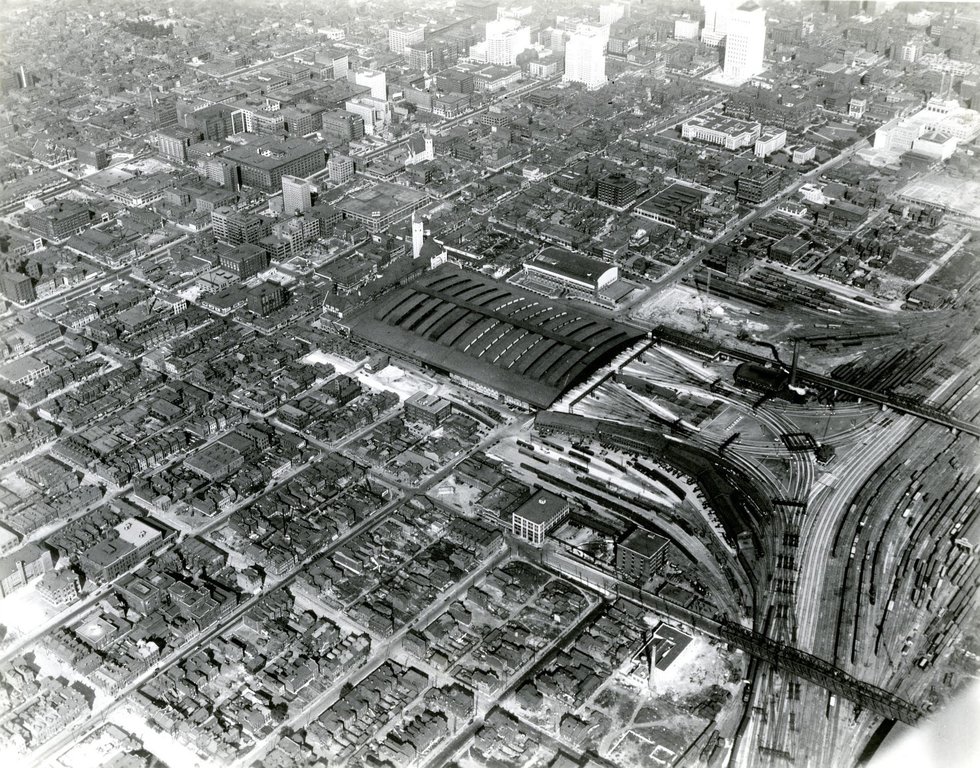
The final two bridges were located on either side of the newly completed Union Station, which united all the passenger service in St. Louis in one location. The 18th Street Bridge was mired in controversy before it was even built. On April 2, 1908, the Post-Dispatch reported that the city had lost its court case against the Union Depot Co. and the Terminal Railroad Association for their portion of the $150,000 it would cost for the new bridge. The presiding judge ruled they would only have to pay for two piers. The city proceeded and on July 18, 1908, the Globe-Democrat reported that bridge construction was beginning. The final cost ended up being $100,000. By September 19, 1908, the west pedestrian walk was soon to open. The 18th Street Bridge lasted until the 1980s, when it was replaced as part of the overall plan for modernizing the downtown Mill Creek viaducts.
The 21st Street Bridge holds the distinction of being the only major bridge in downtown that was never replaced when it was demolished as part of the modernization campaign in the 20th century. Most likely due to its close proximity to the now-demolished interchange for the planned but never executed 755, its location was considered redundant. MetroLink tracks now follow a portion of its right-of-way, and a section of the old 21st Street still exists, covered in weeds north of the railroad tracks. The 21st Street Bridge had been built in 1890 at a cost of $342,000 split between the city and railroads. It was temporarily closed in 1928 due to “corrosion from locomotives’ smoke” and was rebuilt at a cost of $50,000. It was closed forever in June of 1976 and demolished in 1986 at a cost of $400,000.
In the next installment, we’ll move past downtown, and the bridges over Mill Creek start to spread out and become more monumental in size.