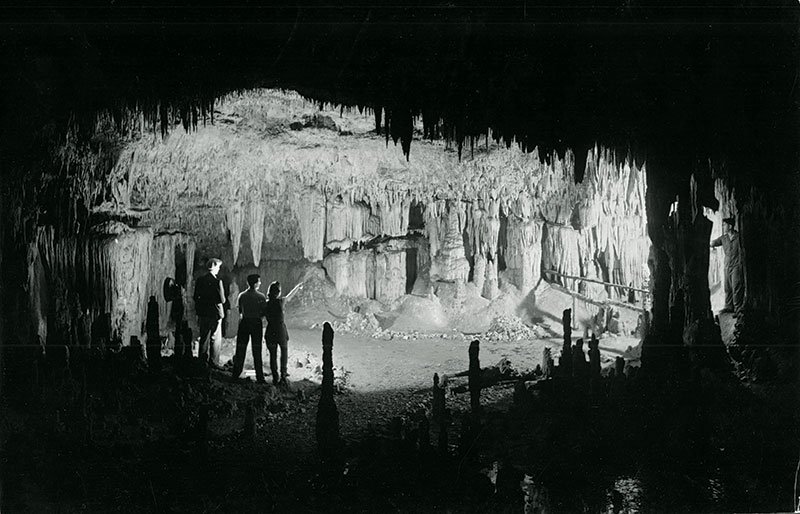
It’s weird that we don’t call ourselves Cave City. We have more than anyone—almost 50—and many of them were used to make something that’s synonymous with St. Louis: beer. Lemp famously fermented its lagers in caves; bootleggers used them to hide alcohol. In March 1950, Cherokee Cave opened to the public. A blocky white museum housing “interesting and unusual exhibits” served as the entrance. Visitors paid $1 to walk “65 to 85 feet below the city streets,” the St. Louis Post-Dispatch wrote, “a mile-long journey through a strange land of beauty and mystery through old brewery lagering rooms, past underground streams and waterfalls…past uranium deposits, the Burial Ground of prehistoric animals, fantastic cave formations such as the Thousand Columns, the Black Dahlia, the Schmoo, the Spaghetti Room, past the Dragon’s Den, the Observatory…” In 1960, it all got buried beneath the footings of Interstate 55. But just as our caves close, they open again—and, somehow, it always comes back to brewing. Today, you can visit Cherokee Street and toast at Earthbound Beer, whose selections are brewed in a basement carved from the limestone.


Lou’s Clues – 11/2/2026
Put your emoji-decoding skills to the test with this family-friendly game 🕵.