
St. Louis holds its French heritage in high regard, but it seems sometimes that those seminal decades of the 18th and early 19th centuries are shrouded in mystery. We know we bear a great debt of gratitude to the men and women who laid down the foundations of our city, even if we do not know their names. Back when it was far more likely to hear French spoken in streets of St. Louis or the Common Fields stretching out across the prairie, even after the Louisiana Territory joined the United States, the link with the home country remained strong.
So it is not surprising that Bishop Louis DuBourg requested French nuns to serve his diocese in the newly expanded United States, over a decade after joining the English-speaking nation. St. Rose Philippine Duchesne was one of the sisters who responded to his call, and traveled to the St. Louis region in 1818. St. Rose had come of age at easily the tumultuous moment in the history of the Roman Catholic Church in France. Born in 1769 in Grenoble, she joined the Order of the Visitation in 1788; one year later, the storming of the Bastille heralded the French Revolution. The revolutionaries linked the Church—the Second Estate—to the First Estate, the nobility. Both were blamed for the suffering of the peasantry. Mother Duchesne would spend much of her young life working to rescue priests and aid those imprisoned during the Terror, joining the Order of the Sacred Heart in 1800.
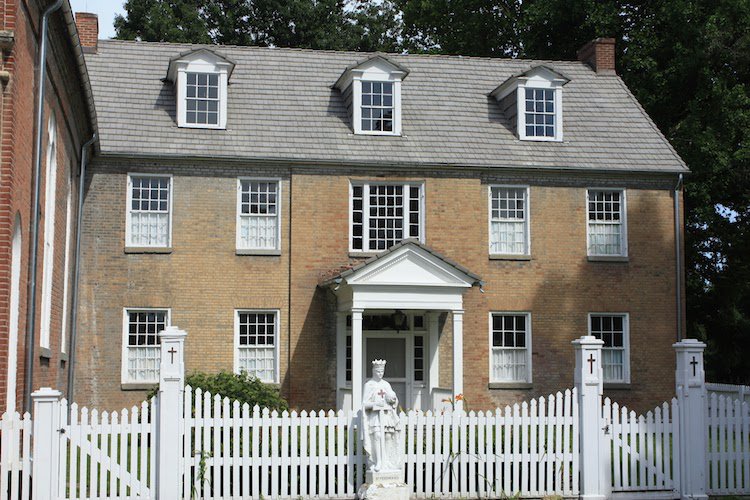
But with the coming of Napoleon, a treaty was reached between the papacy and the French Empire. By the time Mother Duchesne left France, the Bourbon kings had been restored to power. Perhaps her early career during the Revolution prepared the nun for the trials and tribulations of living on the frontier, during a time when it took all day to walk between St. Charles and St. Louis. Often lacking basic staples such as cooking grease, she at one point resorted to using bear fat, which even this tough and resourceful nun could not learn to enjoy. Settling in to her new home at the St. Ferdinand Convent in Florissant in 1819, she set to work creating a school for local Native Americans.
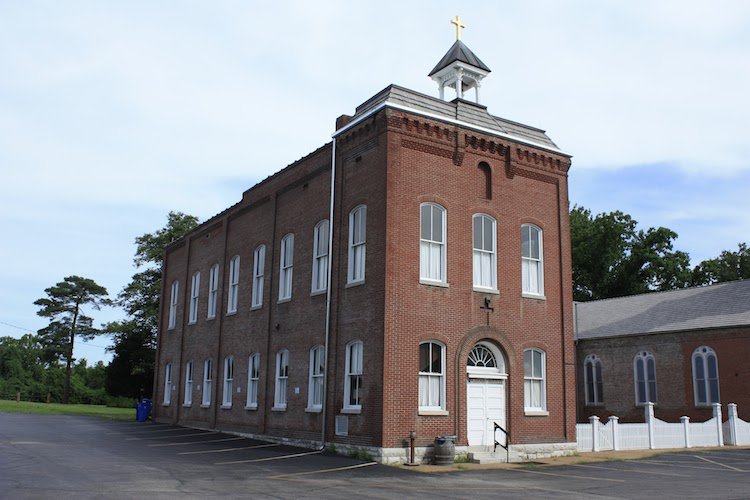
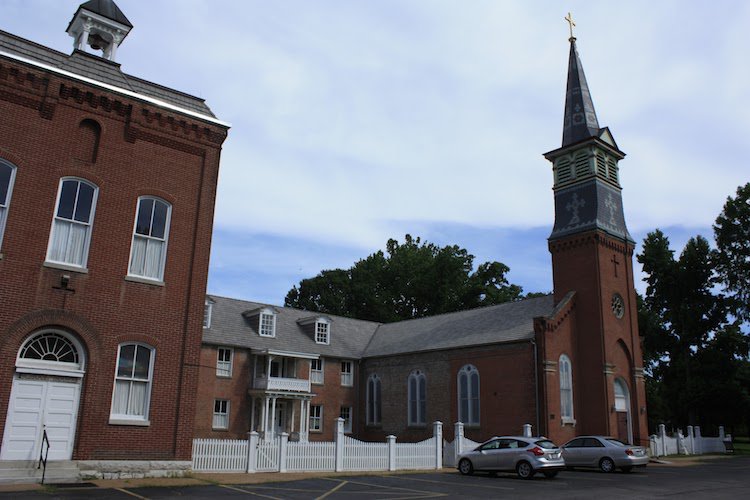
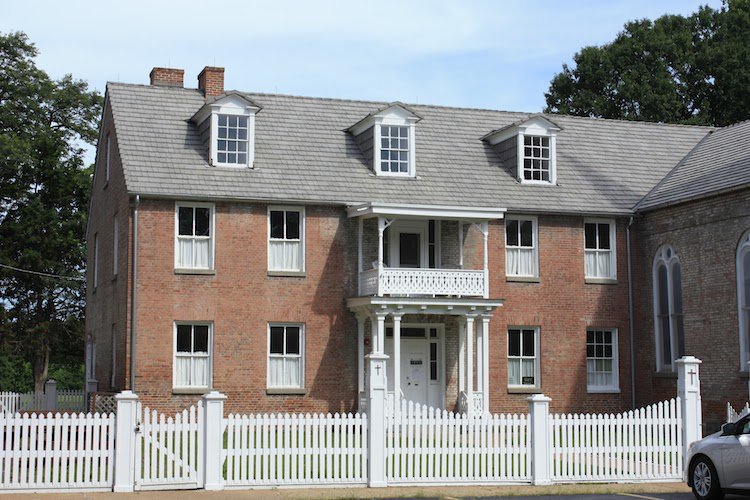
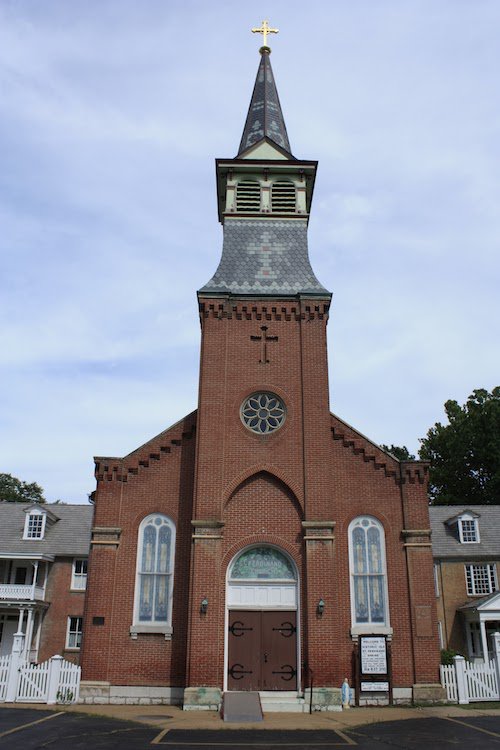
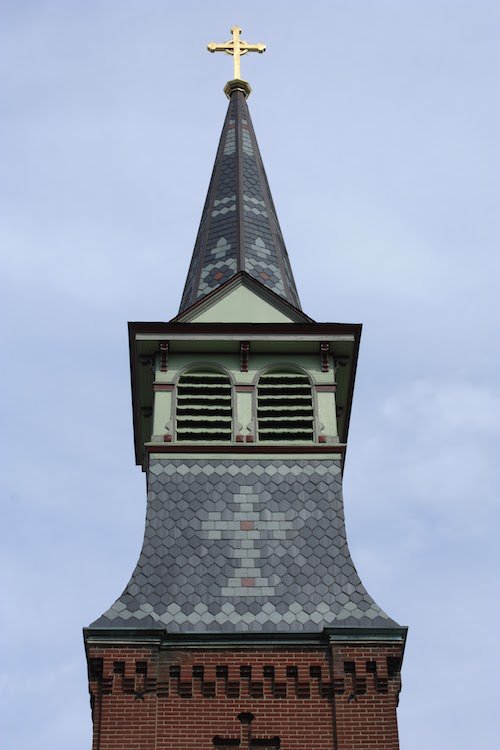
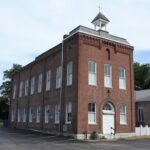
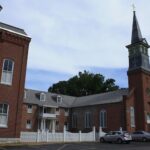
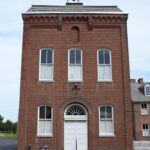
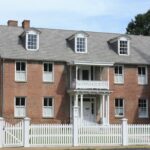
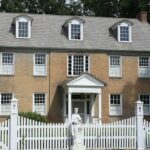
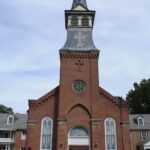
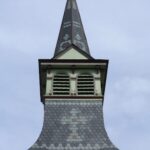
Later in 1821, the current church minus the front bay and tower, opened. A log cabin had served as the sanctuary since 1789. Barring any newly discovered research, the convent and church are two of the oldest buildings in the St. Louis region, with only a couple of structures in the region that are older. The whole complex, with the 1840 rectory and the later expansion of the church and addition of the bell tower in 1883, is listed on the National Register of Historic Places. The closet under the stairs, where Mother Duchesne apparently slept after an exhausting day of labor that stretched late into the night, still exists.
This historic complex will celebrate its 200th anniversary in a few short years. Ironically, despite its fame, the actual parish moved out of the church back in 1957, when the suburbanization of St. Louis County caused the population of Florissant to explode. Further setbacks include a 1966 lightning strike that set fire to the historic church (though ironically, the restoration then exposed original decoration long hidden to visitors). Likewise, while it was probably convenient in 1819, the church and its buildings sit uncomfortably close to two creeks, which have overflowed on several occasions.
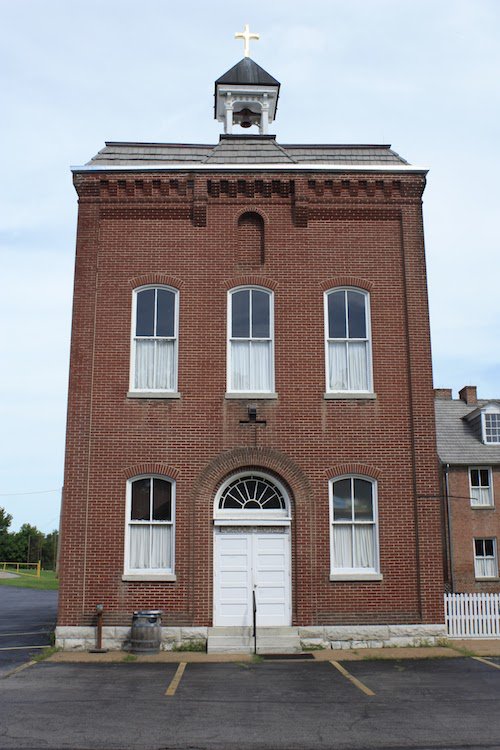
The historic shrine now sits at a crossroads; the aging buildings require major renovations to maintain the structural integrity of the masonry. The St. Ferdinand Shrine’s nonprofit board has just announced a $400,000 capital campaign to upgrade and restore the church. Among the tasks at hand: tuckpointing, sealing, and otherwise repairing the brick facades of particularly the convent, one of the oldest brick buildings in the region, and the other buildings in the complex. Windows need sash replacements, and other windows require re-glazing. Also, simple features such as making the church ADA compliant necessitate expensive upgrades. The ceiling and roof will need to be repaired in the future as well.
This is a worthy project deserving of the public’s help. The buildings in the complex rank as some of the oldest in the St. Louis region; the convent in particular is an excellent example of early Federalist architecture west of the Mississippi. Also, Mother Duchesne’s work with Native Americans also opens up an interesting, productive, and much-needed dialogue with how early settlers treated the original inhabitants of Missouri. As many of us know, that is not a pleasant story—members of religious orders often served as advocates against mistreatment. Helping restore the place where two rich cultures merged gives valuable lessons in an increasingly multi-cultural America.
Special Thanks to Bob Shea for his help arranging the author’s visit to the Shrine, and thanks to Geri Debo, secretary/treasurer, for her gracious hospitality at the Shrine. Donations can be given via GoFundMe, mailed, or given directly during the Fall Festival on October 9. The Shrine’s address is 1 Rue St Francois, Florissant, MO 63031. Office hours are Monday–Friday, 9am–noon; the Shrine is open for tours on Sundays from 1–4 p.m.. For more information, call 314-837-2210, email [email protected], or visit oldstferdinandshrine.com.


