A vaccine—for cancer? The seemingly far-fetched idea is inching closer to reality.
Through a small clinical trial at WashU Medicine, certain breast cancer patients have benefited from an exclusive vaccine. The drug in question isn’t a mass-produced vaccine; rather, it’s a custom-made formula designed to destroy a particular tumor and prevent recurrence in individuals who’ve already been diagnosed with triple-negative breast cancer. Led by WashU computational biologists Malachi Griffith and Obi Griffith, a team developed software that selects neoantigens from a patient’s tumor to trigger a strong immune response.
Your guide to a healthier, happier you
Sign up for the St. Louis Wellness newsletter and get practical tips for a balanced, healthy life in St. Louis.
Dr. Timothy Eberlein, director of Siteman Cancer Center, says it’s taken decades of research to figure out how to stimulate the immune system to do more than prevent contraction of certain diseases. “Twenty to 30 years ago, we recognized that the immune system might be a very powerful way to destroy cancers, but we had to figure out how to turn on the immune system to recognize the cancer and then control that recognition so that it only destroyed the cancer but not the normal tissue,” Eberlein explains. “In theory, that technology would be able to be utilized in any kind of solid tumor. For example, that’s why we started to do the same thing in pancreatic cancer—to see if we can optimize additional treatment without causing side effects for patients with pancreatic cancer.”
Published last November in Genome Medicine, the breast cancer vaccine study involved 18 patients with triple-negative breast cancer that hadn’t spread to other organs. Three years after treatment, 16 of those patients remained cancer-free. “Normally, 50 percent of patients would recur within two years, so it’s a big difference,” Eberlein says. “We’re still doing additional work trying to optimize how we can make the vaccine even more effective in a broader group of patients.”
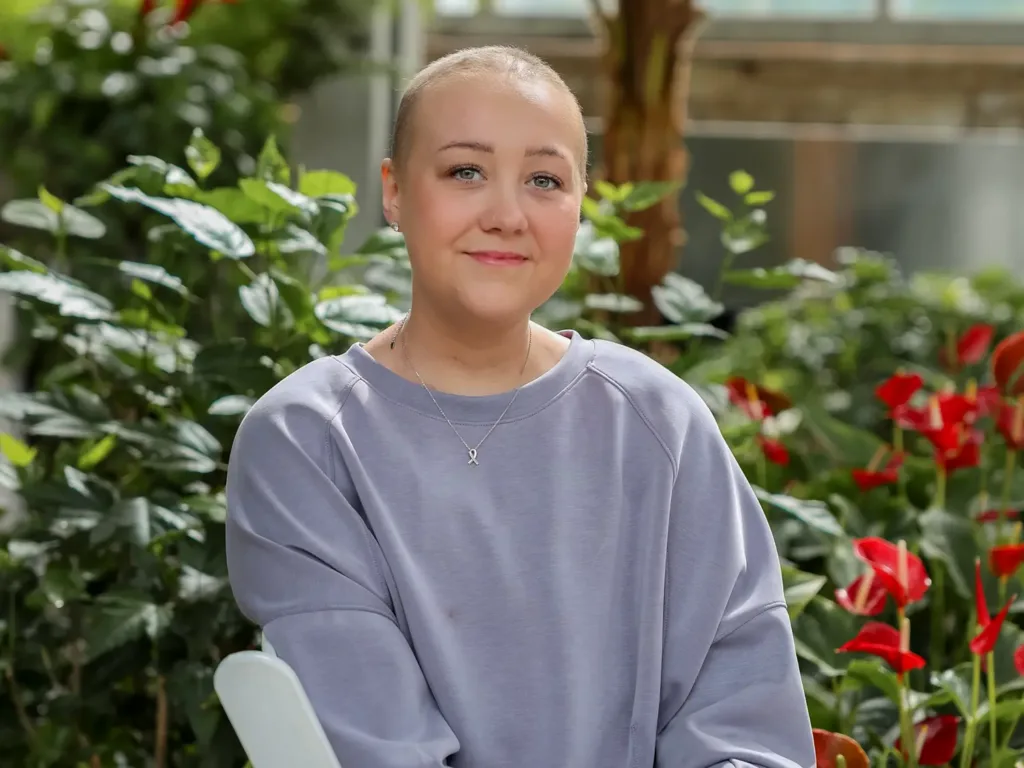
Lauren Lee, a 25-year-old fighting her second battle with cancer, says she’d “be first in line” if offered such a vaccine. Lee, who lives in Maryville, Illinois, received her first cancer diagnosis, Hodgkin lymphoma, at 11 years old. After five rounds of chemotherapy and radiation at Cardinal Glennon Children’s Hospital in St. Louis, she emerged cancer-free but with a warning for later in life: Start checking for breast cancer at age 25, despite the typical recommendation for screenings beginning at age 40. She understood that the childhood radiation treatment increased her risk for redeveloping cancer; proactive screening allowed doctors to catch her breast cancer at stage 2, before it spread to nearby lymph nodes. While she isn’t currently eligible for the vaccine, Lee has had successful chemo treatments and surgeries over the past year and feels grateful for the hope her doctor has provided along the way. “‘Curable, treatable’: She said it over and over, reassuring me that I’m going to be OK,” Lee remembers.
Eberlein describes the vaccine for triple-negative breast cancer as a groundbreaking addition to oncologists’ arsenal. “[The vaccine] is not only a very effective treatment, but it tends to have relatively low toxicity,” he says. “What we’re trying to do is push the frontier—develop new technologies and new treatments that are going to extend the life of patients with this type of cancer.”