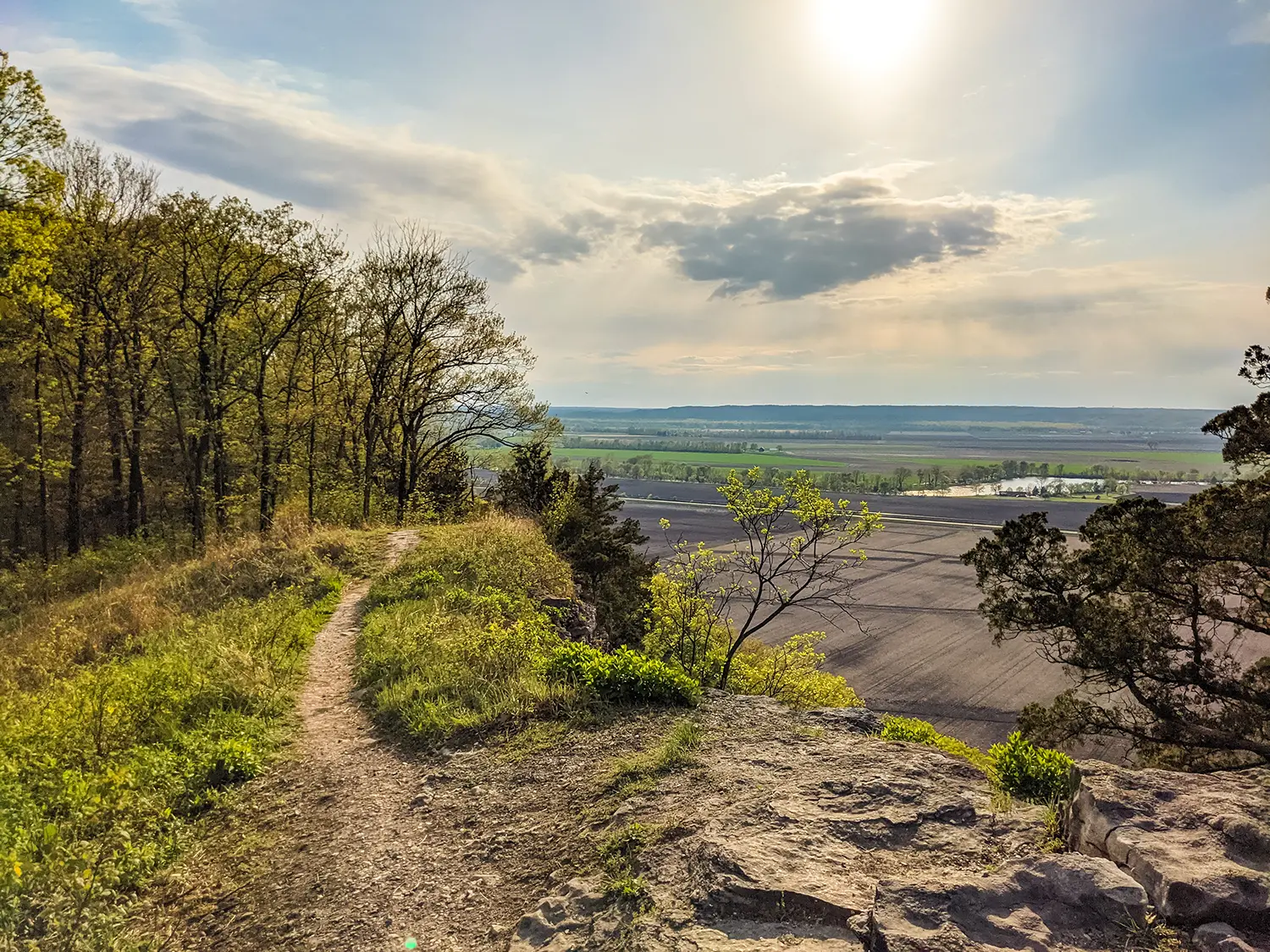
The Breathtaking View: Salt Lick Point Land and Water Reserve
A visit to Salt Lick Point is a natural jumping-off point for experiencing what makes southwestern Illinois special. This natural area just east of Valmeyer offers 5 miles of hiking trails across loess hill prairie, part of a 25-mile stretch of ecosystem dubbed the Hill Prairie Corridor. Owned by and accessed from the village of Valmeyer, Salt Lick Point showcases one of the highest points in Monroe County as well as 11 threatened and endangered species and 24 different prairies and glades. Multiple marked trails offer access to the area’s densely wooded upland forests and limestone glades, as well as steeper climbs for views from the bluffs. Salt Lick Point is a shady place for a stroll in the summer and a marvel of fall foliage in autumn, but breathtaking views of the Mississippi floodplain are also easy to find in winter.
Note: Nature preserves have strict laws in place prohibiting the removal of any plants, animals, or rocks.
Discover your next outdoor adventure
Subscribe to the St. Louis Outdoors newsletter to get smarter about hiking, biking, paddling, climbing, and camping within the St. Louis region and beyond.
A Scavenger Hunt for Shutterbugs: White Rock Natural Preserve
White Rock represents the best of natural beauty and human stewardship. Managed by nonprofit organization Clifftop, the preserve also is part of the Hill Prairie Corridor—containing 33 percent of Illinois’ hill prairie acreage, according to the Illinois Nature Preserves Commission. White Rock is home to more than 1,110 species of plants, birds, and animals, including several species on the state’s threatened and endangered lists. In late winter, a visit offers a chance to see bald eagles from above, as well as rock formations in a mature forest full of large trees. Visitors to White Rock’s in-and-out trail should check out Overlook Prairie for the best view.

Birder’s Paradise: Fults Hill Prairie & Kidd Lake Marsh state natural areas
These two natural areas are located across the road from one another. Fults Hill Prairie, the first such hill prairie to be protected in the state when it was established in 1971, showcases another section of Illinois’ unique loess hill prairie uplands and limestone glades more akin to those found in the Missouri Ozarks along a 1.5-mile loop trail. Kidd Marsh is home to an ancient piece of the Mississippi floodplain, which is integral to avian traffic on the Central Flyway. As winter transitions to spring, the area is a potential hot spot for everything from eagles to migratory songbirds. On the ground, you might spot the domed houses made by muskrats and hear the spring chorus of frogs, toads, and peepers. During the fall, Kidd Lake also becomes a popular spot for deer and waterfowl hunting.
The Outdoor Art Gallery: Piney Creek Ravine Natural Area
According to the Illinois Department of Natural Resources, this preserve contains the largest body of prehistoric rock art in the state, with nearly 200 petroglyphs and pictographs, some estimated as many as 1,500 years old. Artwork made by prehistoric native peoples are believed to have depicted religious ceremonies or spiritual beliefs. This collection of rock carvings and paintings is part of the palette in Piney Creek Ravine, where natural features create a one-of-a-kind environment. Piney Creek Ravine is one of the few places where short-leaf pine can be seen in Illinois. Along with sphagnum moss and soon-to-be-seen wildflowers, these features make the 1-mile loop trail here a must-visit destination. Hiking and birdwatching are the only two permissible activities inside the preserve, so be sure to take only memories and leave only footprints.
Click here for more information about accessible hours, permissible activities, and potential park closures in Illinois State Parks.


